A Safety-First Guide to Dealing with Gas Connection Repairs
Gas Connection Repair Starts With Fast, Safe Action
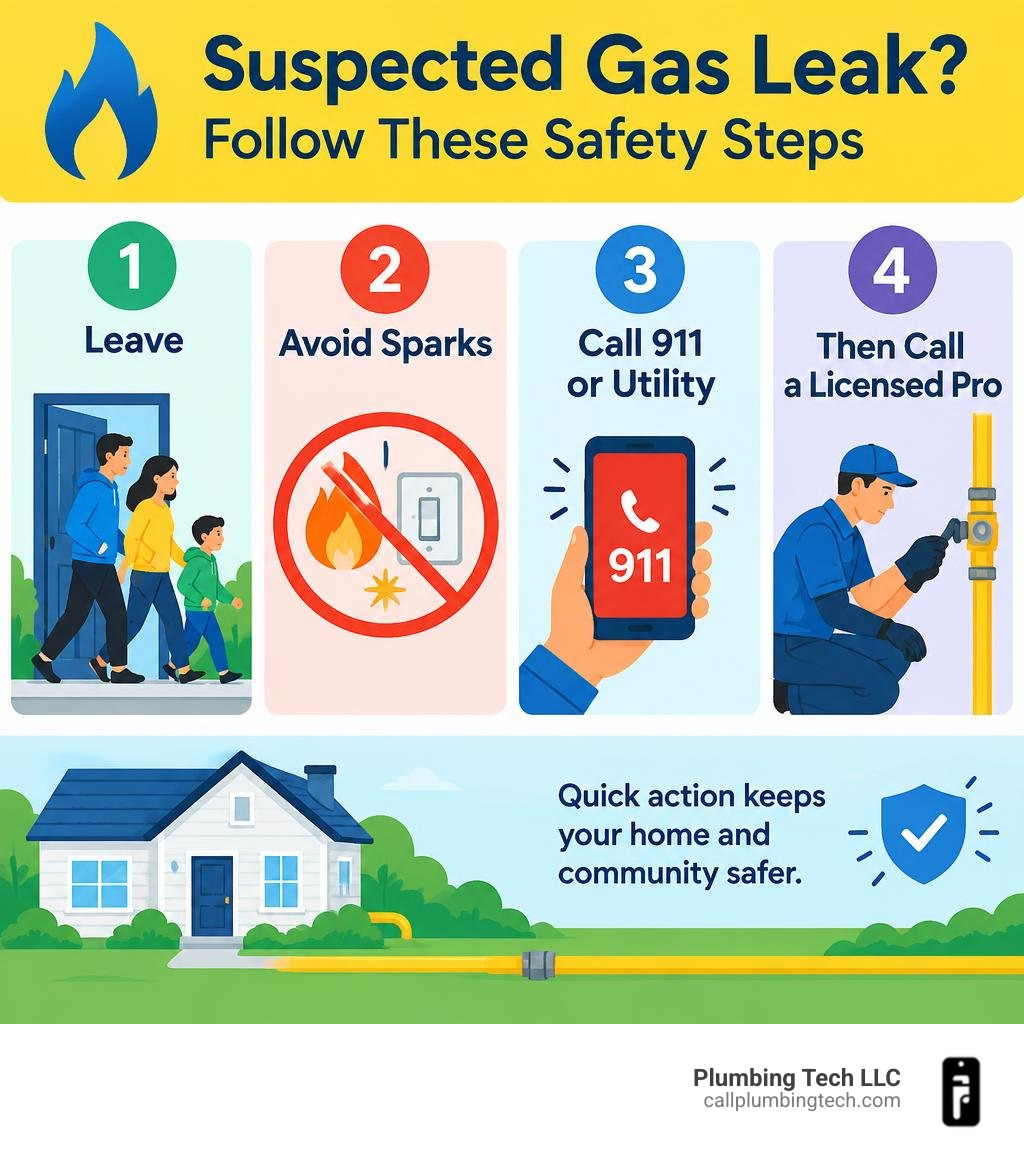
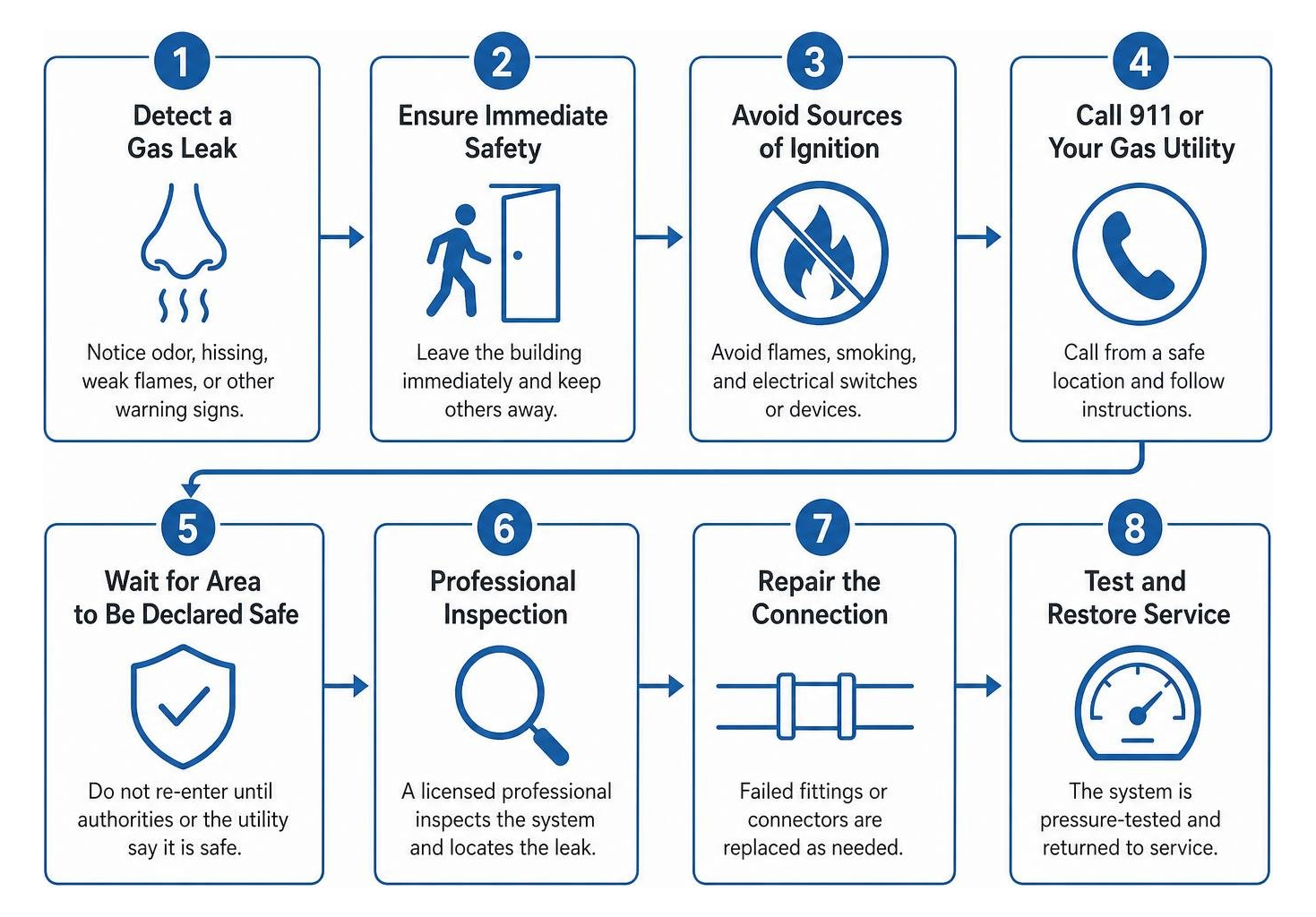
If you smell a rotten-egg odor, hear hissing near a gas appliance or line, or notice a sudden gas smell indoors, do not try to repair the connection yourself. Leave the building immediately, keep others away, avoid flames and electrical switches, then call 911 or your gas utility from a safe location. Once the area is declared safe, a licensed professional can inspect and complete the needed gas connection repair.
Natural gas has no smell on its own. Utilities add an odorant so people can detect leaks early. Other warning signs can include weak or yellow appliance flames, damaged flexible connectors, corrosion around fittings, or dying vegetation above an outdoor gas line. For more background on the fuel itself, see natural gas.
For Greater Cleveland homes and small businesses, fast action matters. A professional repair may involve isolating the gas supply, locating the leak with approved testing equipment, replacing a failed fitting or connector, and pressure-testing the system before it goes back into service.
Identifying Gas Leaks and Immediate Safety Protocols
Dealing with natural gas demands immediate attention and zero guesswork. Natural gas provides reliable heating and cooking power, but an unsecured joint or compromised pipe turns that everyday convenience into a hazard. Knowing how to identify the subtle signs of a compromised gas line gives you the power to protect your household before an emergency unfolds.
When you suspect an active leak, relying on 24/7 emergency plumbing services ensures certified professionals arrive with proper diagnostic equipment to secure your home.
Early Warning Signs of Failing Gas Connections
Gas leaks do not always announce themselves with a sudden, overwhelming cloud of odor. Small leaks often develop slowly at threaded joints or behind large appliances.
- Rotten egg smell: Utility companies inject a harmless chemical compound called mercaptan into natural gas. If you notice a sulfur smell that lingers near your water heater, furnace, or stove, treat it as an active leak.
- Yellow burner flames: A healthy natural gas burner produces a crisp, steady blue flame. If your stove or furnace burners display lazy yellow or orange flames, the gas mixture is not burning cleanly. As an industry joke goes, if your stove flame looks like a vibrant sunset, it is time to call a pro.
- Bubbling damp soil or standing water: Outdoor gas supply lines buried beneath your lawn can leak upward. When moisture sits over the line, escaping gas pushes bubbles up through puddles or wet soil.
- Dead or dying vegetation: Patches of grass, shrubs, or flower beds turning brown above a buried pipe run point toward underground line deterioration. The escaping gas deprives plant roots of oxygen.
- Subtle whistling or hissing noises: Listen closely near the back of heavy appliances or along exposed basement pipes. A high-pressure gas leak often produces a distinct whistling sound at loose fittings.
Critical Emergency Steps to Take When You Smell Gas
If any warning signs point to an active gas leak, drop whatever you are doing and follow these life-safety steps:
- Evacuate immediately: Get every person and pet out of the house at once. Do not stop to gather personal belongings.
- Prevent all electrical sparks: Do not flip light switches on or off, do not unplug appliances, and do not use landline phones inside the house. Any small arc of electricity can ignite concentrated gas vapors.
- Avoid open flames: Extinguish any lit candles or cigarettes before moving, and never strike a match or lighter inside the home.
- Shut off the meter valve if trained: If your exterior gas meter shut-off valve is easily accessible and you can turn it safely with a wrench without delaying your evacuation, shut it off. Otherwise, leave it for the emergency crews.
- Call for emergency dispatch from a safe distance: Once you are down the street or at a neighbor’s house, call 911 and your local gas utility. Once the utility clears the property, contact a certified technician to handle the required pipe repairs.
Common Causes of Gas Connection Failures in Residential Systems

Gas distribution lines inside residential properties experience physical, chemical, and environmental stresses every single day. Understanding why these supply points fail helps homeowners schedule routine residential plumbing services to catch hidden defects early.
Aging Piping, Corrosion, and Material Degradation
Residential gas piping systems often utilize rigid black iron or older galvanized steel pipes. Over decades of service, environmental moisture causes iron oxidation.
- Black iron corrosion: High moisture levels in basements and crawl spaces cause surface rust to eat away at outer pipe walls, especially around exterior entry points.
- Galvanized pipe deterioration: Galvanized steel was common in older homes. Over time, the internal zinc coating flakes off and clogs appliance valves or creates microscopic pinholes at joint threads.
- Degraded pipe dope: Threaded pipe joints rely on specialized pipe sealant (pipe dope) or yellow gas-rated PTFE tape. Over twenty to thirty years, old sealant can dry out, crack, and permit gas to escape past the threads.
- Thread friction and poor cuts: Pipes threaded with worn dies during original construction can leave burrs that weaken the mechanical seal under continuous line pressure.
Physical Movement, Improper Installation, and Appliance Stress
Pipes do not exist in a completely static environment. Minor mechanical stresses add up over time.
- Improper assembly torque: Under-tightening a threaded gas joint causes gradual gas migration, while over-tightening can crack brass flare fittings and cast-iron elbows.
- Unbonded CSST lines: Corrugated Stainless Steel Tubing (CSST) provides flexible routing through walls, but it requires proper electrical bonding to prevent lightning strikes or electrical surges from arcing holes through the thin metal wall.
- Appliance vibration: Clothes dryers and heavy washing machines create structural vibration that travels down rigid piping. Without proper flexible appliance connectors, these movements slowly loosen rigid connections.
- Shifting foundations: Soil settling beneath basements pulls on exterior gas entrance points, placing high shear stress on main manifold fittings.
- Missing sediment traps: Building codes require sediment traps (dirt legs) installed upstream of water heaters and furnaces. Without a sediment trap, loose scale and moisture enter the appliance valve, damaging internal seals.
Professional Gas Connection Repair: Step-by-Step Process
Fixing a gas connection is strictly a job for licensed, certified professionals. Handling flammable gas demands specialized diagnostic tools, tight adherence to regional safety standards, and municipal permits to ensure code compliance.
Diagnostic Testing and Pressure Verification
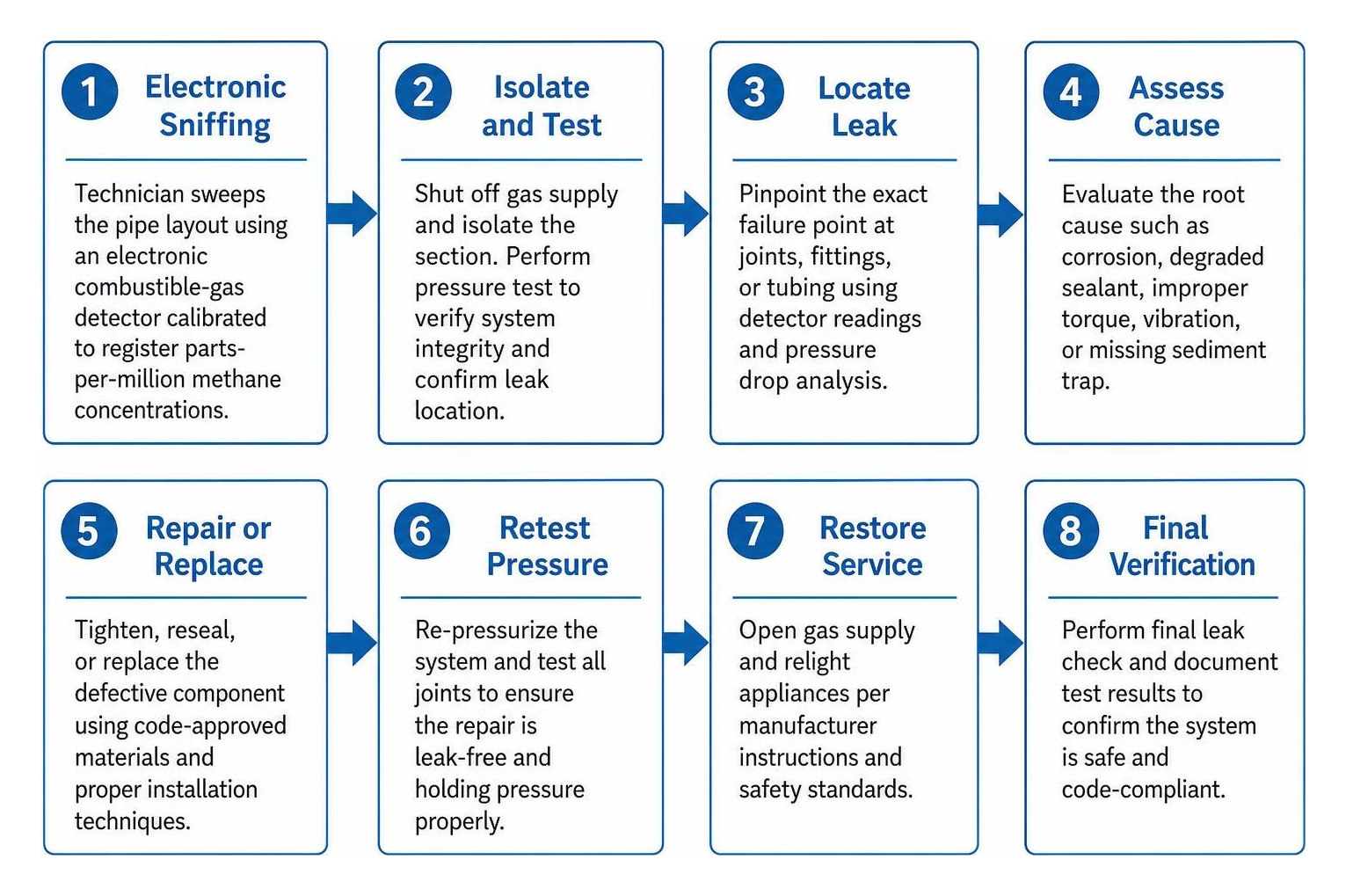
When a technician arrives on site, finding the exact origin of a leak requires systematic isolation and diagnostic testing.
- Electronic sniffing: Technicians sweep the pipe layout using an electronic combustible-gas detector calibrated to register parts-per-million methane concentrations.
- Non-corrosive bubble testing: Applying an approved bubble solution over suspect fittings confirms the leak. Escaping gas produces continuous expanding bubbles without corroding brass or stainless steel components.
- Differential pressure drop testing: Technicians disconnect appliances, cap line ends, and connect a digital manometer or test gauge to pressurize the system with air. If the pressure drops over a 10 to 15 minute window, additional leaks exist along the branch line.
Safe Fitting Replacement and Pipe Restoration Techniques
Once the problematic connection is mapped, the technician carries out the physical repair:
- Isolating supply valves: The branch supply is locked out to prevent accidental gas flow into the workspace.
- Disassembling failed joints: Damaged flexible lines, cracked flare nuts, or stripped black iron nipples are unthreaded using dual pipe wrenches to avoid twisting upstream pipes.
- Applying approved sealant: New joints are prepped with gas-rated thread sealants that resist petroleum gases and vibration breakdown.
- Installing code-compliant components: Technicians install new CSA-certified stainless steel flexible appliance connectors, manual lever-handled ball valves, and fresh sediment traps.
- System purging and relighting: After final pressure checks pass, air is purged from the lines and pilot lights are safely relit according to manufacturer specifications.
Signs You Need a Gas Connection Repair vs. Full Replacement
Minor fitting failures can often be repaired on the spot, but widespread system wear calls for a complete pipe run replacement.
| Assessment Factor | Gas Connection Repair | Full Line Replacement |
|---|---|---|
| Leak Location | Single isolated fitting, valve, or appliance connector | Multiple leaks across main trunk and several branch lines |
| Pipe Material | Modern black iron or properly bonded CSST | Outdated galvanized steel or corroded bare copper |
| Corrosion Level | Minor localized surface rust away from joints | Deep flaking rust, pitting, and widespread structural wall thinning |
| System Sizing | Adequately sized for modern high-BTU appliances | Undersized pipe causing pressure drops across multiple units |
| Permit & Code Status | Direct component swap meeting current code | System-wide code violations, missing shut-offs, and unbonded lines |
Preventing Gas Leaks: Maintenance, Costs, and Efficiency Upgrades

Proactive maintenance protects your family and helps your gas appliances perform at peak efficiency. When you need local expertise, our team provides trusted gas line repair in Strongsville as well as comprehensive gas line repair in Brecksville and surrounding communities.
Estimated Costs and Insurance Coverage for Gas Connection Repair
The cost of restoring a gas connection depends on the location of the pipe, accessibility, and the scope of work needed. A simple replacement of an appliance shut-off valve and flexible connector requires minimal labor and parts. In contrast, locating an underground leak beneath a finished basement floor involves concrete work, line isolation, and municipal permitting fees.
Homeowner insurance policies generally cover gas line repairs only when the damage stems from a sudden, accidental covered peril, such as a fallen tree or a severe storm impact. Standard wear, tear, rust, and age-related deterioration are considered basic property maintenance and are rarely covered by insurance providers.
Routine Maintenance and Long-Term Efficiency Benefits
Scheduling an annual plumbing and gas safety inspection keeps your connections tight while unlocking significant energy savings.
- Upgrading to high-efficiency equipment: If you are repairing an older heating system connection, consider replacing older units with high-efficiency equipment. Modern gas-fired boilers and furnaces feature elevated Integrated Energy Factor (IEF) ratings, which translate into measurable heating bill reductions.
- Lower peak energy demand: Tight connections and properly sized manifolds ensure stable gas pressure, preventing unburned fuel waste and reducing peak demand during freezing winter nights.
- Reduced carbon footprint: Preventing minute methane leaks helps the environment while keeping utility expenses strictly tied to heat and power you actually use.
Frequently Asked Questions About Gas Line Safety
How long does a typical gas connection repair take to complete?
A straightforward gas connection repair, such as replacing a worn flexible connector or an individual shut-off valve, typically takes one to two hours. If the repair involves tracing multiple hidden leaks behind walls, re-threading black iron main lines, and running complete system pressure drop tests for municipal inspections, the job may take four to eight hours.
Can I fix a loose gas appliance connector myself?
No, you should never attempt a DIY gas line repair. Working on gas lines requires specialized flaring tools, specific non-hardening pipe compounds, precise torque limits, and digital leak detection equipment. A small mistake during installation can lead to slow gas accumulation, structural damage, or fire hazards. Always rely on a licensed plumbing and gas piping contractor.
Does homeowner’s insurance pay for gas connection repair work?
Insurance coverage depends entirely on what caused the leak. If physical damage occurs suddenly due to a covered structural accident, your policy may reimburse the repair costs. However, gradual corrosion, aging joints, loose fittings, and deferred maintenance are excluded from standard homeowner policies. Always retain your technician’s itemized diagnostic report if you plan to file a claim.
Conclusion
A compromised gas connection is a serious safety concern that requires an immediate, professional response. Taking fast action when you spot early warning signs protects your home, your family, and your investment.
At Plumbing Tech LLC, our veteran-owned team brings over 25 years of combined industry experience, modern diagnostic tools, and a 100% satisfaction guarantee to every service call across Greater Cleveland. Whether you require same-day safety assessments or 24/7 emergency response, our licensed technicians are ready to help.
Schedule your Gas Line Repair with our certified specialists, or Contact Us today to book a comprehensive home gas safety inspection.