How to Choose the Right Hot Water Service
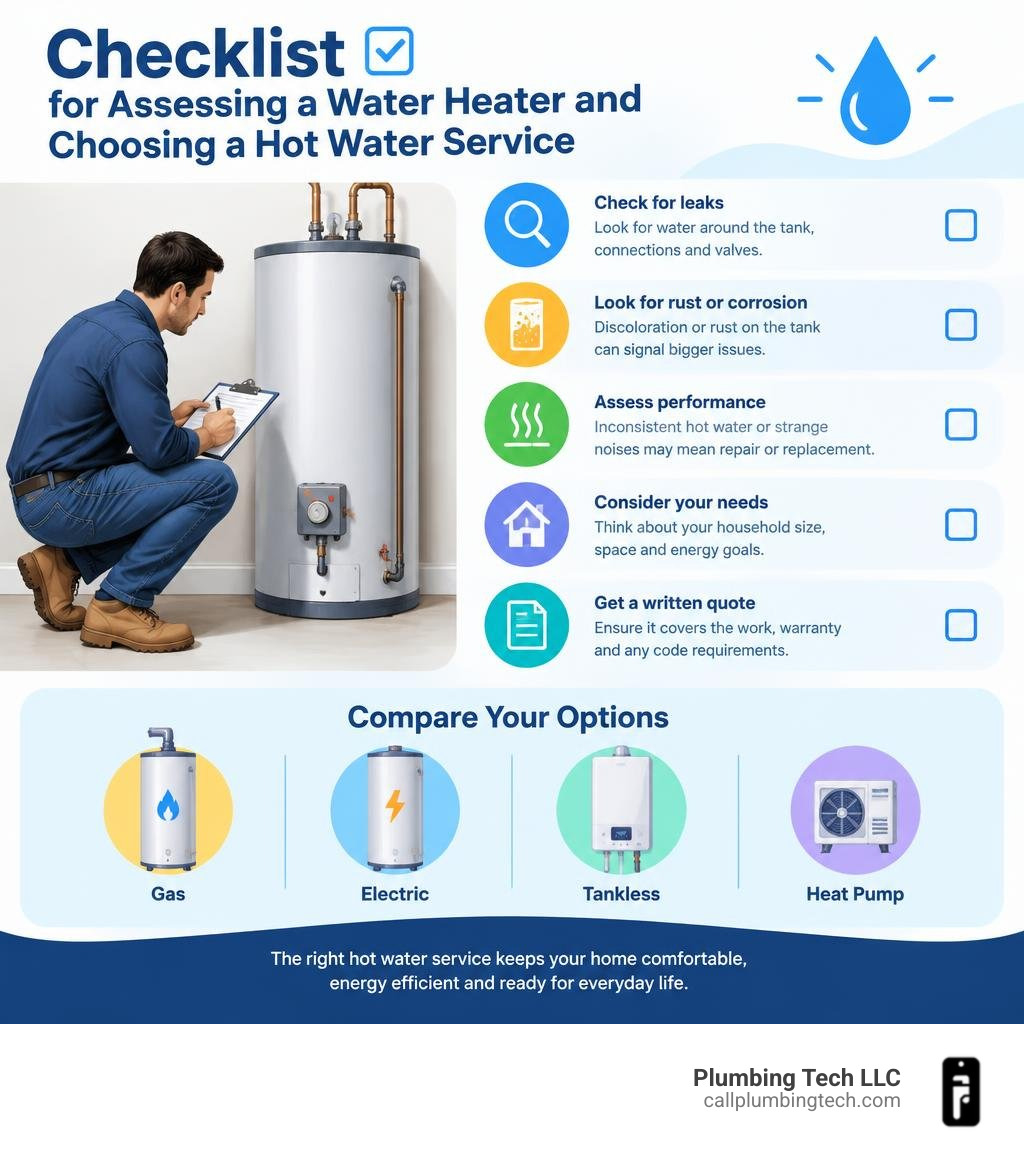
Start with the problem. No hot water may be a repairable fault, but a leaking or rusted tank may need replacement. If the tank is leaking, turn off its water supply and call a licensed plumber.
Before choosing a new system, compare gas, electric, tankless, and heat pump options against your hot water needs, available space, and expected energy use. Ask for a written quote that explains the work, warranty, and any code requirements.
Identifying When Your System Needs Repair vs. Replacement
Nothing disrupts a morning routine quite like turning the shower handle and getting blasted with icy water. When your system starts acting up, figuring out whether you need a simple fix or a full replacement can save you time, stress, and money.
Water heaters face constant pressure, thermal expansion, and mineral exposure every single day. Over time, sediment settles at the bottom of the tank, components wear out, and metal surfaces can slowly corrode. Knowing what to look for helps you address minor issues before they turn into major indoor swimming pools.
Signs You Need an Immediate Hot Water Service
Certain symptoms tell you right away that your unit requires professional attention. If your shower water turns lukewarm halfway through, your heating elements or dip tube might be failing. Popping, rumbling, or banging noises inside the tank usually point to heavy sediment buildup, which traps water underneath and causes it to boil violently.
Other critical warning signs include:
- Water pooling around the base of the cylinder
- Rust-colored or discolored water coming from hot taps
- Continuous dripping or moisture around the temperature and pressure relief (TPR) valve
- A foul or metallic odor in your hot water
- Pilot lights that refuse to stay lit on gas models
If your pilot light went out after a minor draft, you can learn how to relight and restore hot water fast without calling a plumber to see if a quick reset solves the issue. However, if the pilot continues to extinguish or you notice electrical components tripping your circuit breaker, it is time to call in licensed professionals.
Repair or Replace: Evaluating Age and Tank Condition
Deciding whether to repair or replace comes down to age, tank condition, and the cost of the repair. Standard mild steel storage tanks generally last between 10 and 15 years. Premium stainless steel tanks offer exceptional durability and can last upwards of 20 to 30 years under proper maintenance.
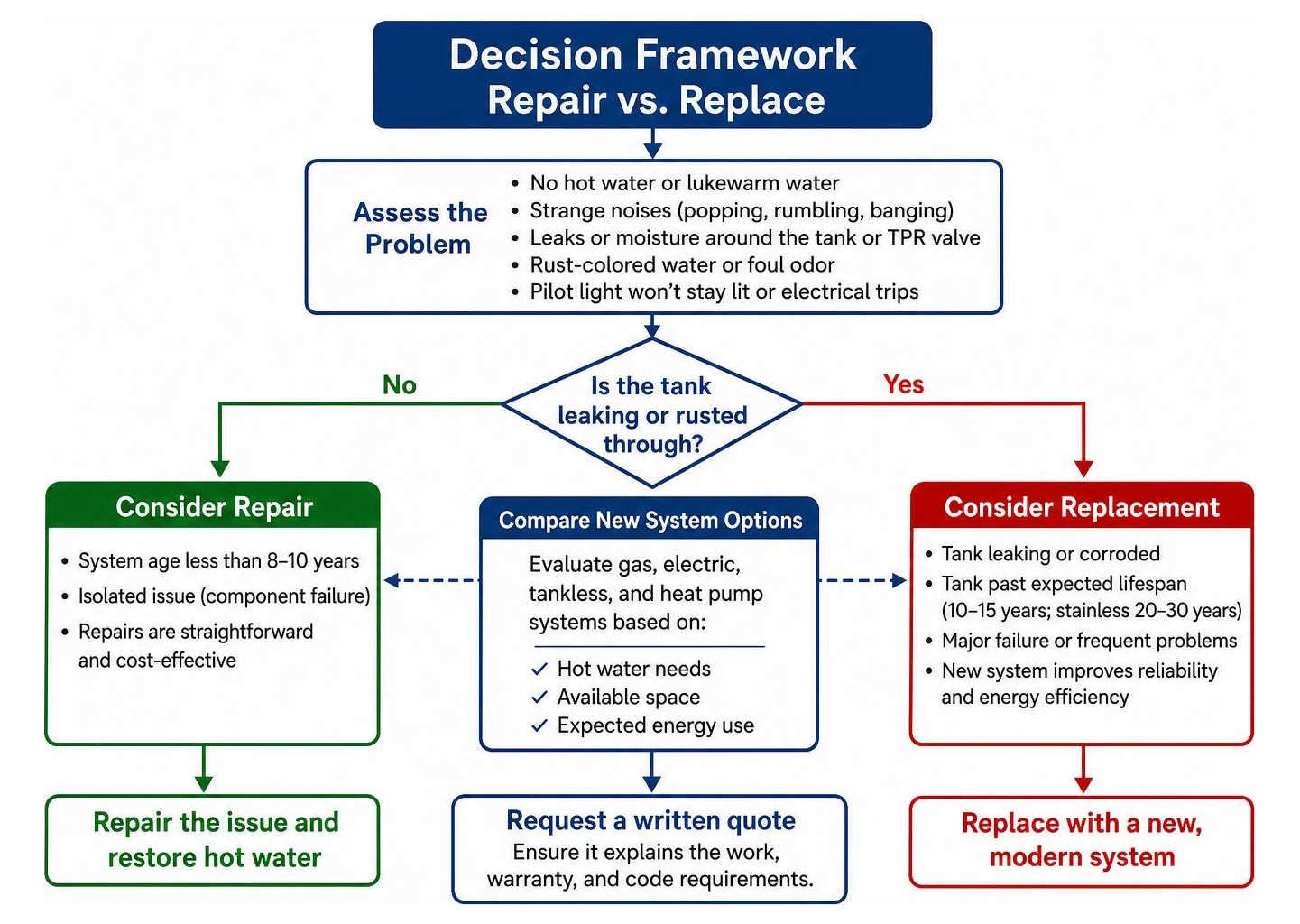
If your system is relatively young (under 8 to 10 years old) and suffers from an isolated issue, like a worn thermostat, a faulty heating element, or a leaking relief valve, a repair is almost always the smarter, more economical choice. Most standard component repairs are straightforward and fast.
On the other hand, if your tank itself is actively leaking, corroded through the base, or past its expected lifespan, sinking money into temporary repairs rarely pays off. Internal tank corrosion cannot be patched safely. In those situations, upgrading to a modern system prevents catastrophic failure and lowers your monthly energy consumption.
Comparing System Types: Gas, Electric, Tankless, and Heat Pumps
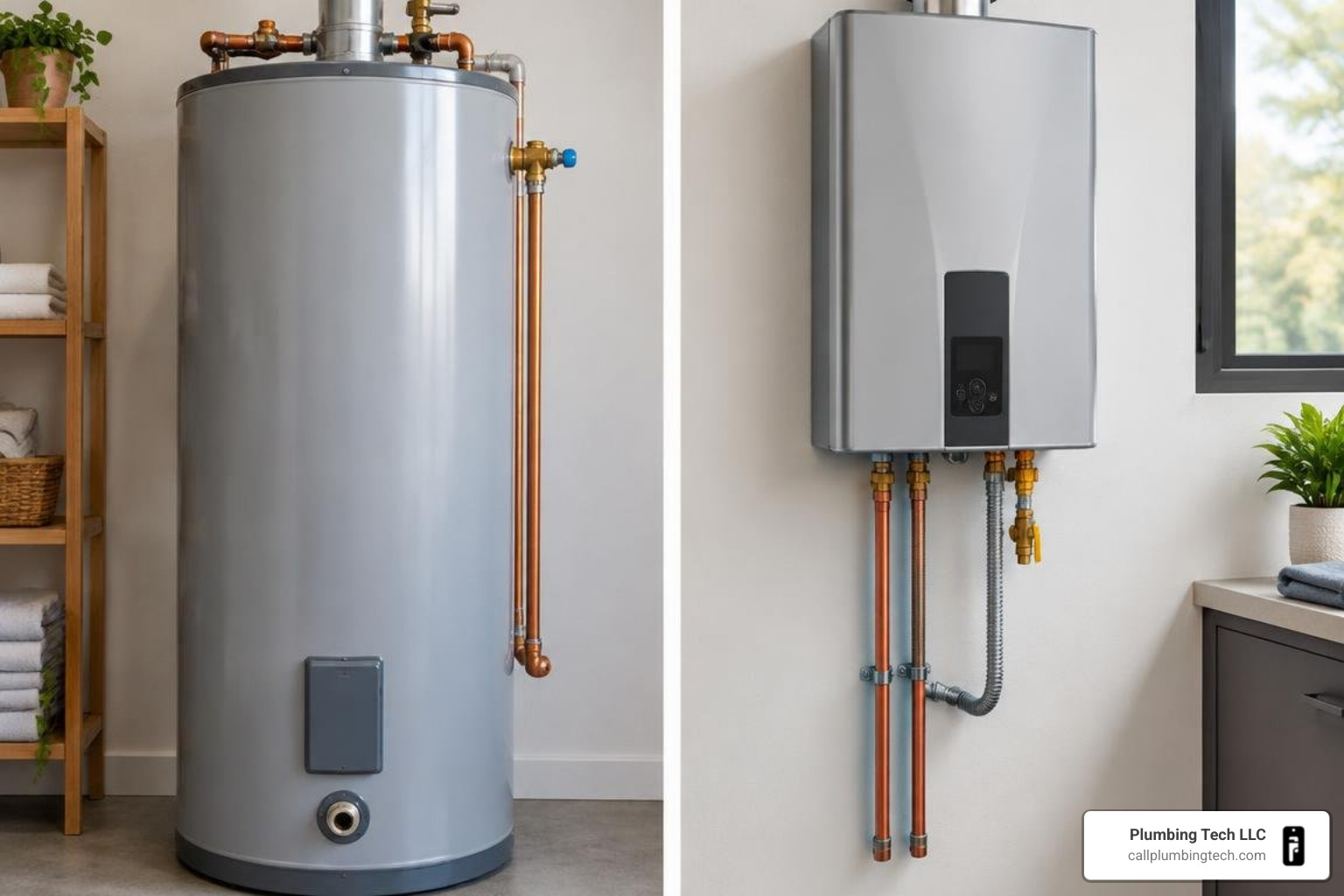
Selecting the right replacement means finding a system that aligns with your household demands, utility hookups, and efficiency goals. Every type of water heater offers distinct advantages depending on your setup.
| System Type | Best Suited For | Energy Efficiency | Typical Lifespan | Space Requirement |
|---|---|---|---|---|
| Electric Storage | Homes without natural gas, low upfront installation needs | Moderate | 10 to 15 years | Requires dedicated indoor or utility space |
| Gas Storage | High hot water usage, homes with existing gas lines | Moderate to High | 10 to 15 years | Requires adequate ventilation and flue |
| Tankless (Continuous Flow) | Endless hot water needs, compact homes, busy families | High (on-demand heating) | 15 to 20+ years | Very compact, wall-mounted |
| Heat Pump (Hybrid) | Maximum energy savings, eco-friendly households | Highest (up to 70% less energy) | 12 to 15+ years | Requires good airflow and clearance |
System Efficiency and Operating Costs
Operating expenses make up the largest portion of a water heater’s total cost over its lifetime. Traditional electric storage tanks run continuously to keep tens of gallons of water hot, leading to standby heat loss.
Heat pump systems, also known as hybrid electric water heaters, work differently. Instead of generating heat directly through electric elements, they extract ambient heat from the surrounding air and transfer it directly into the water. This process can reduce hot water energy consumption by up to 70 to 75 percent compared to standard electric storage units. Over a decade of operation, that efficiency translates into thousands of dollars in utility bill savings.
Tankless systems also eliminate standby energy losses because they only heat water as it passes through the heating exchanger. When no tap is open, the system draws virtually zero power.
Sizing and Household Demand Considerations
Proper sizing ensures you never run out of hot water during busy mornings when laundry, dishes, and multiple showers run at once.
For storage systems, sizing revolves around your peak hour demand, which is the maximum amount of hot water your home uses during its busiest one-hour window. A single person or couple might do well with an 80-liter to 120-liter tank, while a bustling family of four or five often requires a 250-liter to 315-liter capacity.
For continuous flow and tankless models, sizing depends on the flow rate (measured in gallons or liters per minute) and the temperature rise required. If you want to run two showers and a dishwasher simultaneously, you need a unit with enough flow capacity to deliver steady hot water across all fixtures without a drop in pressure. Our team at Plumbing Tech provides comprehensive residential plumbing services to help homeowners calculate exact flow requirements and choose the perfect system capacity.
Key Factors When Selecting a Professional Hot Water Service
Choosing the right unit is only half the battle. Proper installation is equally vital for safety, efficiency, and system longevity. Water heaters involve high water pressure, extreme temperatures, and either high-voltage electricity or combustible gas lines.
When searching for a trustworthy provider, always partner with fully licensed and insured technicians who know regional building codes. For instance, installations within local jurisdictions must comply with municipal safety ordinances and building guidelines, such as those outlined by the City of Strongsville. Proper permitting and code compliance protect your home and ensure your manufacturer warranty remains completely valid.
Licensing, Compliance, and Workmanship Warranties
A quality hot water installation requires seamless integration of both plumbing and electrical work. Hiring uncertified contractors risks faulty wiring, gas leaks, improper pressure relief drainage, and premature equipment breakdown.
Always look for:
- Fully licensed plumbing and electrical technicians
- Strict adherence to local and state building codes
- Solid manufacturer warranties on both the tank and internal parts (typically 6 to 12 years)
- Clear workmanship guarantees that cover labor and installation quality
A strong workmanship warranty demonstrates that the contractor stands firmly behind their labor, giving you complete peace of mind long after the job is finished.
Upfront Pricing and Emergency Availability
Unexpected plumbing issues can be stressful enough without surprise charges appearing on your final bill. Reputable service providers offer transparent, upfront estimates before any physical work begins. This practice ensures you know exactly what the job entails, what parts are required, and what the final investment will be.
Hot water emergencies also have a habit of happening at the worst possible times, such as late at night or during holiday weekends. Having access to responsive, 24/7 assistance is essential. Whether you manage a busy household or rely on hot water for commercial plumbing services, fast turnaround times prevent costly operational downtime and extensive water damage.
Emergency Checklist: Managing Leaks and Sudden Breakdowns
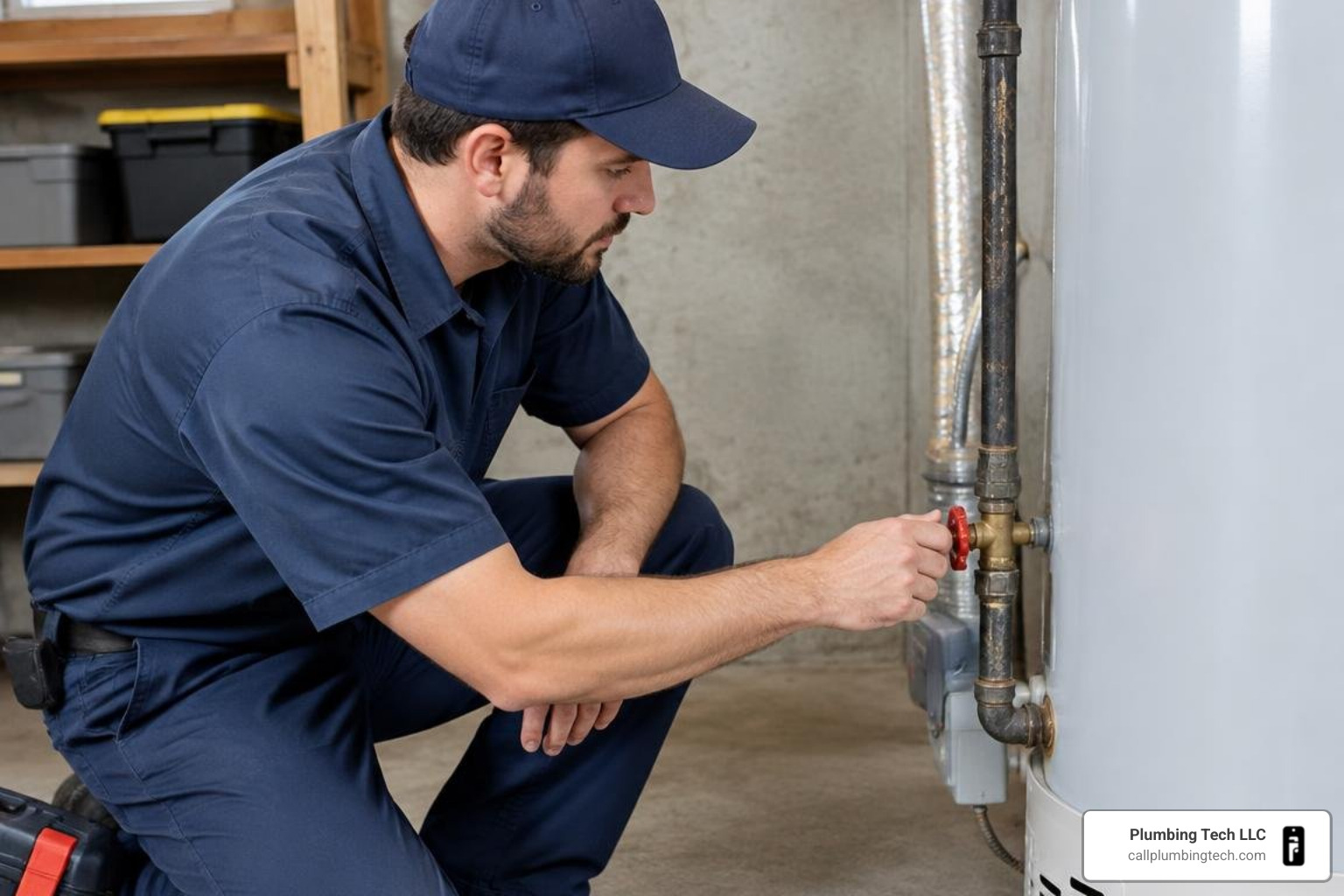
When a water heater bursts or leaks heavily, quick action is necessary to protect your flooring, walls, and personal property from water damage.
Immediate Steps for Leaking or Overflowing Tanks
If you discover water flooding out of your system, follow this step-by-step emergency protocol immediately:
- Shut off the water supply: Locate the cold water isolation valve on the pipe entering the top or side of your tank. Turn the wheel clockwise or pull the lever perpendicular to the pipe to stop incoming water. If the valve is stuck or leaking, shut off your home’s main water supply valve.
- Turn off the power or gas:
- For electric systems: Go to your electrical breaker panel and switch off the dedicated circuit breaker labeled for the water heater.
- For gas systems: Locate the gas control dial on the front of the unit and turn it to the OFF position. You can also close the manual gas shut-off valve on the supply line.
- Open a hot tap: Open a hot water faucet in a sink or bathtub on a lower level of your home. This relieves internal pressure and prevents a vacuum from forming as the tank empties.
- Connect a garden hose (if safe): If the tank is actively flooding your floor, screw a standard garden hose onto the brass drain valve at the bottom of the cylinder and run the other end to a floor drain or outdoors. Carefully open the drain valve using a flathead screwdriver or handle.
- Call for professional help: Once the system is secured and the leak is contained, contact our emergency plumbing services team for rapid dispatch and repair.
Schedule Regular Hot Water Service and Maintenance
You do not have to wait for an emergency to care for your water heater. Routine maintenance is the single most effective way to extend your system’s operating lifespan and maintain peak energy efficiency.
Major manufacturers recommend having your hot water equipment professionally inspected every 3 to 5 years. During a standard maintenance visit, a technician will:
- Inspect and replace the sacrificial anode rod (which attracts corrosive minerals to protect the tank walls)
- Flush accumulated sediment and mineral scale from the bottom of the cylinder
- Test the temperature and pressure relief (TPR) valve for proper operation
- Check electrical connections, heating elements, and thermostat calibration
- Inspect gas burners, pilot assemblies, and flue ventilation for safe combustion
Staying on top of this basic schedule keeps your system running smoothly and prevents surprise breakdowns. If your unit is due for an inspection, you can easily contact us to book a comprehensive maintenance check.
Frequently Asked Questions About Water Heater Maintenance
How long does a standard water heater system last?
On average, standard mild steel storage tank water heaters last between 10 and 15 years. Their lifespan depends heavily on incoming water quality, regular maintenance, and whether the sacrificial anode rod is replaced when depleted. High-grade stainless steel storage tanks resist corrosion much better and can last up to 25 or 30 years, while tankless systems regularly deliver reliable service for 20 years or more with routine descaling.
What is the most energy-efficient hot water system available?
Heat pump hot water systems are currently the most energy-efficient option available for residential use. Because they transfer heat from the surrounding air into the water rather than generating heat directly through electric resistance elements, they use up to 70% to 75% less electricity than traditional electric water heaters. Continuous flow tankless systems are also highly efficient because they eliminate standby energy losses completely.
How much does a standard water heater repair usually cost?
The cost of repairing a water heater depends on the specific component that has failed and the age of the unit. Routine repairs, such as replacing a faulty upper or lower heating element, swapping out a broken thermostat, or replacing a leaking temperature and pressure relief valve, are straightforward and economical fixes. More complex repairs involving gas control valves, electronic circuit boards, or extensive pipework modifications require more labor and specialized parts. A reputable technician will always provide a fixed, upfront quote before beginning work.
Conclusion
Choosing the right system and maintaining it properly ensures your home enjoys dependable comfort, lower utility bills, and steady hot water year-round. By assessing your household demand, watching for early warning signs of wear, and staying on top of routine anode rod checks and flushes, you can maximize your equipment’s lifespan and avoid costly emergency replacements.
At Plumbing Tech LLC, we bring over 25 years of combined industry experience to every job across Greater Cleveland, including Strongsville and Richfield, OH. As a veteran-owned company and certified backflow specialist, we pride ourselves on transparent communication, modern diagnostic technology, and a 100% satisfaction guarantee on all residential and commercial jobs.
Whether you need a quick diagnostic repair, routine maintenance, or a high-efficiency system upgrade, reach out to schedule our expert water heater services today and let our team keep your hot water flowing reliably.