How to Compare Gas Water Heaters for Your Home
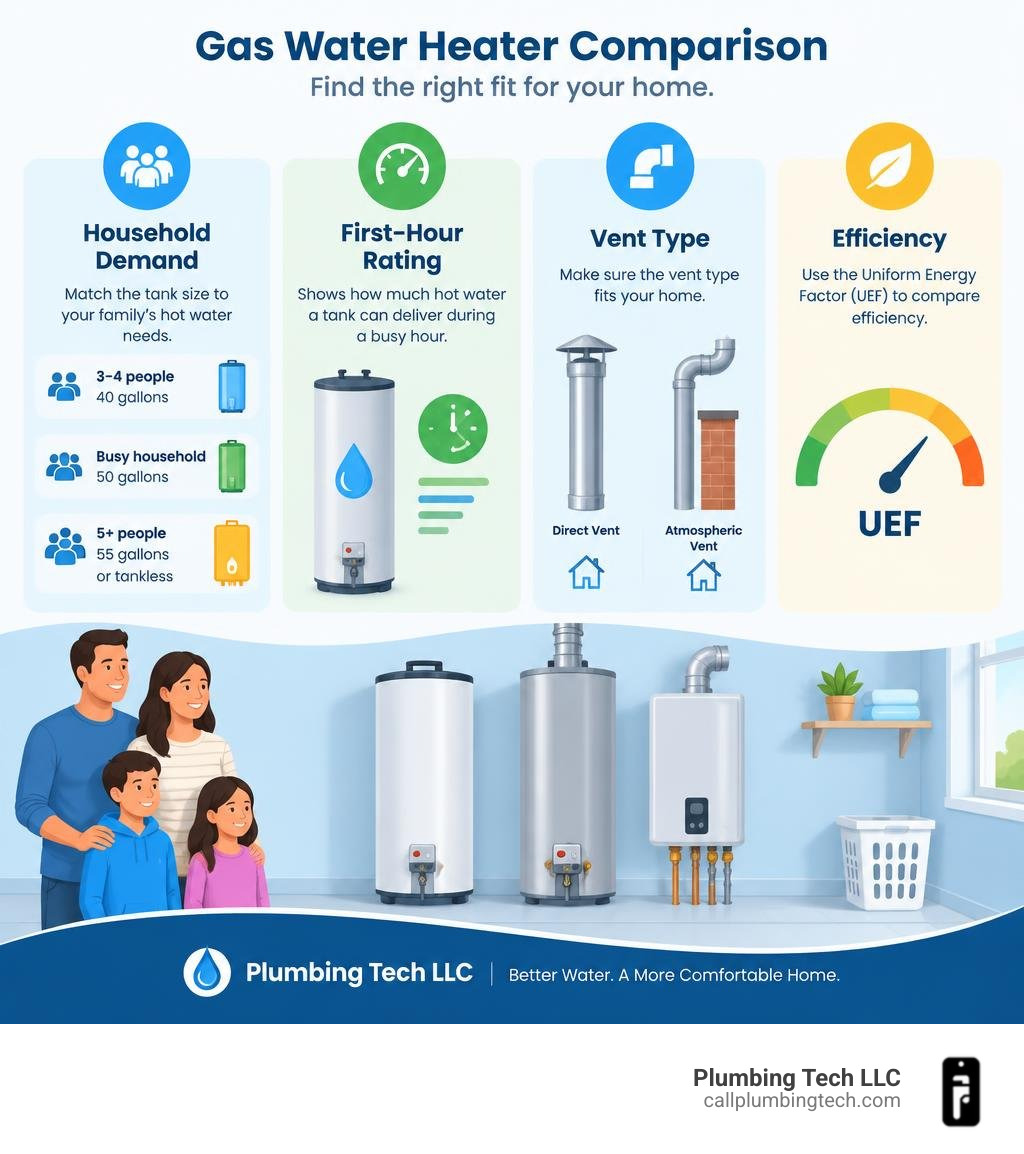
Start with how much hot water your home needs at once. A 40-gallon gas water heater often suits three to four people. A 50-gallon tank gives a busy household more room for back-to-back showers and laundry. For five or more people, consider a 55-gallon tank or a tankless model sized for the fixtures you use together.
Then compare the first-hour rating, not just tank size. It tells you how much hot water a tank model can deliver during a busy hour. Check that the vent type fits your home, and use the Uniform Energy Factor (UEF) to compare efficiency. For Greater Cleveland homeowners replacing a failed unit, those details can help narrow the choice before installation.
How to Choose the Right Gas Water Heater for Your Home
Finding the right system means matching your daily routine with proper mechanical capacity. When you replace a unit, look beyond the dimensions of the old tank in your basement. Evaluating capacity, physical layout, and fuel supply ensures your home stays comfortable without wasting energy.
Tank models come in sizes ranging from 30 gallons up to 55 gallons or more. In addition to volume, consider the physical shape of the unit:
- Tall configurations: Standard tall tanks fit easily into open basements or dedicated utility rooms where vertical clearance is plentiful.
- Short configurations: Lowboy or short tanks are wider and work well in crawl spaces, under stairwells, or beneath low ceiling joists.
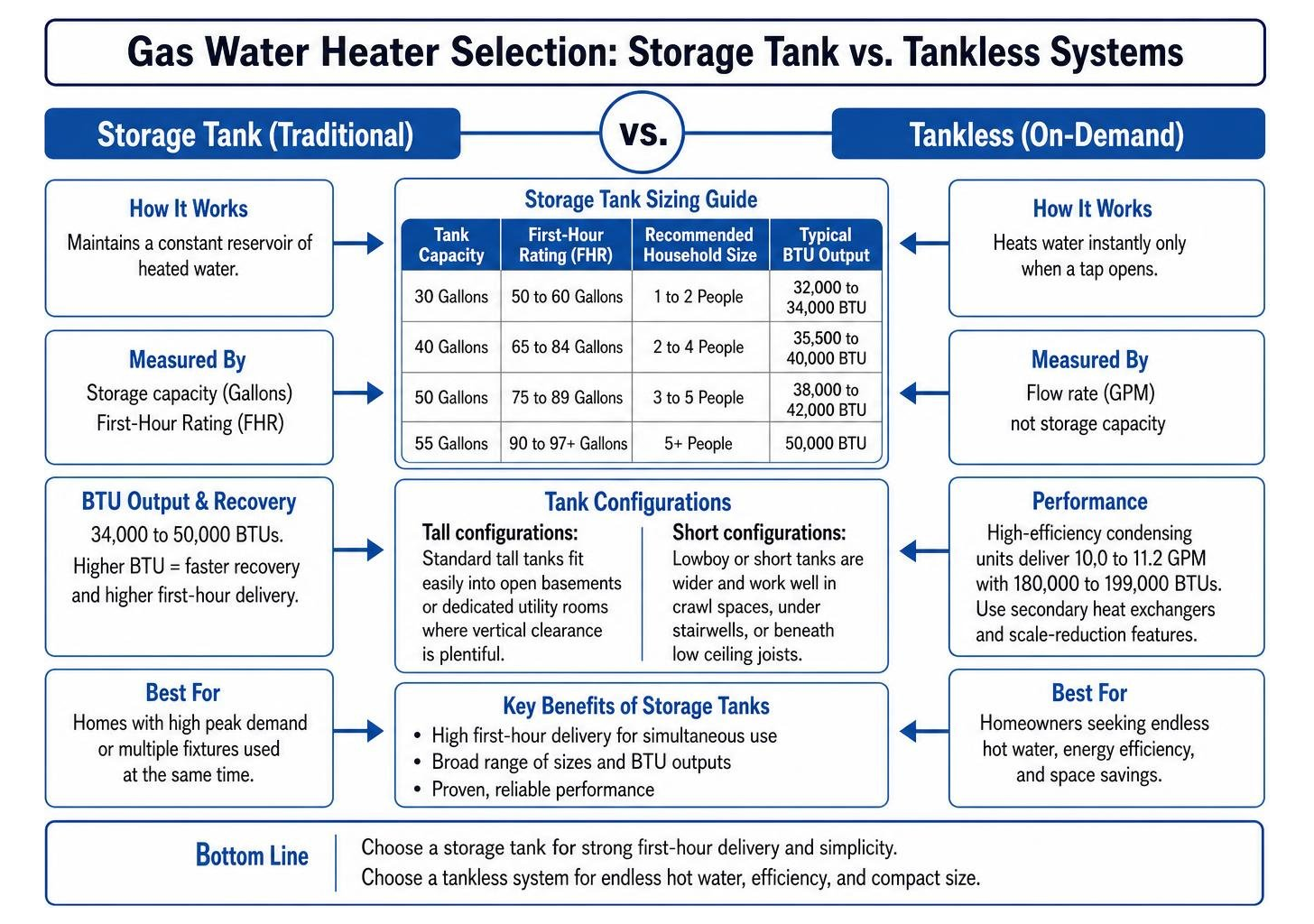
| Tank Capacity | First-Hour Rating (FHR) | Recommended Household Size | Typical BTU Output |
|---|---|---|---|
| 30 Gallons | 50 to 60 Gallons | 1 to 2 People | 32,000 to 34,000 BTU |
| 40 Gallons | 65 to 84 Gallons | 2 to 4 People | 35,500 to 40,000 BTU |
| 50 Gallons | 75 to 89 Gallons | 3 to 5 People | 38,000 to 42,000 BTU |
| 55 Gallons | 90 to 97+ Gallons | 5+ People | 50,000 BTU |
Checking national standards such as the Department of Energy guidance on energy-efficient residential water heaters can help you identify models that balance capacity with lower operational waste.
Sizing Storage Tanks by Household Demand
The true measure of a tank’s capacity is its First-Hour Delivery (FHD), also known as the First-Hour Rating. This metric measures the total gallons of usable hot water the unit can supply in a single hour of peak demand, starting with a fully heated tank.
If your home has two showers running while the dishwasher runs in the morning, high peak output is essential. Standard 40-gallon natural gas models provide roughly 68 gallons in that first hour. This volume comfortably covers moderate simultaneous use for standard single-family homes.
Evaluating BTU Output and Recovery Rates
British Thermal Units (BTU) indicate the heat output of the gas burner. A higher BTU rating allows the system to heat incoming cold water faster, which directly speeds up its recovery rate.
Standard residential storage water heaters operate between 34,000 and 50,000 BTUs. When multiple family members take back-to-back showers, high-output 55-gallon units running at 50,000 BTUs replenish hot water rapidly. They deliver up to 97 gallons in the first hour, keeping temperature drops to a minimum.
Tank vs. Tankless Gas Systems: Performance and Longevity
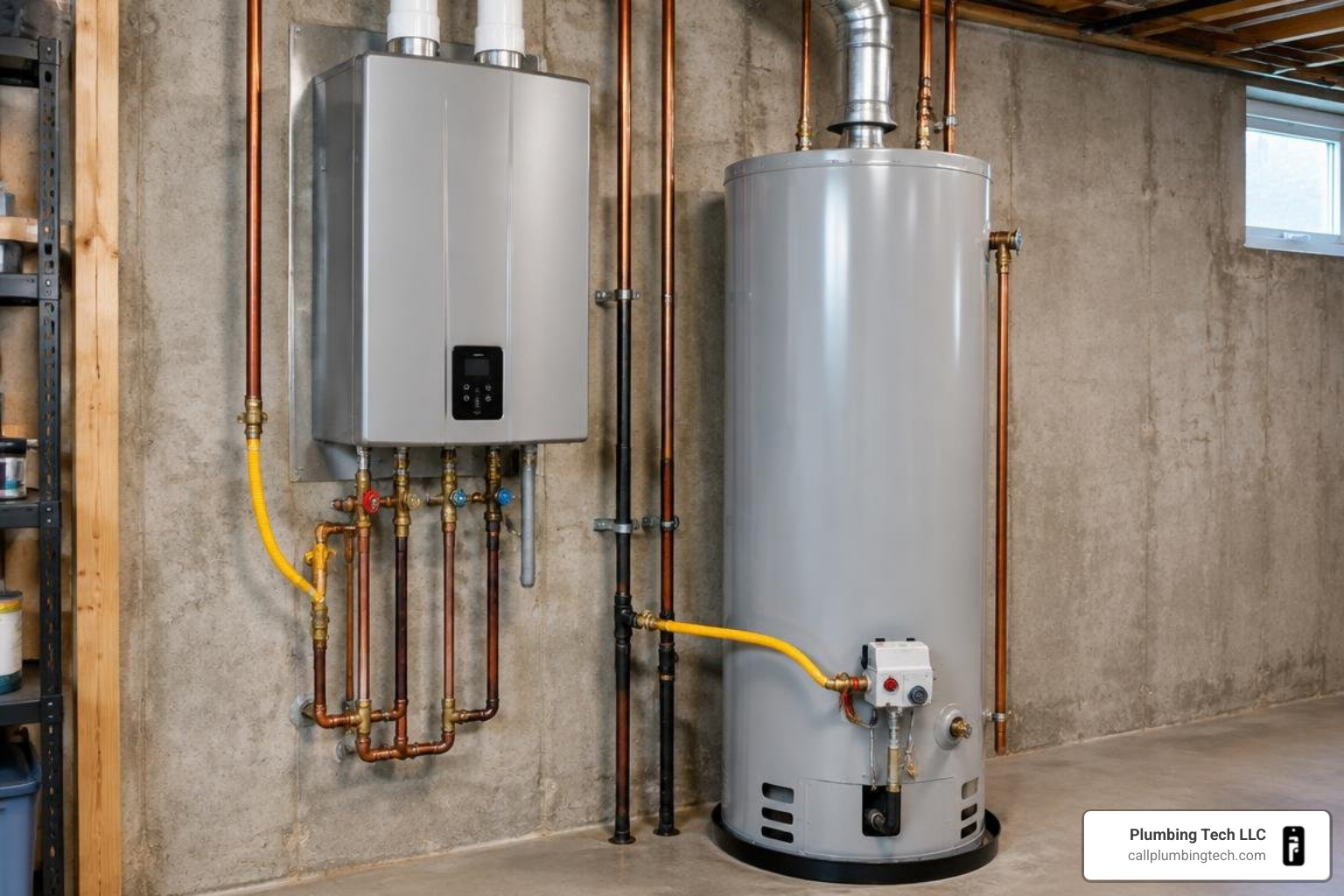
Choosing between storage tanks and on-demand systems comes down to lifestyle preferences, space availability, and long-term efficiency goals. Traditional tanks maintain a constant reservoir of heated water, which creates minor standby heat loss. In contrast, many homeowners enjoy transitioning to a continuous water heater because it heats water instantly only when a tap opens.
Flow Rate (GPM) vs. Storage Capacity
Tankless performance is measured in Gallons Per Minute (GPM) rather than total stored volume. Sizing depends on the temperature of incoming groundwater and the total flow rate of fixtures operating simultaneously.
High-efficiency condensing tankless units deliver between 10.0 and 11.2 GPM using powerful burners rated from 180,000 to 199,000 BTUs. These systems use secondary heat exchangers to capture residual warmth from exhaust gases, and many incorporate scale-reduction features to protect against hard water buildup.
Warranty Tiers and Expected Lifespan
Manufacturer warranty lengths reflect the durability of internal parts:
- 3-Year to 6-Year Coverage: Standard entry-level tanks typically use polymer drain valves and standard sacrificial anode rods.
- 9-Year to 12-Year Coverage: Premium systems, such as 12-year warranty platinum models, feature heavy-duty commercial brass drain valves, upgraded internal glass linings, and oversized or dual anode rods for better corrosion defense.
Tank units generally last 8 to 12 years, while well-maintained tankless models can operate for 20 years or longer.
Venting Configurations and Energy Efficiency Standards
Every gas water heater creates combustion byproducts that must be safely exhausted outside your home. Choosing the right venting option depends on your floor plan, utility room airflow, and existing chimney setups.
| Venting Type | Exhaust Mechanism | Air Intake Source | Vent Material | Electrical Required? |
|---|---|---|---|---|
| Atmospheric Vent | Natural vertical convection chimney draft | Indoor room air | Metal B-Vent or masonry chimney | No |
| Direct Vent | Natural draft through dual-chamber pipes | Outside air directly | Coaxial concentric metal pipe | No |
| Power Vent | Motorized mechanical blower fan | Indoor room air | Solid PVC, CPVC, or Polypropylene | Yes (120V outlet) |
Atmospheric, Direct Vent, and Power Vent Configurations
Atmospheric venting relies on hot air rising naturally through a vertical chimney or B-vent duct. These systems operate quietly and continue working during electrical power outages because they require no motorized blowers.
When outdoor chimney access is unavailable or indoor air is limited, direct vent gas models pull fresh combustion air directly from outside through a concentric coaxial pipe while pushing exhaust outdoors. Power vent systems use an electric fan to push exhaust gases horizontally through side walls using PVC piping, offering great placement flexibility for finished basements.
Efficiency Ratings, Low NOx, and Regional Emissions Compliance
Modern efficiency is measured using the Uniform Energy Factor (UEF). Higher UEF ratings indicate lower energy waste per gallon heated. Standard atmospheric tanks average between 0.58 and 0.65 UEF, while condensing tankless systems often exceed 0.90 UEF.
Modern units also incorporate crucial safety and environmental features:
- Flammable Vapor Ignition Resistance (FVIR): Sealed combustion chambers with flame arrestor plates prevent external flammable vapors from igniting.
- Low NOx and Ultra-Low NOx Burners: Advanced burner designs reduce nitrogen oxide emissions to comply with regional clean-air guidelines.
- Electronic Diagnostics: Push-button piezo igniters replace standing pilot flames, while LED diagnostic gas control valves simplify troubleshooting.
Gas Water Heater Operating Costs
Natural gas remains one of the most cost-effective residential heating fuels. Standard natural gas storage heaters cost significantly less to operate annually than standard electric resistance water heaters, saving homeowners money over time.
While high-efficiency heat pump water heaters offer exceptional electrical efficiency, upgrading an existing natural gas setup to a modern gas model avoids electrical panel upgrades. It also provides fast water recovery times during cold Northeast Ohio winters.
Installation Standards, Safety Codes, and Maintenance Troubleshooting
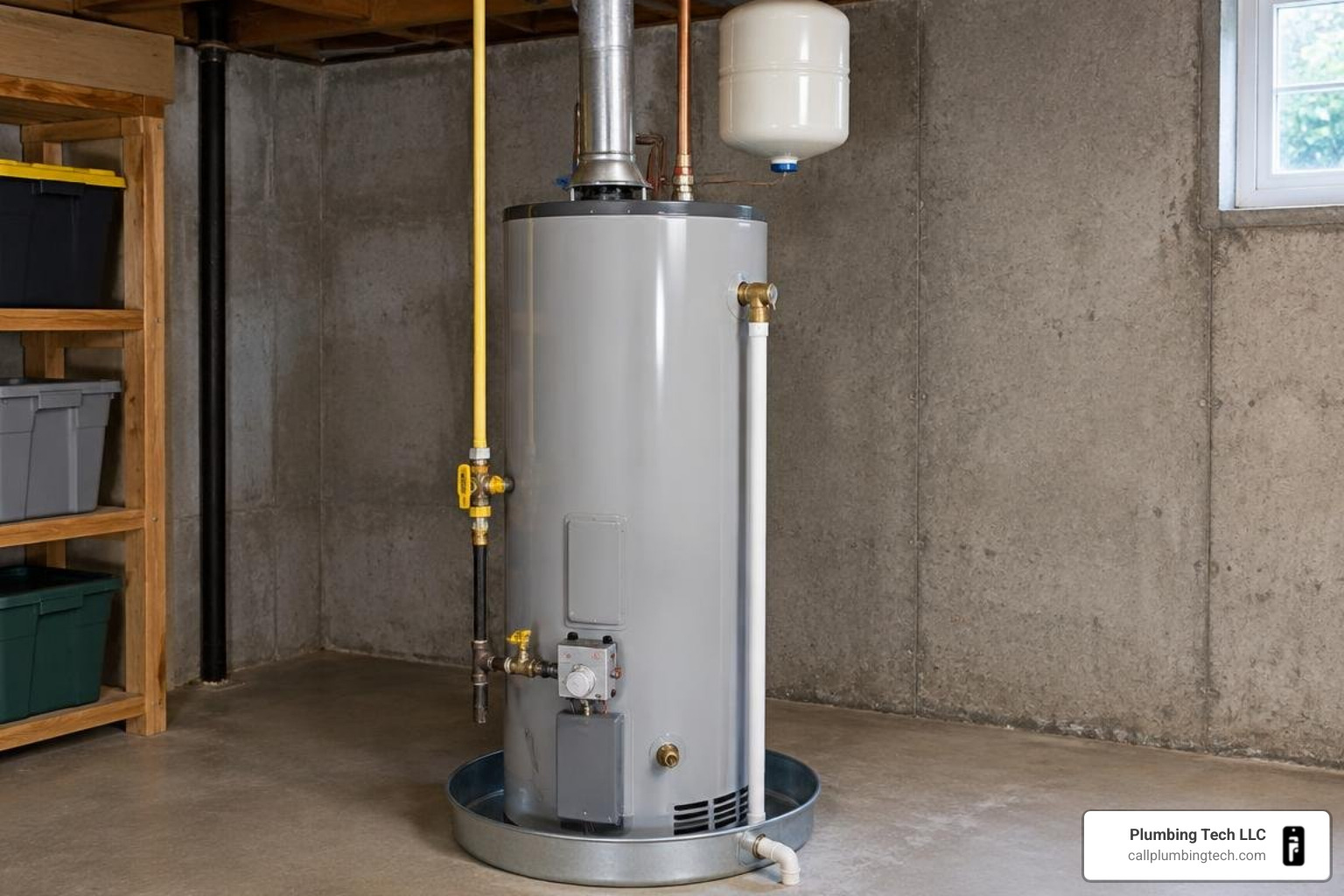
Safe installation requires following building codes and fuel gas regulations closely. Connecting fuel lines properly is critical, and you can learn about flexible vs rigid code requirements for appliance lines to ensure your installation meets safety standards.
Closed-loop plumbing systems require a 2.0-gallon thermal expansion tank above the heater to absorb water pressure spikes. Units installed inside living areas or over finished floors also need corrosion-proof drain pans with drain lines routed to an approved discharge point. If you smell gas or notice pipe damage, seek professional gas line repair immediately, and read our guide to gas connection repairs for vital safety advice.
Troubleshooting Pilot Lights, Burners, and Tank Leaks
When your hot water stops flowing, simple diagnostic steps often reveal the underlying cause:
- Pilot Outages: Review the steps for relighting standing pilot assemblies using modern push-button ignition controls.
- Pilot Won’t Stay Lit: A worn thermocouple or dirty intake screen may be cutting off the gas supply. In many cases, unclogging a pilot light orifice clears away soot and restores a stable flame.
- Water Leaks: If water pools beneath the unit, check whether it is coming from the temperature and pressure (T&P) relief valve or the tank base. A leaking inner tank shell cannot be patched and requires unit replacement.
- Sediment Build-Up: Flushing your tank annually removes mineral scale, prevents popping sounds, and preserves burner efficiency.
Frequently Asked Questions About Gas Water Heating
How many gallons should a gas water heater have for a family of four?
A 40-gallon or 50-gallon tank works well for a family of four. A 40-gallon model rated at 36,000 to 40,000 BTUs provides sufficient hot water for staggered routines, while a 50-gallon tank accommodates simultaneous morning showers and laundry cycles.
Why does my gas water heater keep losing its pilot light?
Common causes include a failing thermocouple, a clogged pilot orifice, a dirty flame arrestor screen, or chimney backdrafts blowing out the small flame.
What is the average installation cost for a replacement unit?
Installation costs depend on venting modifications, gas supply line adjustments, expansion tank additions, and local permit requirements. For seamless project management, our team delivers complete residential plumbing services customized to your home.
Conclusion
Choosing the right water heater comes down to balancing fuel efficiency, tank storage capacity, recovery rates, and venting options. Whether you need a space-saving direct vent model, a reliable 50-gallon storage tank, or a high-output tankless system, selecting the proper setup ensures consistent comfort for your home.
Plumbing Tech LLC is a veteran-owned company with over 25 years of combined experience. We serve homeowners across Greater Cleveland, including Strongsville and Richfield, with modern tools and a 100% satisfaction guarantee. When you are ready to upgrade your hot water system, turn to us for expert water heater repair and installation you can trust.