How to Compare Water Heater Installation Quotes
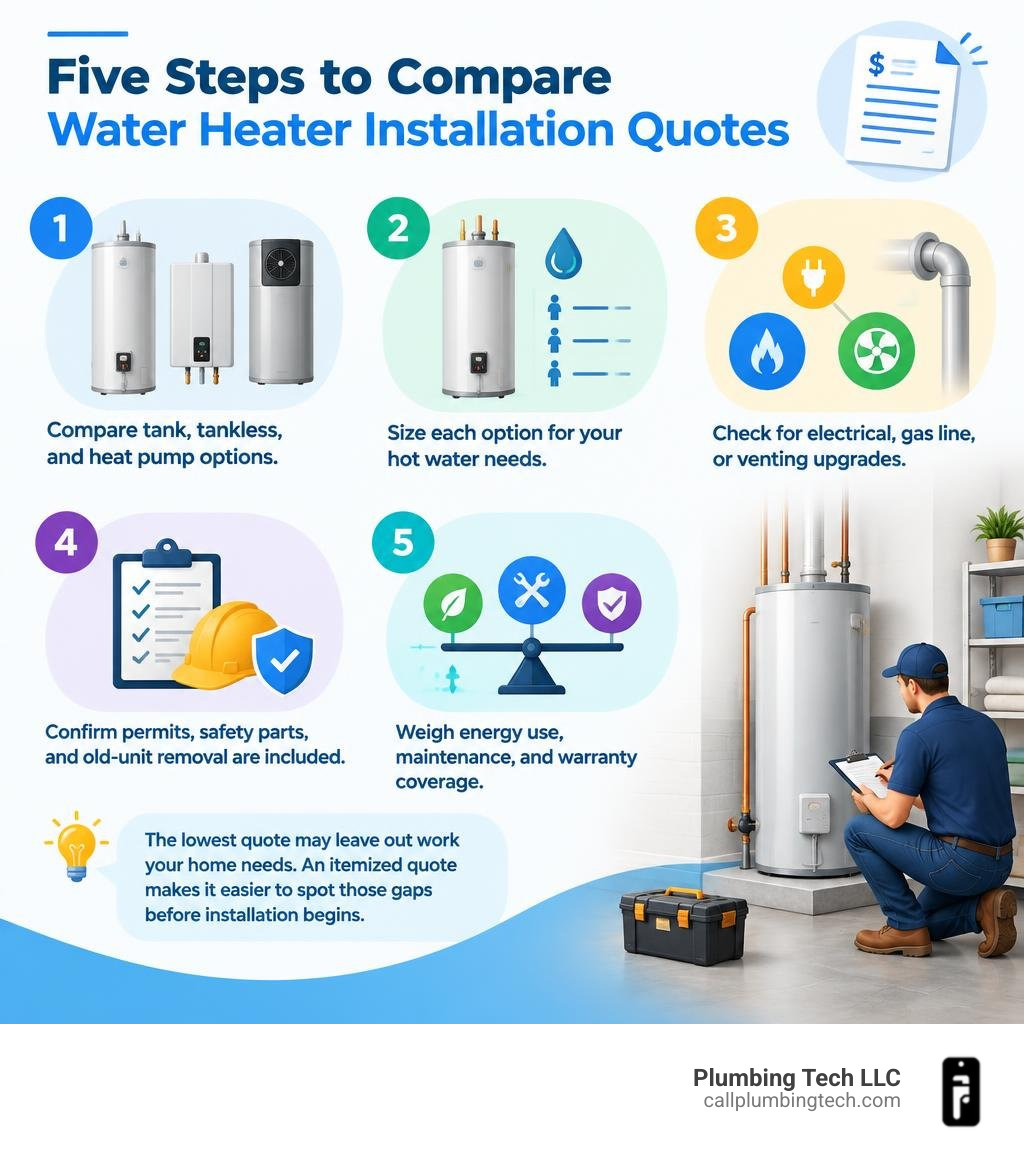
To compare water heater installation quotes, ask each installer to price the same type and size of heater, then check what each quote includes:
- Compare tank, tankless, and heat pump options.
- Size each option for your hot water needs.
- Check for electrical, gas line, or venting upgrades.
- Confirm permits, safety parts, and old-unit removal are included.
- Weigh energy use, maintenance, and warranty coverage.
The lowest quote may leave out work your home needs. An itemized quote makes it easier to spot those gaps before installation begins.
Key Factors Influencing Water Heater Installation Estimates
When evaluating contractor bids, looking solely at the bottom-line number can be misleading. A comprehensive quote accounts for physical equipment, labor hours, site preparation, municipal permitting, and disposal fees.
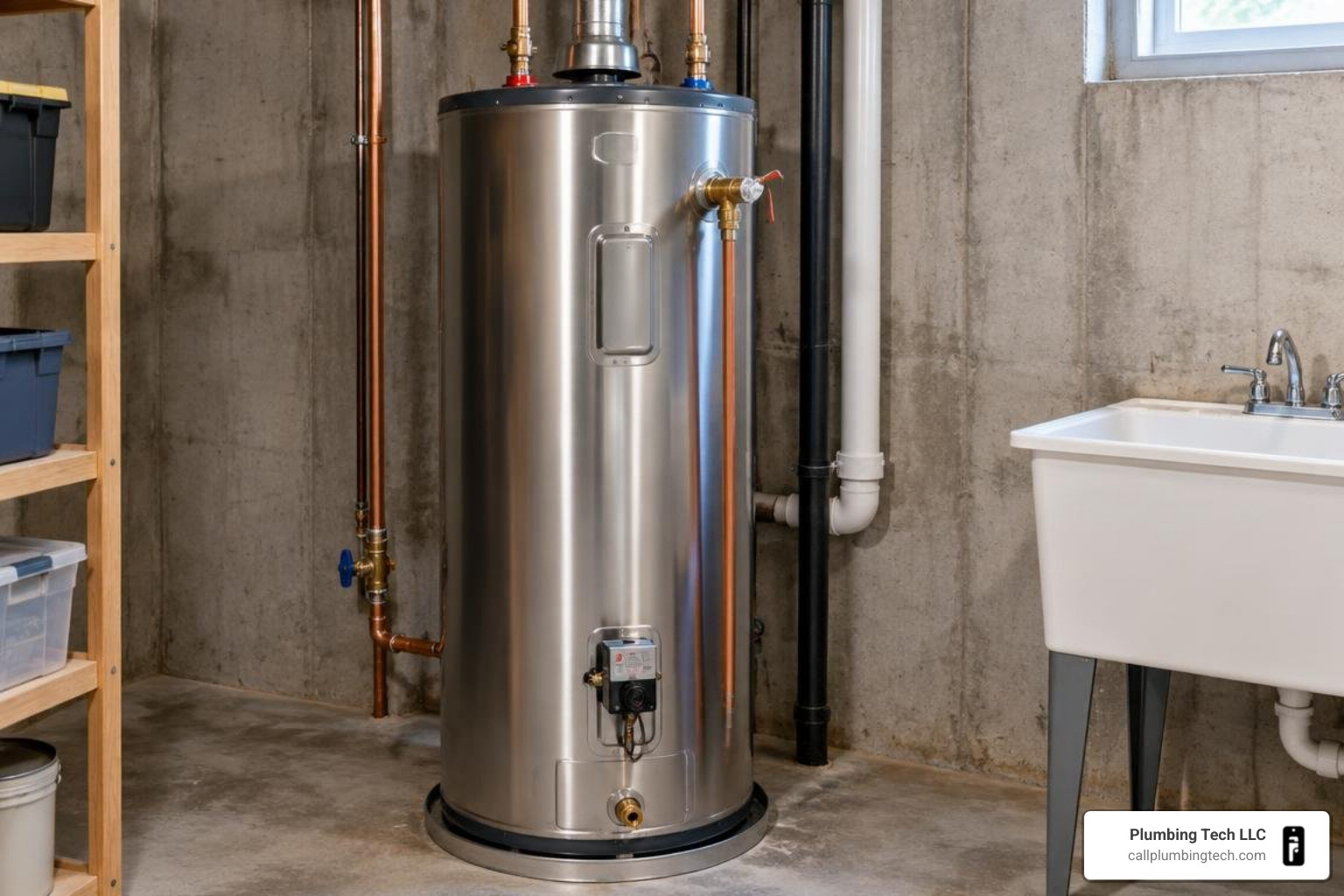
Every home layout is unique. A direct replacement in an open basement requires far less labor than relocating plumbing lines into a finished utility closet. To truly understand what you are paying for, break down your quotes into these five straightforward steps.
Step 1: Compare System Types and Energy Efficiency
The fundamental design of your water heater establishes both your initial purchase price and your monthly utility costs. Traditional tank models store hot water continuously, which leads to standby heat loss as heat escapes through the tank walls. Tankless systems heat water on demand, eliminating standby loss entirely, while hybrid heat pumps pull ambient warmth from surrounding air to heat the water at high efficiency.
If you are thinking about upgrading your equipment, you can explore continuous water heater options to see how on-demand heating compares to conventional storage.
| System Type | Typical Lifespan | Energy Efficiency Feature | Best Suited For |
|---|---|---|---|
| Standard Storage Tank | 8 to 12 years | Baseline efficiency, subject to standby heat loss | Lower upfront budgets, straightforward swaps |
| Tankless (On-Demand) | 15 to 20+ years | Heats only during active water draw | High continuous demand, compact spaces |
| Hybrid Heat Pump | 10 to 15 years | Pulls ambient heat into the storage vessel | Maximizing electricity savings in unconfined areas |
Step 2: Calculate Sizing and Hot Water Demand
Comparing bids requires ensuring every contractor sized the equipment to match your household peak consumption. Sizing a storage unit depends on its first-hour rating, which measures how many gallons of hot water the unit can supply in a busy morning hour. For instance, a family of four typically needs a 50-gallon tank to support simultaneous routines.
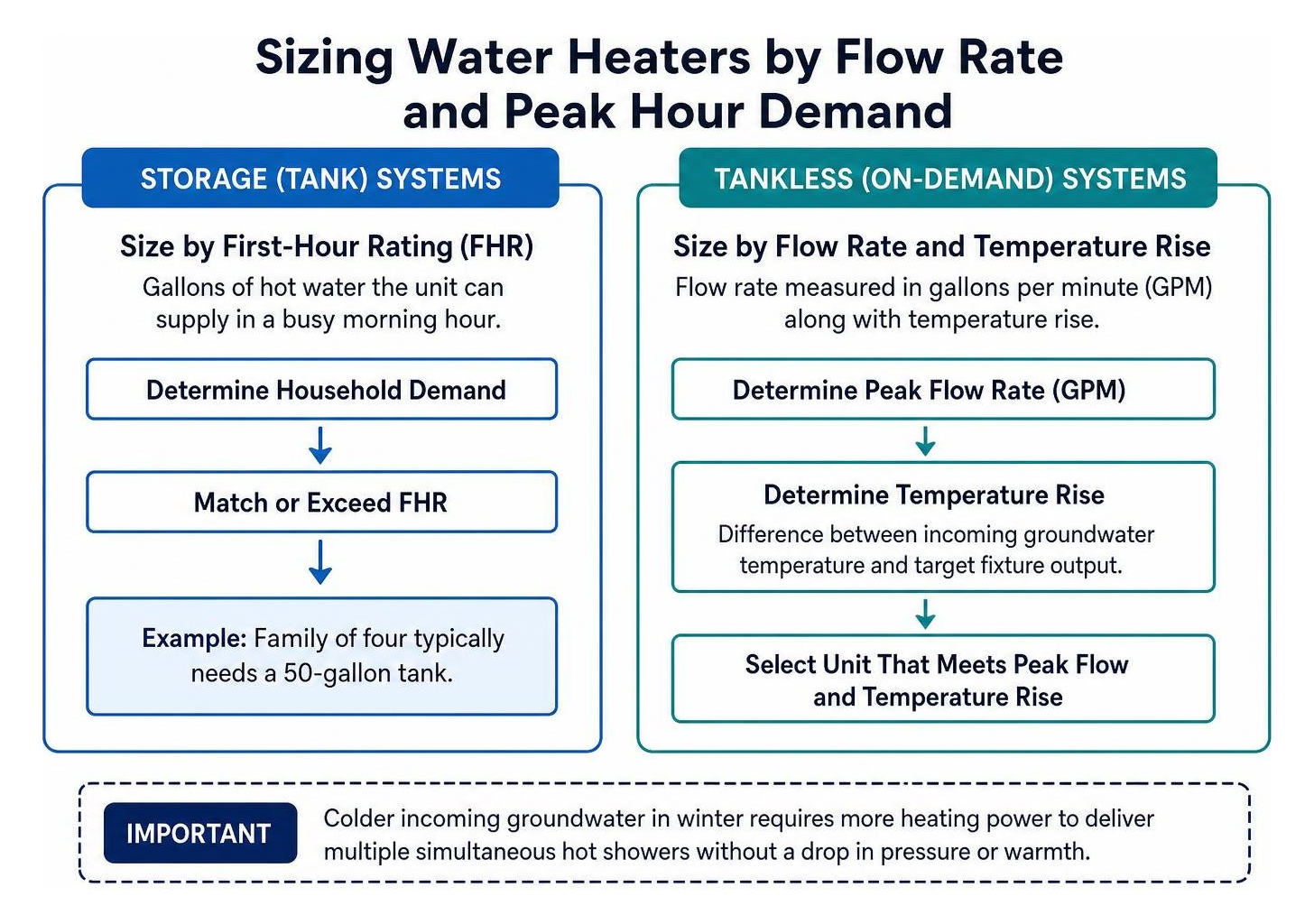
For on-demand systems, sizing depends on flow rate measured in gallons per minute (GPM) along with temperature rise. Temperature rise is the difference between incoming groundwater temperature and your target fixture output. If your incoming groundwater is cold during winter months, your system needs significantly more heating power to deliver multiple simultaneous hot showers without a drop in pressure or warmth.
Step 3: Account for Fuel Lines, Electrical, and Venting Upgrades
A common reason one estimate looks higher than another is required infrastructure work. Transitioning from an older tank to a high-capacity gas tankless unit often requires upgrading your gas supply. While a standard 50-gallon gas tank unit is rated for roughly 40,000 BTUs, a whole-home tankless unit often demands between 150,000 and 199,000 BTUs. That spike in fuel volume may require installing larger-diameter piping. When adjusting your fuel supply, utilizing comprehensive gas line services ensures proper sizing and safe fuel delivery.
Electric systems also require careful electrical assessment. Traditional electric tank heaters typically run on a 30-amp, 240-volt circuit using 10-gauge wire. Electric tankless systems draw substantial instantaneous amperage, often needing multiple dedicated double-pole breakers and heavy 6-gauge or 8-gauge wiring. Ensure all electrical quotes factor in appropriate conduit routing and panel capacity.
Step 4: Evaluate Material Upgrades and Code Compliance Expenses
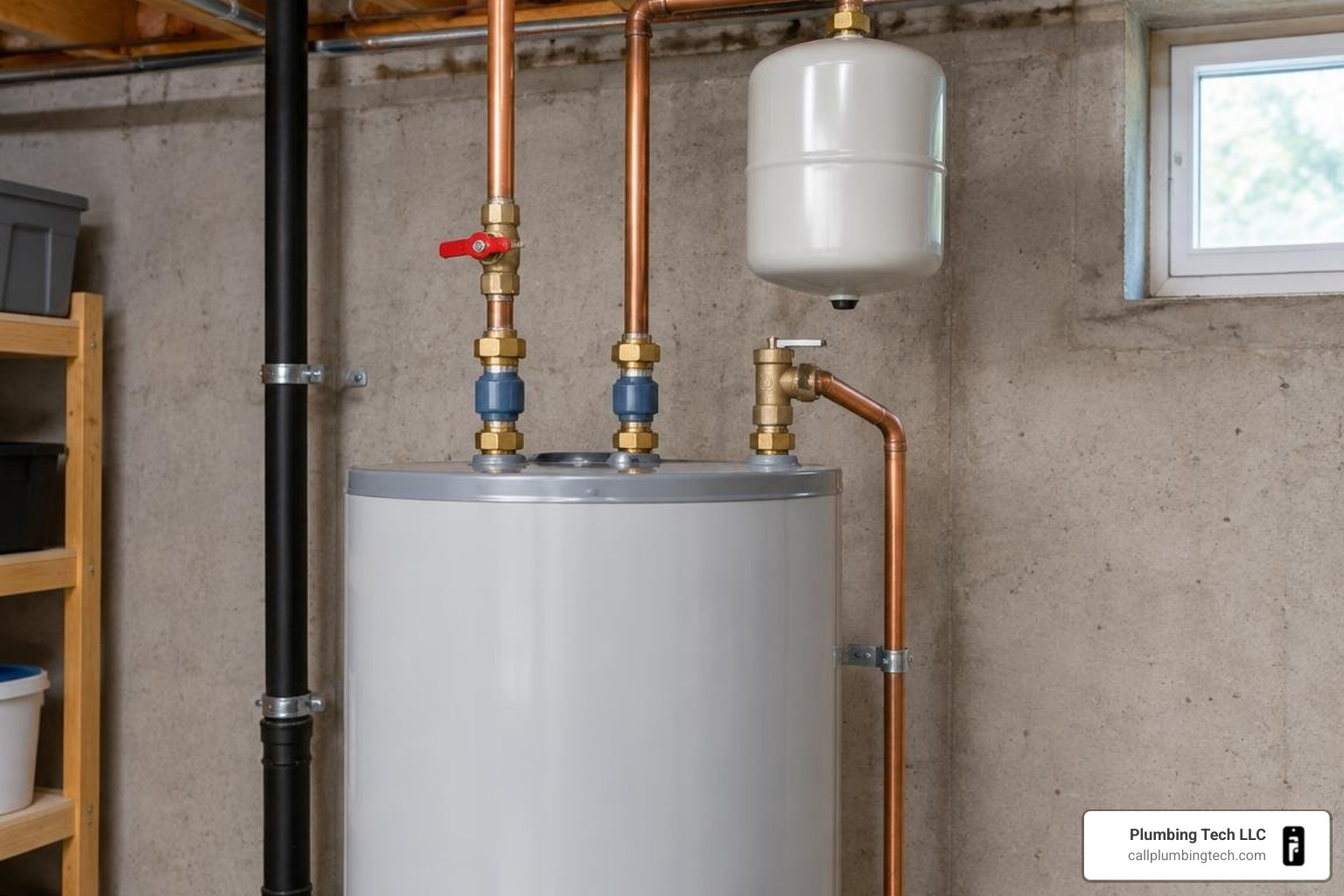
A quality quote includes all auxiliary plumbing hardware required by modern safety codes. Connecting copper pipes directly to a steel tank causes galvanic corrosion, so your installer must use dielectric unions or brass transitions. Additionally, closed-loop plumbing systems require a thermal expansion tank to absorb pressure spikes that occur when water expands during heating.
Installers must also follow official municipal installation guidelines to ensure the unit passes inspection. These rules dictate proper shutoff valve placement, approved CPVC or copper drain lines, and safety relief lines that protect your home from pressure overloads.
Step 5: Factor in Operational Lifespan and Maintenance Costs
Operating expenses should factor heavily into your purchasing decision. While tank models cost less upfront, their shorter lifespan means you will replace them sooner. Tankless units last 20 years or more with routine care but require annual descaling to remove mineral buildup from heat exchangers.
Scheduling preventative residential plumbing services keeps your tank flushed of sediment and your anode rod functional, protecting your investment for years to come.
Technical Safety and Code Standards for New Units
Plumbing codes protect your property and personal safety. Bypassing safety components or taking installation shortcuts can lead to premature tank failure, electrical hazards, or catastrophic water damage.
Tank vs. Tankless Water Heater Installation Considerations
Choosing between tank and tankless configurations involves evaluating physical space, venting pathways, and electrical delivery. Tankless units mount securely to wall studs, freeing up valuable floor space, but require specialized venting materials to handle acidic exhaust condensation safely.
Operating temperatures also demand attention. Setting your storage tank to 140 degrees Fahrenheit eliminates bacteria such as legionella, but water at that temperature can cause severe burns within seconds. Installing a thermostatic mixing valve tempers the water at the outlet down to a safe 120 degrees Fahrenheit while effectively increasing your usable hot water capacity by 10 to 15 gallons. To keep your system safe and efficient, review proper water heater thermostat settings before making final adjustments.
Essential Safety Steps, Relief Valves, and Code Compliance
Every water heater must include a certified Temperature and Pressure (T&P) relief valve. This valve acts as an emergency safeguard by releasing water if temperatures climb past 210 degrees Fahrenheit or internal pressure exceeds 150 psi.
Never restrict or plug this valve. The discharge line must be constructed from copper, CPVC, or PEX rated for high temperatures, maintaining a continuous downward slope that terminates within 6 inches of a floor drain. Always consult manufacturer installation and safety manuals to confirm model-specific clearance and venting requirements.
Water damage from an overflowing or cracked water heater is costly. Placing an EPDM or polypropylene drain pan beneath your storage unit gives you crucial protection. Ensure the pan is at least 2 inches wider than the heater diameter and piped directly toward an approved drain.
Labor Breakdown and Professional Execution
When you receive an estimate, labor covers more than just setting the heater in place. Professional execution ensures complete adherence to local plumbing and electrical codes, proper system startup, and manufacturer warranty validation.
Professional vs. DIY Water Heater Installation Cost Breakdown
Taking on a water heater replacement yourself might look like a way to save on labor, but hidden expenses add up fast. DIY projects require purchasing specialty tools such as pipe cutters, torque wrenches, and conduit benders, while carrying significant risk if connections leak.
| Factor | Professional Installation | DIY Installation |
|---|---|---|
| Equipment Warranty | Fully protected and registered | Risk of voiding warranty if uncertified |
| Permitting & Inspections | Handled directly by licensed contractor | Homeowner assumes full liability |
| Water Damage Risk | Insured, backed by workmanship guarantee | Homeowner pays out-of-pocket for leaks |
| Safety & Gas Verification | Verified with combustion and pressure tools | High risk of hidden gas or electrical faults |
| Time Investment | Typically completed in 2 to 4 hours | Often requires 1 to 2 full days |
A licensed plumber completes a standard tank installation in 2 to 4 hours, whereas a complex tankless conversion takes between 4 and 6 hours.
Filling, Purging, and Post-Installation Verification
One critical mistake made during amateur electric installations is powering on the unit before the tank is completely full. When electric heating elements are energized in an empty or partially filled tank, they burn out within seconds, an issue known as dry fire.
To complete a safe installation:
- Keep the electrical breaker turned completely off.
- Open cold water supply valves and let the tank fill.
- Open the highest hot water faucet in your home for 3 full minutes to purge trapped air from the lines.
- Inspect all plumbing joints and compression fittings for leaks.
- Restore electrical power only after water flows in a steady stream without sputtering.
If an unexpected leak or pressure fault develops during an installation, calling for 24/7 emergency plumbing response ensures the problem is resolved before water damages your home.
Frequently Asked Questions About Home Water Heating
How long does a typical installation take?
A direct, like-for-like storage tank replacement usually takes a licensed professional between 2 and 4 hours. If you are retrofitting from a standard tank to a wall-mounted tankless unit, the job generally takes 4 to 6 hours due to mounting, gas line resizing, and new exterior vent penetrations.
Why is my installation estimate higher than the unit’s retail price?
Retail store tags show only the base price of the bare heater. A complete professional installation estimate includes delivery, removal and disposal of the heavy old tank, permit fees, new copper lines, safety valves, expansion tanks, and skilled labor backed by insurance and warranties.
What size water heater does a typical household require?
A home with 3 to 4 residents typically requires a 50-gallon storage tank or a tankless unit capable of delivering 4 to 5 gallons per minute (GPM) of continuous flow. Sizing should always be adjusted upward if you have high-flow fixtures such as oversized soaking tubs or multi-head walk-in showers.
Conclusion
Choosing the right bid is about finding the greatest long-term value, not just the lowest initial price tag. By comparing equipment types, confirming infrastructure upgrades, and verifying code compliance, you protect your home against unexpected breakdowns and property damage.
At Plumbing Tech LLC, our veteran-owned team brings over 25 years of combined experience to homeowners across Greater Cleveland, including Strongsville and Richfield, OH. We back every project with modern technology and a 100% satisfaction guarantee. When you are ready to upgrade your hot water system, turn to our team for expert water heater repair and installation you can rely on.