How to Stop a Humming Garbage Disposal
A garbage disposal humming instead of grinding is often jammed. Turn it off right away so the stalled motor does not overheat. Unplug the unit or switch off its breaker before looking inside. Remove any visible object with tongs, never your fingers. Then use a hex wrench in the socket underneath the unit to move the grinding plate back and forth.
If the disposal stopped after humming, let it cool before pressing its reset button. Restore power and test it with cold water. If it still hums, leaks, or trips again, stop using it and call a plumber.
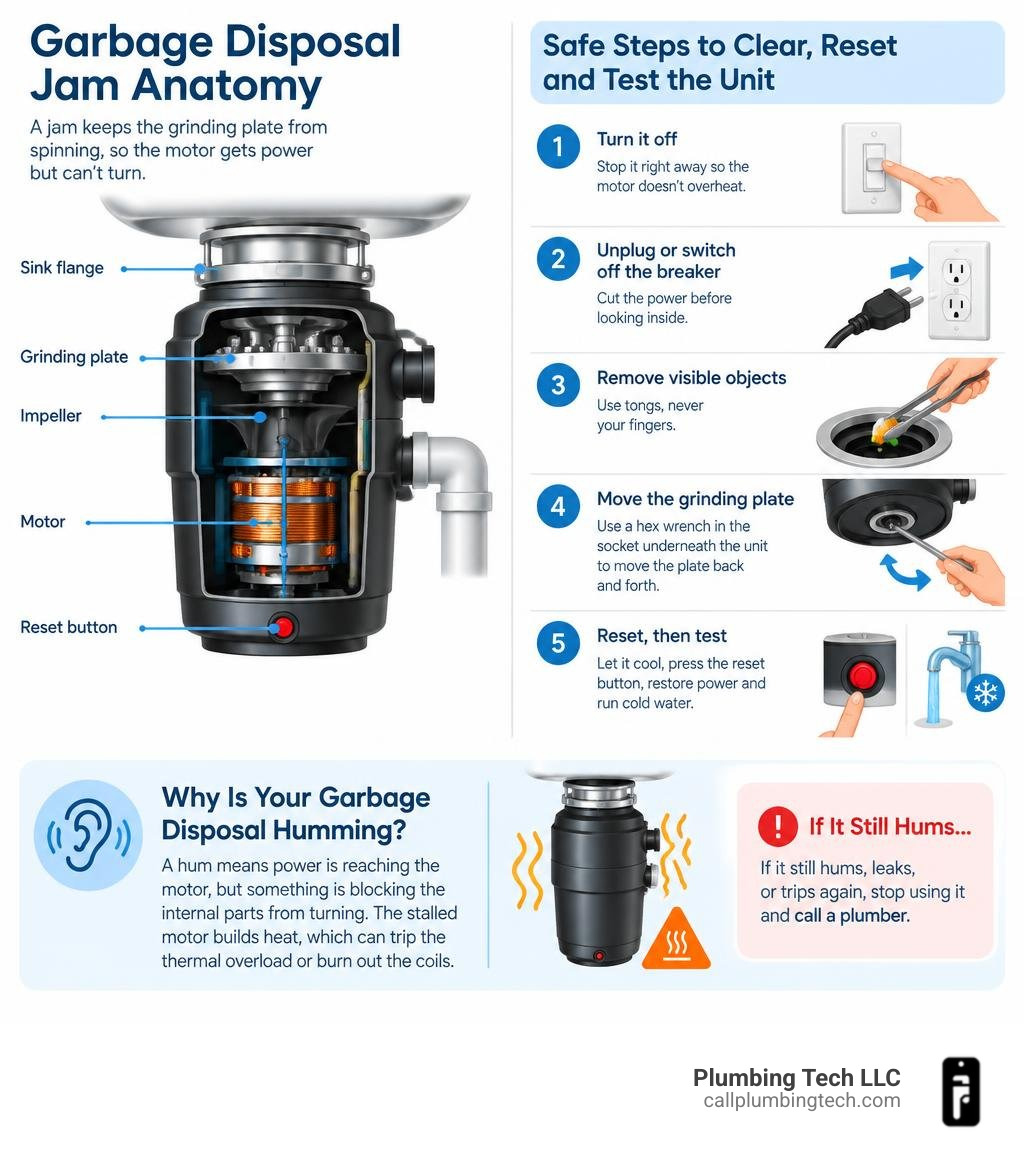
Why Is Your Garbage Disposal Humming?
When you flip the wall switch, you expect the familiar roar of shredded food scraps heading down the drain. Instead, you hear a low, steady drone. That hum tells us electrical power is reaching the motor windings, but something is preventing the internal components from rotating.
Because the motor receives electricity without turning, that trapped energy converts directly into heat. Left running, a stalled motor will trip its internal thermal overload protector or permanently burn out its electrical coils.
| Disposal Symptom | Mechanical Cause | Likeliest Solution |
|---|---|---|
| Low humming, no spinning | Jammed flywheel or shredder plate | Manual rotation via hex wrench |
| Humming, then sudden silence | Motor overheated and tripped reset | Cool-down period, then press reset button |
| High-pitched squeal or screech | Seized or worn motor bearings | Motor replacement or unit replacement |
| Complete silence (no sound at all) | Tripped breaker, wall switch, or GFCI | Reset electrical circuit or GFCI outlet |
| Humming with standing water | Downstream clog in P-trap or drainline | Drain clearing and manual jam release |
Foreign Object and Food Obstructions
The most frequent culprit behind a humming unit is physical debris wedged between the rotating impeller plate and the stationary grind ring. Modern garbage disposals do not have razor-sharp blades like a blender. Instead, they use small impellers mounted on a spinning plate that throw food against a stationary shredder ring.
Hard objects like fruit pits, beef bones, seafood shells, or dropped metal utensils can instantly lock the plate in place. Stringy and fibrous foods like celery stalks, corn husks, onion skins, and artichoke leaves can wrap around the rotating assembly, binding the mechanism until the motor stalls.
Tripped Thermal Overload and Motor Overheating
When the motor cannot spin freely, heat builds up rapidly in the internal electrical windings. To protect your home from an electrical fire and shield the motor from total destruction, disposals feature an integrated thermal overload switch.
This safety switch monitors heat buildup and pops out automatically when temperatures exceed safe operating limits. If your disposal was humming and suddenly went dead, this protector likely tripped to save the appliance. Giving the machine adequate time to cool down is necessary before the system allows you to restore operation.
Seized Motor Bearings or Broken Flywheel
If no debris is blocking the grinding chamber, the humming may stem from internal mechanical wear. Over years of daily service, water seals can deteriorate, allowing moisture into the lower motor housing. This moisture causes the heavy-duty metal bearings to corrode and seize.
A cracked or damaged flywheel can also wedge against the housing wall. When internal bearings seize completely, the motor cannot spin even though power flows freely. In these situations, following a general troubleshooting guide for common disposal issues helps pinpoint whether a simple fix will work or if the internal motor components have reached the end of their service life.
How to Fix a Humming Garbage Disposal: Step-by-Step Guide
Fixing a jammed unit is a straightforward DIY task when approached methodically. You do not need expensive specialty gear, just a few household tools:
- A 1/4-inch hex key (Allen wrench) or the manufacturer jam buster tool
- A bright flashlight or headlamp
- Long-handled tongs or needle-nose pliers
- Heavy work gloves and protective eye gear
Step 1: Shut Off Electrical Power Safely
Safety is always the primary priority when working around sink appliances. Never perform maintenance while the unit is connected to live electricity.
Start by flipping the wall switch to the OFF position. Next, unplug the disposal power cord from the electrical outlet located inside your sink cabinet. If your disposal is hardwired directly into your home electrical system, head to your main service panel and turn off the corresponding circuit breaker. Test the wall switch once more to confirm zero electricity is flowing to the unit before proceeding.
Step 2: Remove Visible Obstructions
With electrical power completely cut, look directly down into the drain opening using your flashlight.
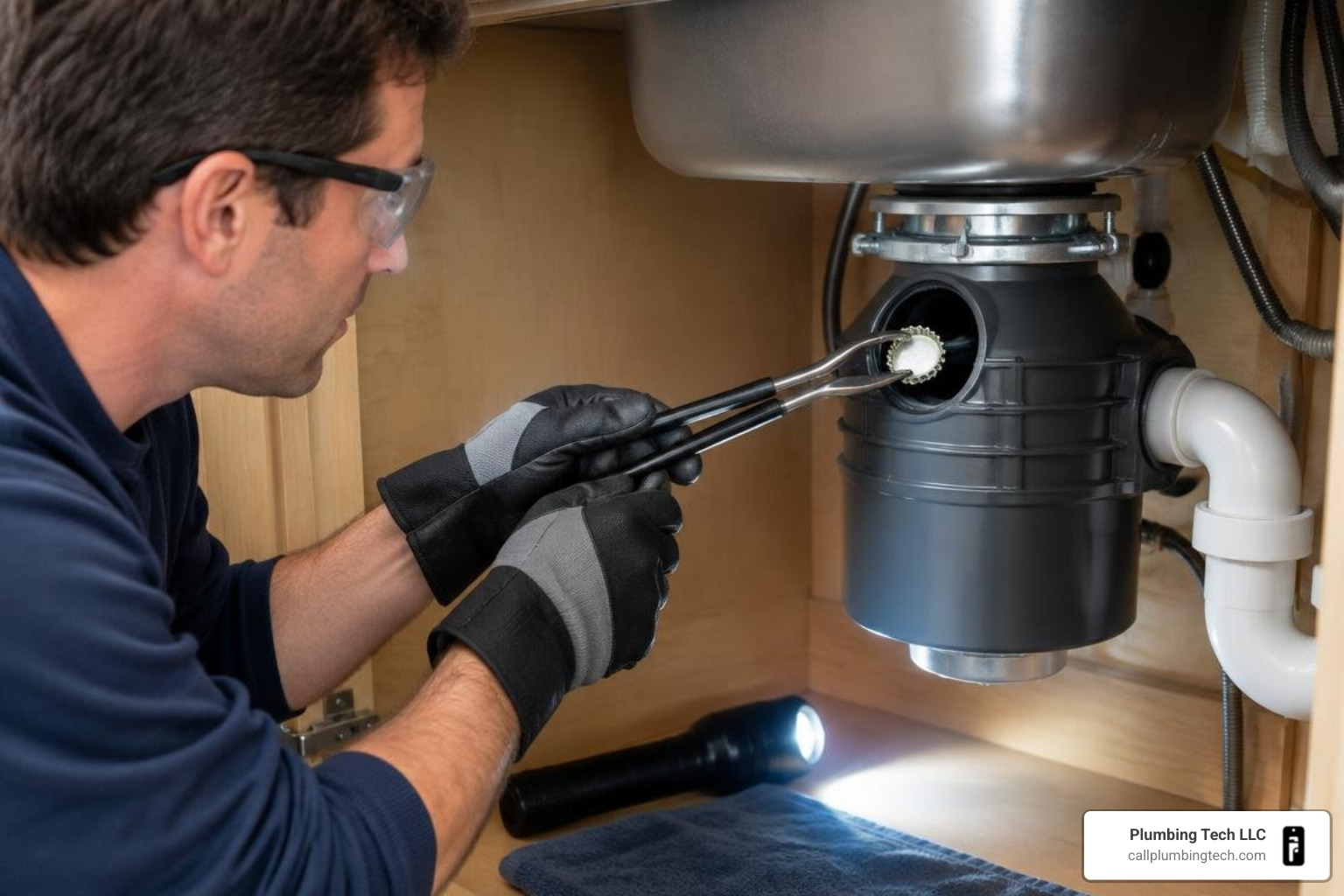
Inspect the perimeter between the impeller plate and the outer grind ring for foreign objects like silverware, bottle caps, or dense food chunks. Use your long-handled tongs or needle-nose pliers to extract any items you find.
Never put your bare hands or fingers inside the grinding chamber, even when the power is disconnected. The interior metal edges can easily cause cuts, and jammed impellers can snap forward under spring tension when cleared.
Step 3: Freeing the Impeller When Your Garbage Disposal Is Humming
Locate the small hex socket in the center of the bottom base underneath the sink. This socket connects directly to the internal motor shaft.
Insert your 1/4-inch hex wrench firmly into the socket. Work the tool back and forth in clockwise and counterclockwise directions. You may encounter firm resistance at first. Apply steady, moderate force until the wrench breaks through the jam and turns a full 360 degrees smoothly in both directions.
For units without a bottom hex slot, you can check an external reference or watch a video tutorial for freeing jammed disposals to learn how a wooden broom handle inserted from the top can safely rock the impellers.
Step 4: Reset the Overload Protector and Test
Once the motor shaft spins freely without binding, let the unit sit for 10 to 15 minutes so the motor cools. Look underneath the disposal housing for the small red reset button located near the bottom rim or base plate.
Press the red button firmly until you hear or feel a distinct click. If it does not stay in, give the motor another five minutes to cool down before trying again.
Plug the power cord back into the wall outlet or restore power at the circuit breaker. Turn on your kitchen faucet with cold water flowing at a moderate pace, then flip the wall switch. The unit should run smoothly. If you need professional assistance with difficult plumbing fixtures or persistent electrical faults, our team provides comprehensive residential plumbing services to get your kitchen back in order.
The Hidden Costs of Neglecting Disposal Problems
Ignoring a struggling disposal or repeatedly flipping the switch while it hums can cause severe downstream damage throughout your kitchen. A stalled motor running hot can warp seals, leading to hidden under-sink water leaks. These slow leaks can rot cabinet wood, ruin subflooring, and foster toxic mold colonies beneath your sink.
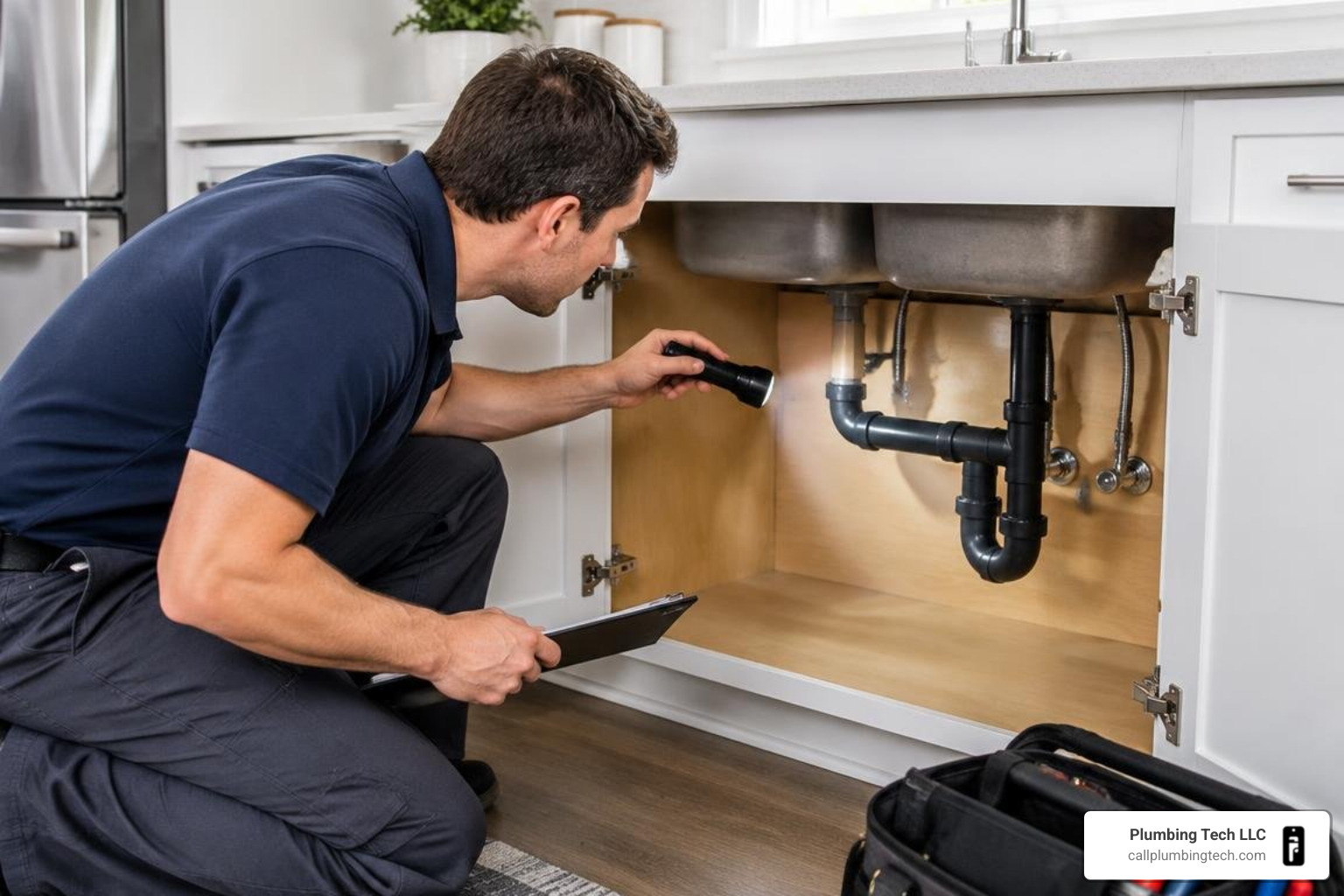
Furthermore, attempting to force food past a partially blocked disposal pushes unground solids into your plumbing pipes. This practice causes dense blockages in the P-trap and kitchen drainline. When grease and heavy starches bind with trapped debris, your sink backs up completely, requiring thorough drain cleaning to clear the system. Running an inefficient, struggling disposal also wastes electrical energy and shortens the operational lifespan of the appliance.
How to Prevent Disposal Jams and Future Humming
A few mindful kitchen habits will keep your disposal spinning quietly and effectively for years to come:
- Always run cold water before, during, and for roughly 15 seconds after grinding food to keep fats solid and moving downstream.
- Avoid disposing of fibrous or stringy items like corn husks, celery, artichokes, onion skins, and potato peelings.
- Keep extremely hard objects out of the drain, including beef bones, peach pits, unpopped popcorn kernels, and seafood shells.
- Never pour cooking oils, bacon grease, or leftover fats down the disposal, as they coat the impellers and harden inside drainpipes.
- Feed food waste into the drain gradually rather than shoving large mounds into the chamber all at once.
- Clean the grind chamber monthly by running a tray of ice cubes combined with a cup of coarse rock salt to scrub internal buildup.
- Freshen the chamber naturally using baking soda and vinegar rather than harsh commercial chemicals that damage seals.
When to Call a Professional Plumber
While clearing a simple jam is a great DIY skill, some disposal issues require professional tools and expertise. You should call a licensed plumber if:
- The hex key turns freely underneath, but the disposal continues humming without spinning when powered on.
- The red reset button pops out instantly every time you flip the wall switch.
- You observe water dripping from the bottom housing seams or electrical connection box.
- The unit emits a sharp burning odor or makes high-pitched squealing noises indicating bearing failure.
- Water consistently backs up into the adjacent sink basin during use.
If you are dealing with broken components or worn-out motors, you can schedule garbage disposal services to repair or replace your unit. For sudden leaks or severe drain overflows, we also provide fast emergency plumbing services to protect your home from water damage.
Frequently Asked Questions About Humming Disposals
Why is my garbage disposal humming but not spinning?
The humming sound indicates that electricity is reaching the motor coils, but a physical obstruction is locking the flywheel or the internal motor bearings have seized. Turn the power switch off immediately to prevent electrical overheating.
How do I reset a garbage disposal that is humming?
Turn off the switch and disconnect power. Clear any jams using a 1/4-inch hex wrench inserted into the bottom center socket. Allow the unit to cool down for 10 to 15 minutes, then push the red reset button located on the bottom or lower side of the housing until it clicks. Restore power and test with cold water.
Can I use chemical drain cleaners to dissolve a disposal jam?
No, you should never pour chemical drain cleaners into a garbage disposal. These caustic chemicals can corrode metal impellers, melt internal rubber seals, and create dangerous chemical splashback risks while you clear the jam manually. Always rely on mechanical clearing methods.
Conclusion
A humming garbage disposal can disrupt your kitchen routine, but diagnosing and resolving the issue is simple once you understand what that low sound means. By cutting the power, clearing jams safely with hand tools, and letting the overload protector cool down, you can restore your kitchen to quiet, reliable operation in no time.
When DIY fixes do not resolve the issue or your disposal shows signs of electrical wear, seized bearings, or persistent leaks, trust the licensed professionals at Plumbing Tech LLC. As a veteran-owned company serving homeowners across Greater Cleveland, our certified technicians back every repair and installation with modern equipment and a 100% satisfaction guarantee. Contact us today for all your trusted plumbing services and keep your kitchen running smoothly.