Bathroom Gas Leak Detection: What to Do First
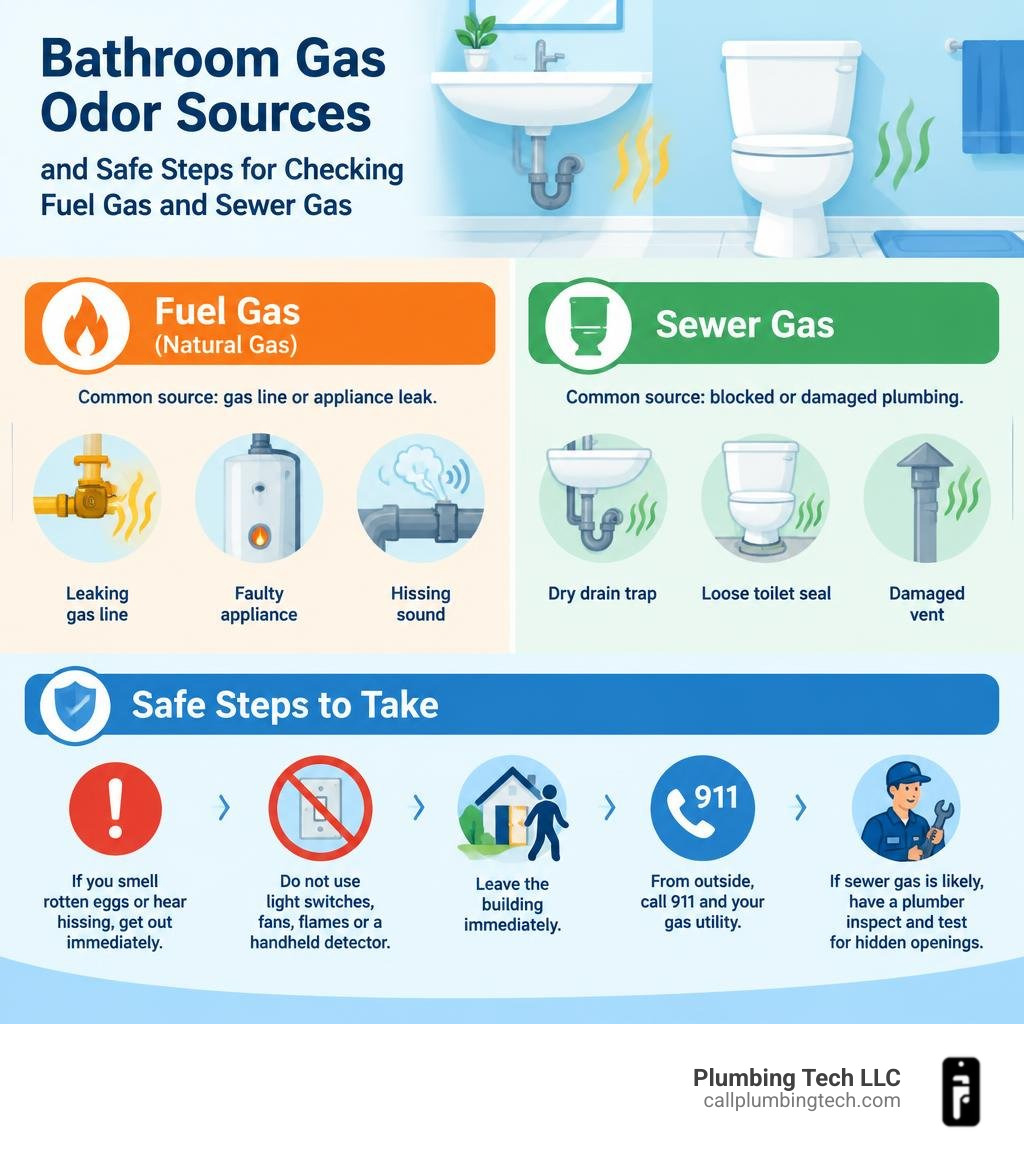
For bathroom gas leak detection, treat a rotten-egg smell or hissing near a gas line as a possible fuel-gas leak. Leave the building immediately. Do not use light switches, fans, flames, or a handheld detector. From outside, call 911 and your gas utility.
If professionals rule out a fuel-gas leak, check whether the odor is strongest near a toilet, sink, or shower drain. A dry drain trap, loose toilet seal, or damaged plumbing vent may be letting sewer gas into the bathroom. A plumber can inspect the fixtures and use testing to find a hidden opening.
Learn more about bathroom gas leak detection:
Identifying Dangerous Bathroom Fumes: Natural Gas vs. Sewer Gas
When an unpleasant odor fills your bathroom, identifying the exact chemical origin is your top priority. While both natural gas and sewer gas share a foul profile, their origins, chemical compounds, and immediate threats differ significantly.
Natural gas is naturally odorless and colorless. To ensure public safety, utility suppliers inject an artificial odorant known as mercaptan, which creates the familiar rotten-egg scent. If you have gas-supplied appliances nearby, such as a tankless water heater tucked in a closet, a leak involves pressurized fuel that can quickly concentrate in an enclosed space. Understanding how to distinguish hazardous household fumes allows you to react quickly before a fire hazard develops.
Sewer gas is a biological byproduct resulting from the decomposition of organic matter in waste lines. It is a complex mixture containing methane, ammonia, carbon dioxide, and hydrogen sulfide. Hydrogen sulfide is the component that naturally emits a pungent, sulfuric stench.
Both gases present severe flammability hazards. The flammability range of natural gas is roughly 5% to 15% gas-in-air concentration. Propane operates within an even tighter explosive window of 2.15% to 9.6% gas-in-air mixture. The minimum ignition temperature of methane sits at 1,163 degrees Fahrenheit, whereas propane ignites at approximately 920 degrees Fahrenheit. Because bathrooms are confined rooms with electrical switches and exhaust fans, any fuel gas accumulation creates an immediate ignition risk.
Rotten Egg Odors and Olfactory Fatigue
Relying entirely on your sense of smell to gauge the severity of a leak is a dangerous mistake. The human olfactory threshold can detect hydrogen sulfide at concentrations as low as 0.001 parts per million (ppm). This makes your nose an exceptional early warning system.
However, prolonged exposure causes rapid olfactory fatigue. The sensory receptors in your nasal passage become desensitized to sulfur compounds within minutes. As the gas concentration climbs higher, you might mistakenly believe the issue has resolved itself simply because the smell faded. In addition, standing water in toilet bowls or shower traps can sometimes bubble if sewer lines back up or if pressurized gas forces its way past a water seal, serving as a visual cue that demands immediate chemical vapor evaluation.
Health Risks and Flammability Hazards

The physical behavior of indoor fuel gases dictates how they accumulate. Natural gas is lighter than air, rising toward the ceiling, while propane is heavier and settles low across the floor. You can review the physical behavior of indoor fuel gases to see how displacement dynamics affect enclosed spaces.
Inhaling either fuel gas or concentrated sewer gas poses immediate health risks:
- Asphyxiation Risk: High concentrations of methane displace oxygen in unventilated bathrooms, leading to dizziness, cognitive confusion, loss of consciousness, and suffocation.
- Hydrogen Sulfide Toxicity: Low-level exposure produces eye, nose, and throat irritation, along with headaches and nausea. Higher exposures can cause pulmonary edema.
- Commercial and Residential Appliance Hazards: Unburned fuel escaping from loose connections can migrate into living spaces, creating a hazardous environment that violates residential and commercial safety codes.
Professional Techniques for Bathroom Gas Leak Detection
Detecting the exact origin of escaping gas requires specialized diagnostic tools. When our technicians arrive on-site, we use structured testing protocols rather than guesswork to locate vulnerabilities in your piping and drainage networks.
For localized checks on pipe fittings, shutoff valves, and threaded connections, professionals often use a non-corrosive detection spray. This specialized solution forms visible bubbles around even the smallest micro-leaks without degrading pipe materials. Applying gas leak detector spray provides immediate visual confirmation of escaping fuel. For complex installations, following safe protocols for gas connection repairs ensures every joint meets modern safety standards.
Tools and Sensors Used in Bathroom Gas Leak Detection
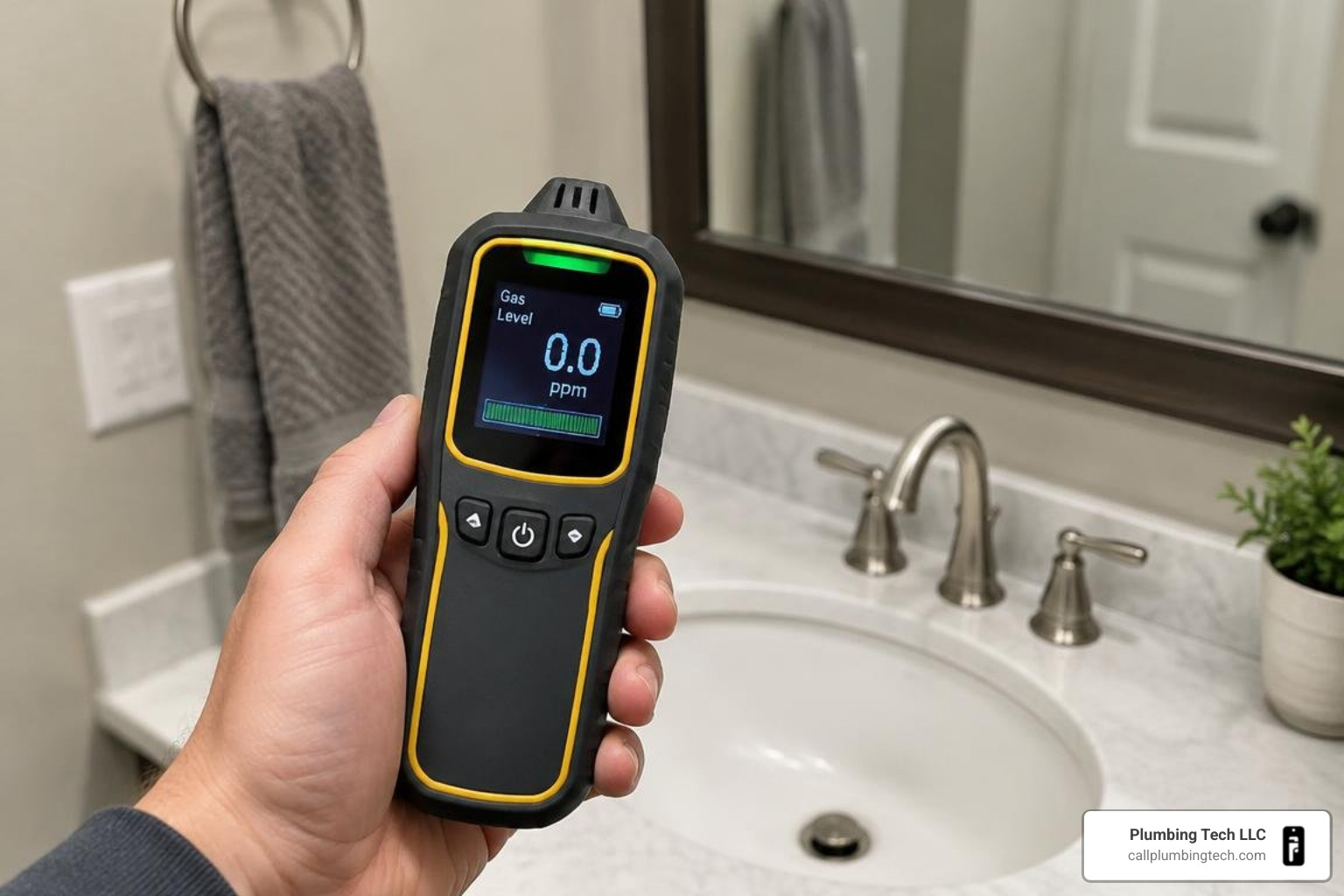
Professional bathroom gas leak detection relies heavily on handheld electronic combustible gas sniffers. These sensitive tools feature flexible gooseneck probes that navigate behind bathroom vanities, under pedestal sinks, and around floor baseboards.
These instruments utilize specialized catalytic or electrochemical sensors calibrated to detect methane, propane, and hydrogen sulfide. While inexpensive consumer detectors operate on a basic alert threshold, professional tools report measurements in precise parts per million (ppm) rather than just a broad percentage of the Lower Explosive Limit (%LEL). Quality sensors last over 5 years when properly maintained and calibrated, providing accurate data to pinpoint concealed line faults.
Smoke Testing Versus Electronic Sniffers
When isolating sewer gas leaks behind bathroom drywall or underneath floorboards, plumbing professionals use two primary diagnostic strategies: electronic gas sniffers and artificial smoke testing.
| Feature | Electronic Gas Detector | Vapor / Smoke Testing |
|---|---|---|
| Primary Target | Fuel gases (methane, propane) and hydrogen sulfide | Drain line fractures, loose seals, dry traps, vent gaps |
| Diagnostic Method | Sensor sampling of ambient air and fittings | Pressurized non-toxic vapor pushed through waste stacks |
| Visual Confirmation | No (audible tone / digital ppm readout) | Yes (visible smoke plume emerges at leak point) |
| Wall Cavity Detection | Limited (must reach open air) | High (smoke emerges through wall plates, outlets, baseboards) |
| Speed | Instantaneous spot checks | Full-system diagnostic (30 to 60 minutes) |
Smoke testing involves introducing a pressurized, petroleum-free artificial vapor into the home’s plumbing drainage and vent stack. If a pipe joint is cracked, a cleanout cap is missing, or a vent pipe is unsealed behind a wall, the visible vapor escapes, instantly revealing the precise leak point without tearing down drywall.
Inspecting Fixtures for Escaping Gas and Sewer Fumes
Every fixture in your bathroom relies on precise mechanical barriers to separate living areas from sewer lines and fuel supplies. If any component degrades, noxious fumes will seep into the room.
When inspecting nearby water heaters or gas heating units, we evaluate pipe integrity according to flexible and rigid pipe code standards. Fuel lines must maintain secure structural support, proper thread sealant, and tight flare fittings to prevent vibration-induced leaks.
Dry Traps and Deteriorated Toilet Wax Rings
The most frequent culprit behind a sewer gas smell in a residential bathroom is a compromised barrier at the drain fixture:
- Evaporated P-Trap Water: Every sink, shower, and floor drain has a curved pipe called a P-trap. This trap holds standing water that blocks sewer gases from rising into the room. If a guest bathroom shower or floor drain sits unused for weeks, that water barrier evaporates, allowing sewer gas to flow freely into the home.
- Failed Toilet Wax Ring: The toilet sits on a wax or rubber gasket that seals the horn of the porcelain bowl to the drain flange. If the toilet rocks due to loose closet bolts, or if the wax seal degrades over time, sewer gas escapes from the base of the toilet whenever negative pressure shifts in the stack.
Blocked Plumbing Vents and Misrouted Exhaust Fans
Your home’s plumbing system depends on a network of vent pipes extending through the roof to equalize air pressure and vent sewer gases outside. If a roof vent becomes clogged with bird nests, leaves, or snow, flushing a toilet creates a vacuum that siphons water right out of nearby P-traps.
In some older homes or unpermitted renovations, contractors have mistakenly tied bathroom exhaust fans directly into the plumbing soil stack instead of routing them outdoors. When the fan turns on, it actively pulls sewer gases into the bathroom ceiling cavity. Furthermore, construction test caps left on roof vents during original building phases can trap gases inside the structure, leading to intermittent odors during wind shifts.
Safe Action Plan When You Detect a Leak
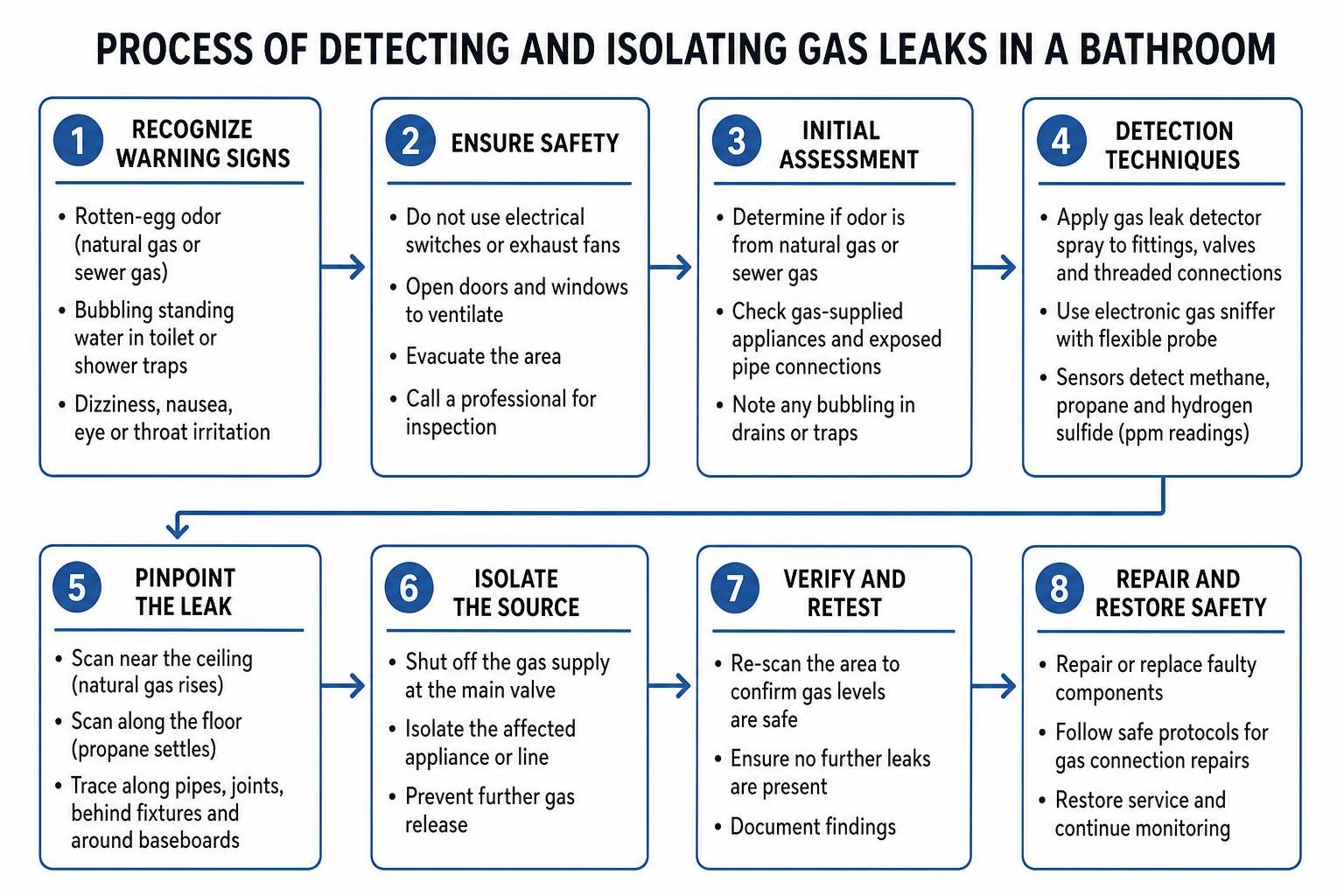
If you suspect an active gas leak in your home, follow this immediate emergency protocol:
- Evacuate the Premises: Get every person and pet outside into fresh air right away.
- Eliminate Ignition Sources: Do not flip light switches, use landline phones, plug in appliances, light matches, or operate garage door openers. Any electrical arc can trigger an explosion.
- Shut Off the Main Gas Supply: If the main exterior gas meter shutoff valve is accessible and safe to reach, turn the valve a quarter-turn perpendicular to the pipe using an adjustable wrench.
- Call Emergency Responders: From a safe distance away from the building, dial 911 and your local natural gas utility provider.
- Schedule Professional Inspection: Once first responders declare the building safe from fuel gas hazards, bring in a licensed plumbing specialist to test the system. If your gas water heater was shut off during the incident, our guide on how to safely relight a gas water heater outlines standard safety procedures.
Step-by-Step Process for Bathroom Gas Leak Detection
Once emergency services confirm the area is structurally safe, our team uses a systematic five-step diagnostic process:
- Step 1: Visual and Physical Barrier Audit: We inspect every toilet base for stability, check under vanities for moisture, and ensure cleanout plugs are airtight.
- Step 2: Trap Replenishment: We run water into all showers, bathtubs, sinks, and floor drains to replenish empty P-traps and re-establish liquid seals.
- Step 3: Handheld Electronic Sniffer Sweep: We guide a calibrated combustible gas detector around fuel lines, fixture bases, drain openings, and drywall joints to detect trace ppm levels.
- Step 4: Non-Corrosive Bubble Testing: We apply leak detection solution to pipe joints, shutoff valves, and appliance connections to visually isolate micro-fractures.
- Step 5: Full Plumbing Smoke and Pressure Testing: If odors persist without an obvious source, we seal the plumbing stack and pressurize the system with artificial vapor to expose hidden breaches behind walls.
What to Do If Your Plumber Cannot Find the Leak
If standard diagnostic attempts fail to find the source of an intermittent bathroom odor, you need advanced diagnostic methods:
- High-Resolution Sewer Camera Inspection: Running an optical fiber-optic camera through the main sewer line and branch drains reveals hidden pipe collapses, root intrusions, and hairline cracks inside the foundation.
- Multi-Story Stack Isolation: In multi-level homes, technicians isolate individual drainage stacks using mechanical test balls to pressure-test individual branch lines independently.
- Specialized Acoustic Leak Detection: High-frequency listening devices pick up the subtle sound of escaping pressurized gas or water inside concealed framing cavities.
Frequently Asked Questions About Bathroom Gas Leaks
How much does a bathroom smoke test cost compared to a gas detector?
Consumer-grade combustible gas detectors are readily available for basic spot checks. In contrast, a comprehensive professional smoke test requires specialized high-volume blowers, non-toxic smoke generators, and roof-stack sealing equipment. While an electronic sniffer checks for ambient gas at a single point, a professional smoke test evaluates the physical structural integrity of the entire drainage and vent network at once, making it the definitive diagnostic standard for elusive leaks.
Can a carbon monoxide detector detect sewer gas in my bathroom?
No. Standard residential carbon monoxide detectors utilize electrochemical sensors designed exclusively to register CO molecules generated by incomplete combustion. They cannot detect methane, propane, or hydrogen sulfide. To detect fuel gas or sewer gas electronically, you must install a dedicated combustible gas detector.
Why does my bathroom smell like sulfur only intermittently?
Intermittent sulfur odors usually stem from atmospheric pressure shifts, wind patterns, or fixture usage cycles. When strong winds blow across your roof, downdrafts can force sewer gases down unshielded vent pipes. Additionally, rapid drops in barometric pressure cause air to expand within waste pipes, pushing past marginal toilet wax seals or dry P-traps that hold only minimal water.
Conclusion
A persistent gas or sulfur smell in your bathroom should never be ignored. Whether caused by a compromised fuel appliance line, a dried-out P-trap, or a failing toilet flange seal, identifying and correcting the issue promptly protects your property from fire hazards and shields your family from hazardous airborne toxins.
At Plumbing Tech LLC, we bring over 25 years of combined experience to every service call across Greater Cleveland, including Strongsville and Richfield, OH. As a veteran-owned company and certified backflow specialist, we back all our work with a 100% satisfaction guarantee and 24/7 emergency response. For comprehensive testing and durable repairs, trust our team with your bathroom fixture plumbing and gas line diagnostics to keep your home safe.