How to Find Reliable Plumbing Services
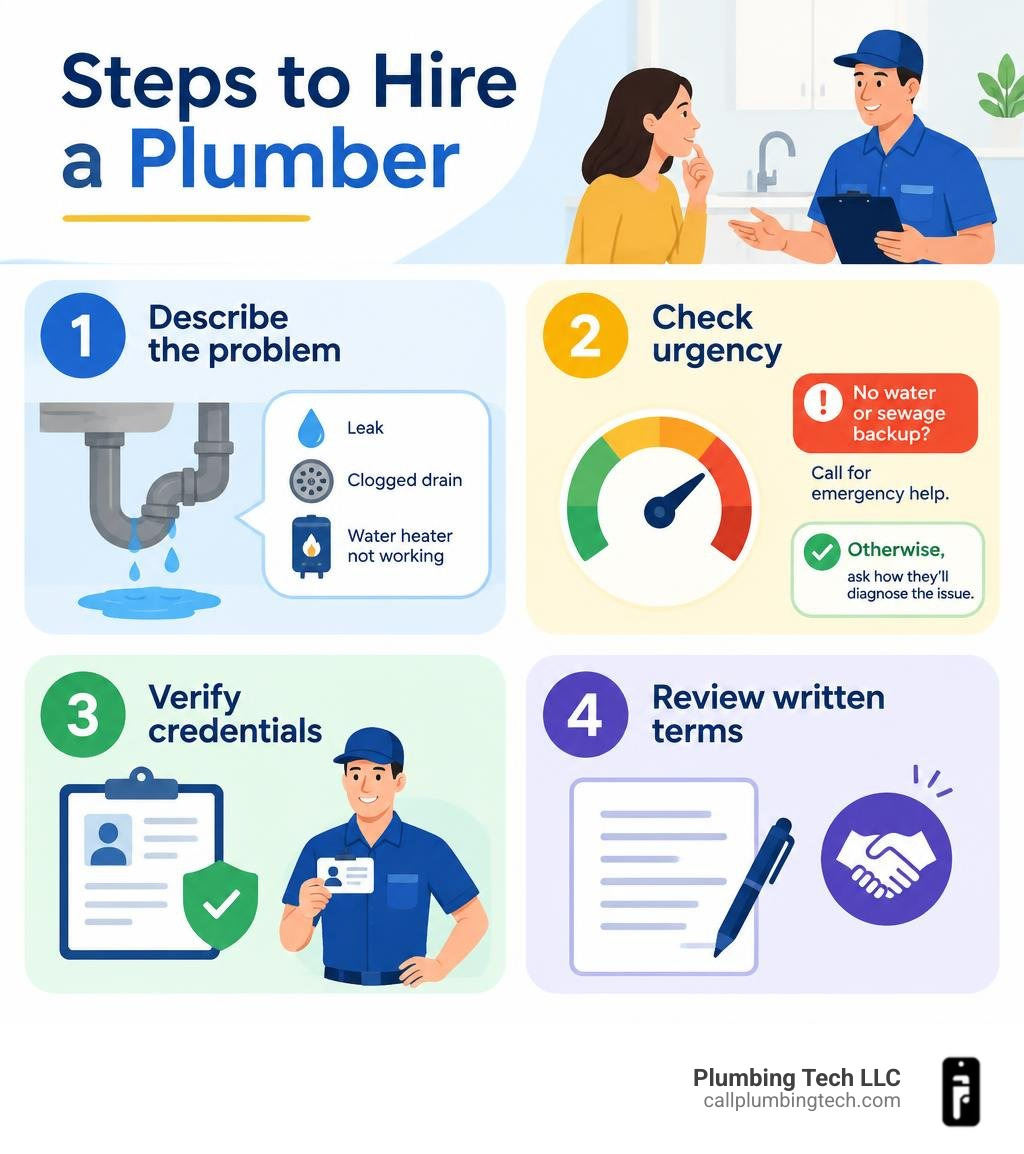
To find reliable plumbing services, start with the problem: a leak, a clogged drain, or a water heater that has stopped working. If water will not stop or sewage is backing up, call for emergency help. Otherwise, ask a plumber to explain how they will diagnose the issue. Before hiring, verify their credentials and insurance, then get the proposed work and terms in writing.
For homeowners and small businesses in Greater Cleveland, Plumbing Tech LLC offers repairs, installations, drain cleaning, water heater work, and 24/7 emergency response. The steps below will help you choose the right service and know what to ask before work begins.
Navigating Professional Plumbing Services for Every Home Issue
Plumbing problems rarely announce themselves at convenient moments. A minor leak in the upstairs bathroom can slowly seep into floorboards, while a sudden main drain backup can bring your entire household to a dead stop. Understanding how to diagnose and categorize these symptoms is the first step toward getting the right fix without paying for unnecessary repairs.
When you notice an issue, map out the symptoms clearly. Is the problem isolated to one fixture, or are multiple fixtures acting up at the same time?
- A single slow sink usually points to a localized hair or soap buildup in the trap.
- Multiple slow-draining sinks, gurgling toilets, or water backing up into a tub indicate a blockage deeper in the main waste line.
For localized or multi-fixture blockages, scheduling comprehensive drain cleaning clears out grease, hair, and sludge to restore proper flow throughout your home.
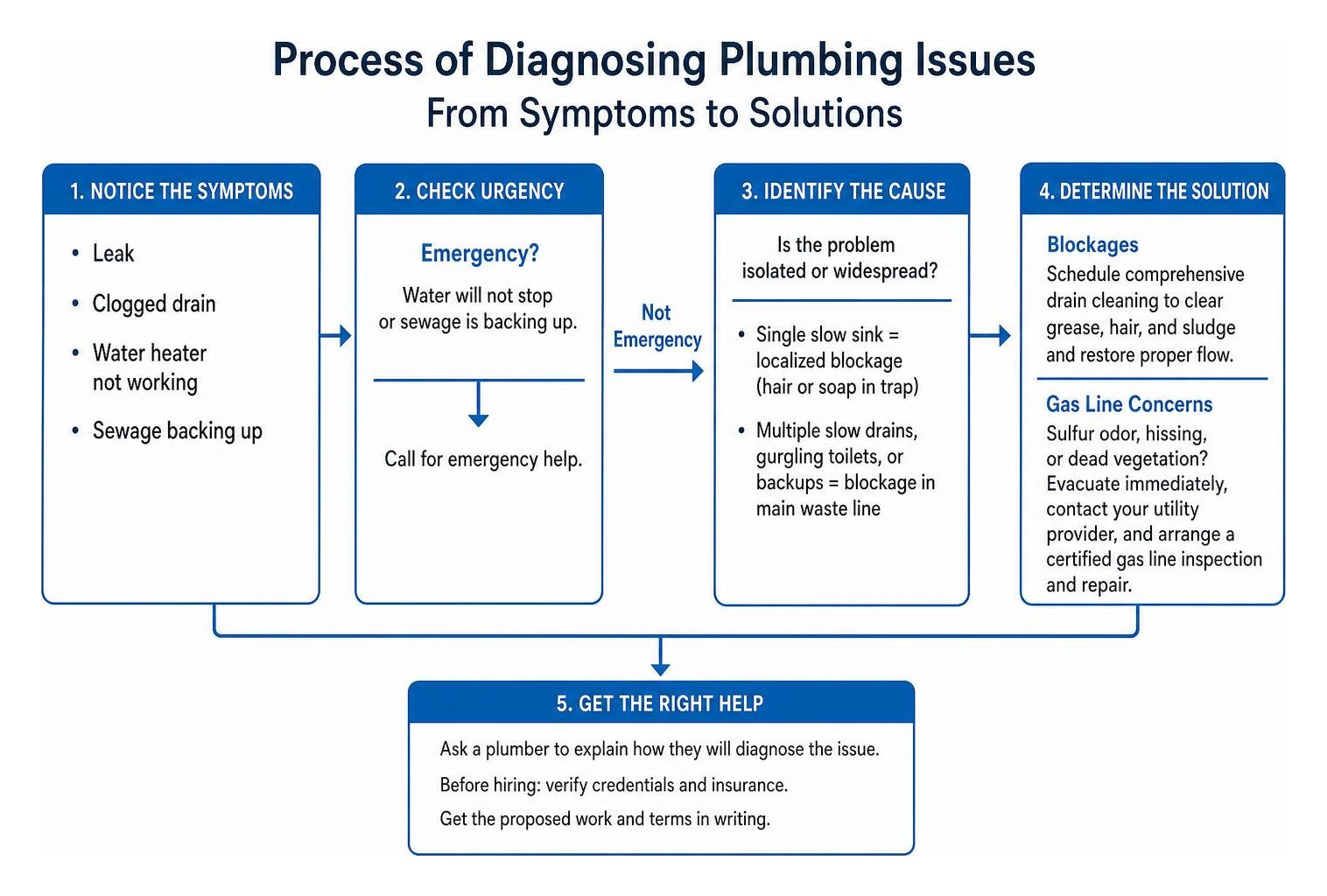
Plumbing systems also include critical supply lines, such as natural gas pipes that fuel your water heater, furnace, and stove. If you detect a sulfur-like rotten egg odor, hear a hissing noise near an appliance, or notice dead vegetation above buried lines, treat it as a hazard. Evacuate the property immediately and contact your utility provider before arranging a certified gas line inspection and repair to ensure your home remains safe.
Identifying When You Need Emergency Plumbing Services
Not every plumbing issue requires an urgent midnight service call, but certain situations pose immediate threats to your safety and property value. Knowing the difference between an everyday repair and an urgent crisis keeps your home protected and prevents unnecessary stress.
True emergencies involve active water that will not stop, raw sewage infiltration, or supply failures that make a building uninhabitable. You should call for 24/7 emergency plumbing response if you encounter any of the following:
- Uncontrollable water pouring from a burst supply pipe or split fitting
- Raw sewage backing up into bathtubs, showers, or floor drains
- A water heater tank that is actively leaking or showing signs of rupture
- Complete loss of running water across the entire property
- Any leak threatening electrical panels, structural framing, or finished ceilings
Rapid intervention limits structural saturation, stops toxic mold growth within walls, and minimizes long-term property damage.
Immediate Actions During Burst Pipes and Major Leaks
When a pipe bursts or a major supply line fractures, your immediate response within the first five minutes can save thousands of dollars in water damage. Follow this sequence of steps right away:
- Shut Off the Main Water Supply: Locate your home’s main water shutoff valve, typically found in the basement, crawlspace, or near the water meter. Turn the valve clockwise (or perpendicular to the pipe for lever valves) to halt incoming water flow.
- Relieve Residual System Pressure: Open the lowest faucets in your home, such as an outdoor hose bib or basement wash sink, along with upper-level faucets. This drains remaining water from the vertical lines away from the rupture.
- Eliminate Electrical Hazards: If escaping water pool near outlets, appliances, or the electrical breaker box, do not walk through standing water. Turn off power at the main panel if it is completely safe to access, or call your electric utility provider.
- Contain Moisture and Protect Belongings: Place buckets under active drips and use towels or a wet-dry vacuum to soak up pooling water. Move electronics, furniture, and valuables into dry rooms.
- Document Everything for Insurance: Take clear photos and videos of the damaged pipe, standing water levels, and any ruined personal property before cleanup starts.
Detecting Hidden Slab Leaks and Structural Pipe Damage
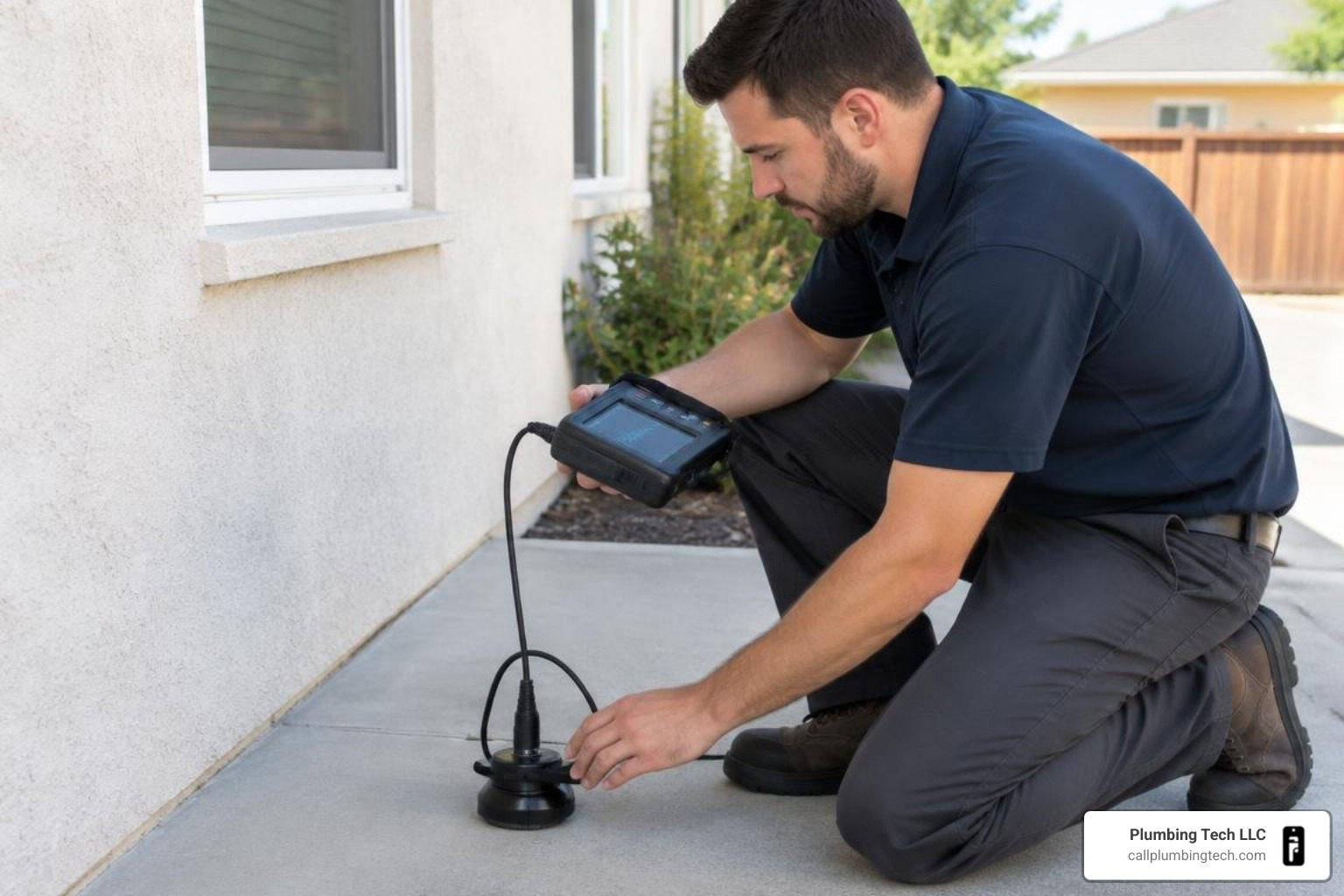
A slab leak occurs when the copper or PEX water pipes running beneath your home’s concrete foundation develop pinhole leaks or cracks. Because these pipes are encased in or buried under concrete, the water remains unseen while steadily eroding soil support and threatening structural integrity.
Watch for these warning signs of a hidden foundation leak:
- Unexplained spikes in your monthly water utility bill with no increase in household usage
- Warm or hot spots on carpet, tile, or hardwood floors
- The sound of running water behind walls or under floors when all fixtures are shut off
- Damp baseboards, bubbling floor coverings, or unexplained mold growth near floor level
- Drop in overall household water pressure
- Cracks appearing in foundation walls or ground-level drywall
Detecting these leaks does not require breaking apart your foundation on guesswork. Modern non-invasive diagnostics utilize acoustic leak detection, pipe tracing sensors, and thermal imaging cameras to pinpoint the exact location of the break through the concrete. Finding the precise failure point allows technicians to make surgical repairs or reroute lines overhead without destructive trenching across your living room.
Essential Criteria for Vetting and Hiring a Qualified Contractor

Hiring a contractor to work on your home requires more than choosing the first search result. Plumbing systems are complex networks of pressurized supply lines, venting stacks, and sanitary drains. Substandard work can result in water damage, gas leaks, and code violations that complicate future home sales.
When vetting a company, look for established local operations that offer upfront flat-rate pricing rather than open-ended hourly rates that leave room for hidden charges. Reputable contractors invest in thorough background checks for their technicians, arrive in fully stocked service vehicles, and stand behind their craft with written warranties.
Always check state and municipal licensing registries before signing an agreement. You can protect your property by Verifying Licensed Contractors through official state licensing portals to ensure their credentials remain active and free of disciplinary suspensions.
Residential vs Commercial Plumbing Services: Choosing the Right Scope
While residential and commercial systems share fundamental principles of physics and fluid dynamics, their scale, mechanical complexity, and legal compliance requirements differ significantly.
- Residential Plumbing: Focuses on single-family homes, townhouses, and small multi-family buildings. Typical projects include bathroom fixture upgrades, basement drain clearing, kitchen disposals, and residential water heater replacements. The primary goal is maintaining safe, reliable water flow for daily household use.
- Commercial Plumbing: Involves multi-story office complexes, retail centers, restaurants, and industrial facilities. These buildings feature complex pipe networks, high-capacity commercial boilers, industrial grease traps, and heavy fixture usage demands.
Our team provides dedicated residential plumbing services customized for family homes, as well as specialized commercial plumbing solutions tailored for local businesses. Commercial facilities also require annual backflow prevention testing to prevent contaminated water from siphoning back into municipal drinking supplies, a service that requires certified backflow specialists.
Critical Questions to Ask Before Hiring a Plumber
Before allowing a technician to begin work on your property, ask these essential vetting questions:
- Are you fully licensed, bonded, and insured in this jurisdiction? Ensure they carry both general liability coverage and active workers’ compensation policies to protect you from liability in the event of an accident.
- Do you provide upfront, flat-rate written estimates? Avoid contractors who hesitate to commit to clear pricing before beginning work.
- Will this project require local municipal permits, and will you pull them? Licensed contractors handle required permits and coordinate building inspections for major water line, sewer, or gas projects.
- What specific warranties or guarantees cover your labor and parts? Look for contractors offering clear satisfaction guarantees and manufacturer-backed parts warranties.
- How long has your team been operating in the local community? Established companies with decades of combined experience bring proven track records and stability.
Advanced Repair, Replacement, and Modernization Solutions
Over decades of service, home plumbing infrastructure undergoes wear from water friction, chemical exposure, and mineral buildup. Older homes often contain outdated piping materials, such as polybutylene or deteriorating galvanized steel, which are prone to internal corrosion, restricted flow, and unexpected catastrophic failures.
Upgrading your home’s system modernizes daily convenience and improves efficiency. Simple updates, like a new kitchen garbage disposal installation, keep food waste moving freely without clogging kitchen drain lines.
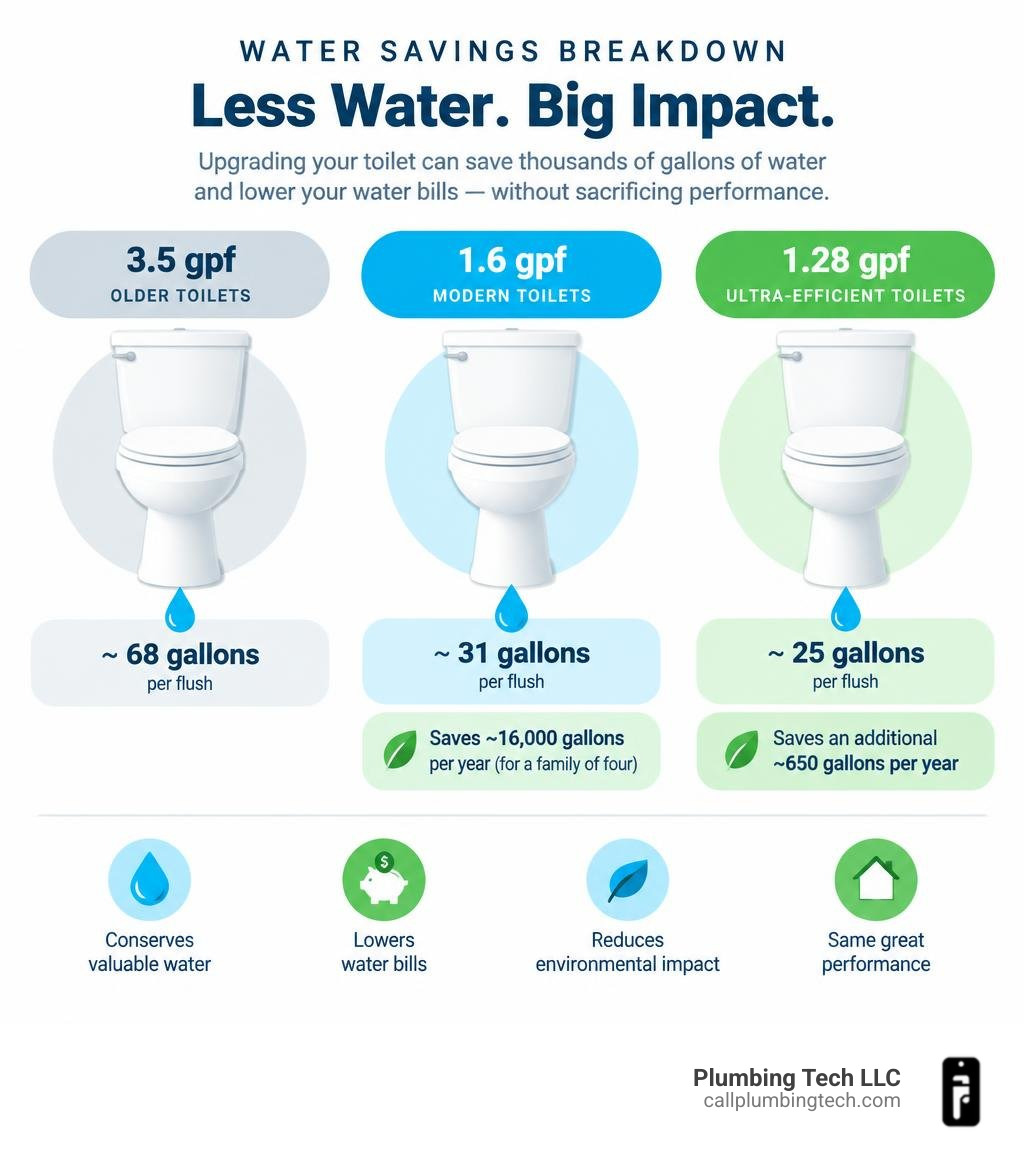
Similarly, investing in water conservation and high-efficiency bathroom fixtures delivers immediate utility savings. Upgrading from outdated 3.5 gallons per flush (gpf) toilets to modern 1.6 gpf models saves an average family of four at least 16,000 gallons of water and over $100 annually on water bills. Choosing ultra-efficient 1.28 gpf toilets yields an extra 650 gallons of water savings every year, significantly reducing environmental impact.
Whole-Home Repiping vs. Targeted Water Line Repairs
When faced with pipe leaks, homeowners must choose between spot repairs and whole-home repiping.
- Targeted Water Line Repair: If your plumbing system is relatively new and suffers an isolated mechanical break, freeze fracture, or localized puncture, a targeted water line repair is the most sensible option.
- Whole-Home Repiping: If your home has recurring pinhole leaks, persistent low water pressure, discolored reddish-brown water, or aged galvanized steel and polybutylene pipes, replacing individual sections only delays the next leak. Whole-home repiping replaces the entire supply network with durable, flexible materials like cross-linked polyethylene (PEX) or modern copper.
PEX tubing resists mineral scaling and corrosion, expands slightly during cold snaps to reduce bursting risks, and can be snaked through wall cavities with minimal drywall disruption.
Trenchless Sewer Repair vs. Traditional Excavation
A collapsed, cracked, or root-invaded main sewer line used to require digging deep trenches across lawns, driveways, and landscaping. Today, trenchless sewer technologies provide durable structural repairs without destroying your yard.
| Feature / Metric | Trenchless Pipe Lining (CIPP / Bursting) | Traditional Open Excavation |
|---|---|---|
| Yard and Landscape Impact | Minimal (1 or 2 small access pits) | Extensive (continuous open trenching) |
| Project Timeline | Usually completed in 1 to 2 days | 3 to 7 days including backfilling |
| Driveway / Hardscape Damage | Avoids cutting concrete or asphalt | Requires concrete removal and repaving |
| Material Lifespan | 50+ years with seamless structural epoxy | 40 to 50 years with new PVC/ABS |
| Structural Integrity | Eliminates joints where roots enter | Standard joint connections every 10-20 ft |
Using cured-in-place pipe (CIPP) lining, a resin-saturated felt tube is inserted into the damaged pipe, inflated, and cured into a rock-solid, joint-free pipe-within-a-pipe. When an existing line has collapsed entirely, pipe bursting pulls a brand-new high-density polyethylene line through the old pipe while breaking the fractured material outward into the soil. For properties where trenchless methods fit the site conditions, our sewer repair solutions restore full sanitary flow with minimal disruption.
Diagnostic Camera Inspections and Hydrojetting
Guesswork has no place in modern plumbing diagnostics. When a main sewer line runs slowly or backs up repeatedly, a professional sewer camera inspection lets technicians see the inside of your pipes in real time.
A waterproof, high-resolution fiber-optic camera is fed through your system’s cleanout, revealing:
- Tree root intrusion breaking through pipe hubs
- Internal grease and mineral scale buildup
- Pipe bellies, offsets, and low spots that trap debris
- Cracked, crushed, or collapsed pipe sections
Once the issue is located, snaking or chemical cleaners often prove insufficient for heavy blockages. Mechanical snakes poke small holes through clogs, but leave thick debris on the pipe walls.
To clear lines completely, high-pressure hydrojetting propels streams of water at several thousand PSI through specialized forward- and reverse-facing nozzles. This scours away tree roots, emulsifies hardened grease, and flushes sand, delivering thorough sewer cleaning that restores pipes close to their original internal diameter.
Water Heater Replacement: Tankless vs. Traditional Storage Tanks
Traditional storage tank water heaters run constantly to keep 40 to 80 gallons of water hot around the clock. Because a traditional water heater typically needs replacement after 8 to 12 years, homeowners facing an aging unit often consider upgrading to an on-demand tankless model.
| Comparison Factor | Traditional Tank Water Heater | Tankless On-Demand Water Heater |
|---|---|---|
| Expected Lifespan | 8 to 12 years | 20+ years with regular maintenance |
| Energy Efficiency | Standard (subject to standby heat loss) | High (heats water only when tapped) |
| Hot Water Supply | Limited to tank storage capacity | Endless, continuous hot water supply |
| Physical Footprint | Large (occupies 10 to 15 sq ft of floor space) | Compact (wall-mounted design) |
| Upfront Equipment Cost | Lower initial purchase and install cost | Higher initial investment |
When planning a water heater repair and installation, evaluate your household’s daily hot water usage, gas or electrical service capacity, and how long you plan to stay in the home. Tankless units eliminate standby energy loss and deliver endless hot water, making them ideal for growing families and homes with high daily demand.
Preventative Maintenance and Regional Climate Considerations
Preventative maintenance helps protect your home from sudden plumbing emergencies and costly water damage. Rather than waiting for a pipe to burst or a drain to back up, simple routine checks keep your plumbing working smoothly:
- Annual Water Heater Flushes: Draining sediment from the bottom of your water heater prevents base tank corrosion and maintains heating efficiency.
- Water Pressure Regulator Checks: High municipal water pressure stresses appliance valves, faucet cartridges, and pipe joints. Ensure your regulator keeps household pressure between 50 and 70 PSI.
- Fixture and Supply Line Inspections: Check flexible braided steel supply hoses on washing machines, dishwashers, and toilets every six months for fraying, kinks, or moisture.
- Automatic Water Shutoff Valves: Installing smart shutoff systems on your main supply line detects abnormal continuous flow and cuts water off automatically, preventing catastrophic flooding while you are away.
In areas prone to freezing winter weather, exposed pipes in crawlspaces, basements, and exterior walls require quality foam insulation sleeves. Outdoor hose bibs must be disconnected, shut off, and drained before the first hard freeze to prevent ice expansion from splitting the internal copper tube.
Frequently Asked Questions About Hiring a Plumber
How often should a homeowner schedule professional plumbing maintenance?
Homeowners should schedule a professional plumbing inspection once a year as a baseline. For older homes with aging supply and drain lines, or properties with high water usage, bi-annual inspections provide added security. Annual visits should cover water heater flushes, main pressure regulator testing, whole-house visual leak audits, and drain flow evaluations.
What is the most cost-effective method to repair a damaged main sewer line?
Trenchless pipe relining is usually the most cost-effective method for repairing cracked or root-damaged sewer pipes that remain structurally intact. While the specialized equipment carries an investment, avoiding deep yard excavation, driveway destruction, and subsequent landscaping restoration saves money on total project costs while finishing in one to two days.
How do I verify if a plumbing contractor is fully licensed and insured?
Ask the plumbing contractor for their state license number, proof of general liability insurance, and active workers’ compensation certificate. Verify their license status through your state’s online contractor licensing portal to check that it is current and in good standing. A reputable contractor will provide these credentials and handle all required municipal permits before starting major work.
Conclusion
Protecting your home from water damage, sewage backups, and costly system failures starts with choosing the right plumbing partner. By understanding your system’s warning signs, acting quickly during emergencies, and vetting contractors on licensing, insurance, and transparent pricing, you can make informed decisions that protect your property for decades.
At Plumbing Tech LLC, we bring over 25 years of combined experience, advanced diagnostic tools, and a 100% satisfaction guarantee to every project in Greater Cleveland. Whether you need an emergency repair, scheduled maintenance, or complete system upgrades, reach out to our team for reliable expert plumbing services you can trust.