Gas Line Repairs Start With Safety
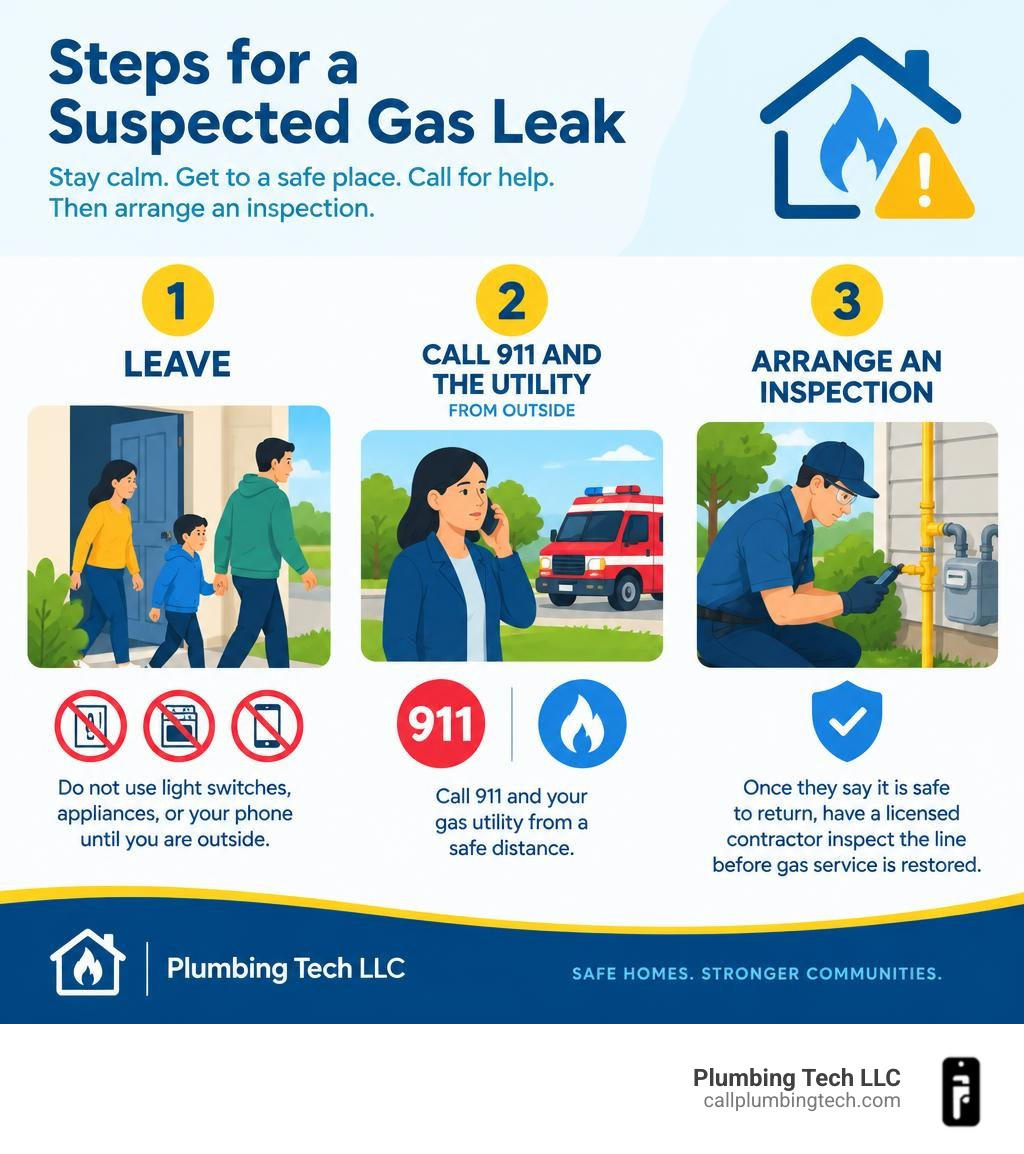
If you suspect a gas leak, leave the building immediately. Do not use light switches, appliances, or your phone until you are outside. Call 911 and your gas utility from a safe distance. Once they say it is safe to return, have a licensed contractor inspect the line before gas service is restored.
Gas line repairs can fix an isolated leak or damaged connection. Widespread corrosion or repeated leaks may call for replacement instead. A professional can find the problem, explain your options, and test the finished work.
Recognizing the Warning Signs of a Damaged Gas Line and Emergency Actions
Natural gas is a safe and efficient fuel source for residential heating, cooking, and water heating. However, when a pipe degrades or a connection loosens, it presents serious hazards. Understanding how to detect issues early allows you to protect your household and property.
Natural gas is naturally colorless and odorless. Utility providers add a chemical odorant called mercaptan, which produces a distinct rotten egg or sulfur smell. This smell serves as the primary alert for leaks, but relying on smell alone is not always enough. Physical conditions like sinus congestion, smoking, or odor fatigue can reduce your ability to detect mercaptan. Therefore, you must also watch for auditory and visual clues.
Auditory and Environmental Warning Signs
Physical indicators of a gas leak along interior or exterior piping include:
- Hissing, Whistling, or Roaring Sounds: High-pressure gas escaping through cracked pipes, loose fittings, or failing valves often creates distinct whistling or hissing noises near appliance connections.
- Blowing Dirt or Dust Clouds: An underground gas leak can disturb the soil above it, creating unexplained swirling dust or continuous bubbling in wet ground.
- Dead or Discolored Vegetation: Underground pipeline leaks displace oxygen in the soil. Patches of dying grass, brown shrubs, or dead plants along the path of a buried gas line point to subterranean leaks.
- Unexplained Spike in Utility Bills: A sudden increase in natural gas consumption without an increase in appliance usage often indicates a slow, continuous leak in your piping infrastructure.
When dealing with compromised connections, following a safety-first guide to dealing with gas connection repairs helps you prevent dangerous situations before technicians arrive.
Immediate Action Checklist During an Emergency
If you observe any signs of a leak, take immediate protective measures:
- Evacuate all occupants and pets from the structure immediately.
- Do not operate light switches, doorbells, garage doors, or electrical appliances.
- Do not light matches, smoke, or use open flames.
- Leave doors open as you exit to help ventilate, provided it does not delay your departure.
- Do not use your mobile phone or landline inside the building.
- Once positioned a safe distance away from the property, call 911 and contact your local gas utility provider.
- Wait for emergency first responders and utility personnel to declare the area safe before attempting to schedule certified gas line repairs.
Assessing Pipe Damage: When to Repair vs Replace Gas Piping
Determining whether to repair a localized fault or replace an entire gas piping run depends on the age, material, and structural integrity of the line. Gas pipelines older than twenty years are prone to material fatigue, joint degradation, and internal or external corrosion. In these cases, repeated minor fixes can become costly and unreliable.
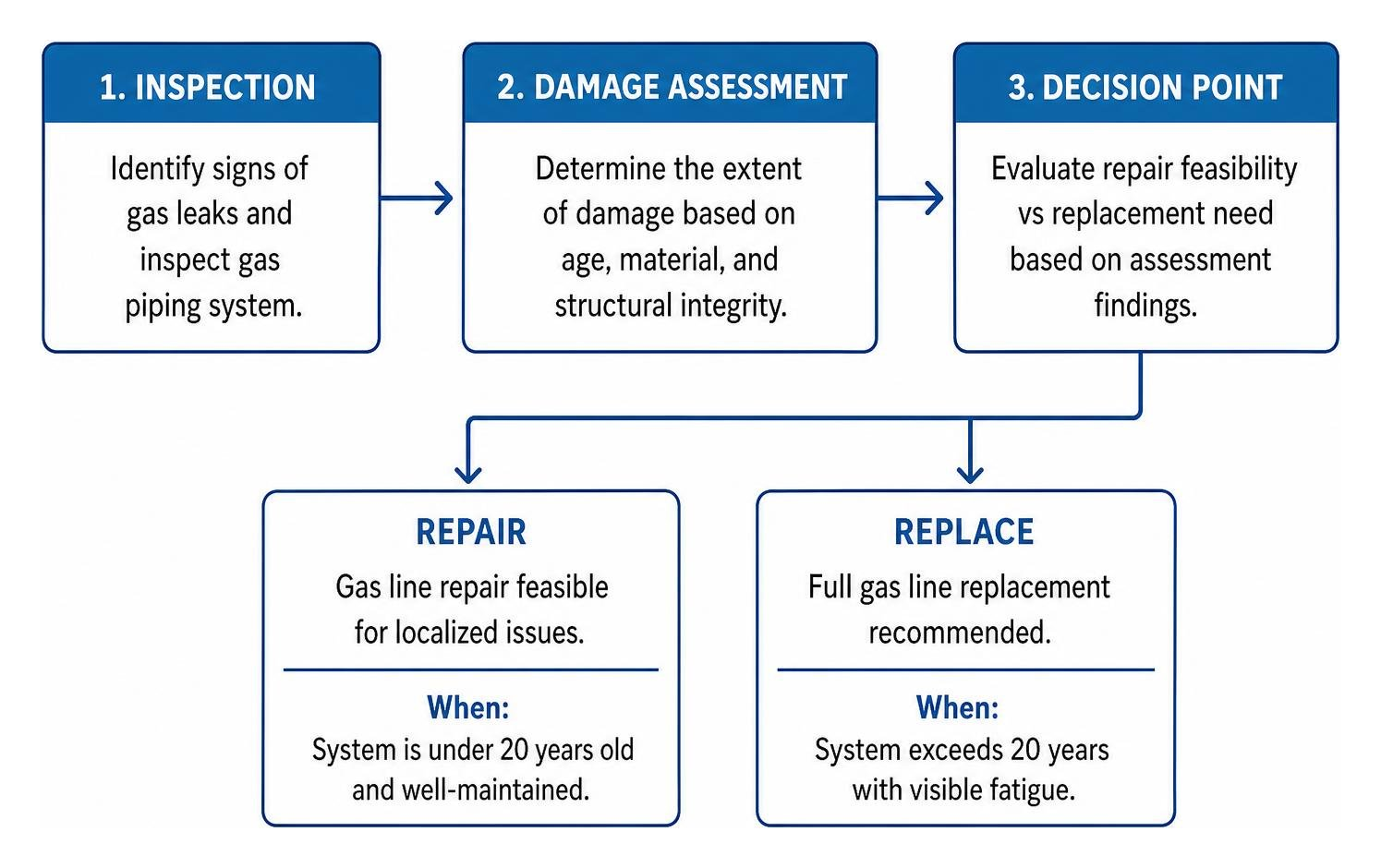
Steel pipes installed decades ago often lack modern protective sheathing, making them vulnerable to moisture, soil minerals, and shifts in the ground. While a loose fitting or minor threading leak can be resolved with targeted gas line repairs, widespread rust, deep pitting, or systemic pressure drops require complete line replacement. Modern installations use durable materials such as black iron pipe for indoor rigid distribution and coated yellow polyethylene pipe for outdoor buried lines.
| Assessment Factor | Gas Line Repair Feasible | Full Gas Line Replacement Recommended |
|---|---|---|
| Piping Age | System is under 20 years old and well-maintained | System exceeds 20 years with visible fatigue |
| Damage Distribution | Isolated leak at a single joint, valve, or fitting | Widespread rust, multiple leaks, or thinning walls |
| Material Quality | Modern black iron, rigid steel, or rated CSST | Outdated, unshielded piping or compromised galvanized pipe |
| History of Leaks | First recorded leak on the specific line segment | Repeated leaks across various points over time |
| Appliance Demand | Existing pipe diameter meets fuel supply needs | Upgraded appliances require larger pipe capacity |
When Gas Line Repairs Are Feasible vs Full Replacement
A targeted repair is suitable when the structural integrity of the surrounding pipe remains sound. Examples include:
- Replacing a worn appliance shut-off valve.
- Swapping out a dried or brittle gasket.
- Tightening and resealing an accessible threaded coupling.
- Cutting out a damaged pipe segment and installing a ground-joint union.
Conversely, full replacement is necessary when the metal shows flaking, structural thinning, or deep corrosion pitting. Environmental factors like shifts in the ground, nearby excavation damage, or heavy vibrations can bend or crack rigid pipes. Attempting to patch pipes in such conditions only transfers stress down the line, leading to new leaks. A licensed professional evaluates the system with pressure gauges to ensure your gas lines meet current building codes.
Critical Factors That Influence the Cost of Gas Line Repairs
Every residential gas infrastructure is configured differently, which influences the time and labor needed to complete a repair.

Key elements that impact the scope of gas piping work include:
- Location and Accessibility: Pipes running through open basement ceilings or utility rooms require less labor to access than lines buried beneath concrete slabs, driveways, or finished drywall.
- Underground Trenching and Depth: Excavating outdoor lines to reach buried fuel runs requires specialized digging tools, careful ground shoring, and subsequent backfilling to prevent pipe damage.
- Pipe Material and Sizing: High-capacity supply lines or specialized fittings require specific materials, proper seals, and careful handling.
- Permitting and Municipal Inspections: Local building authorities require work permits and formal inspections by municipal code officials for gas line modifications.
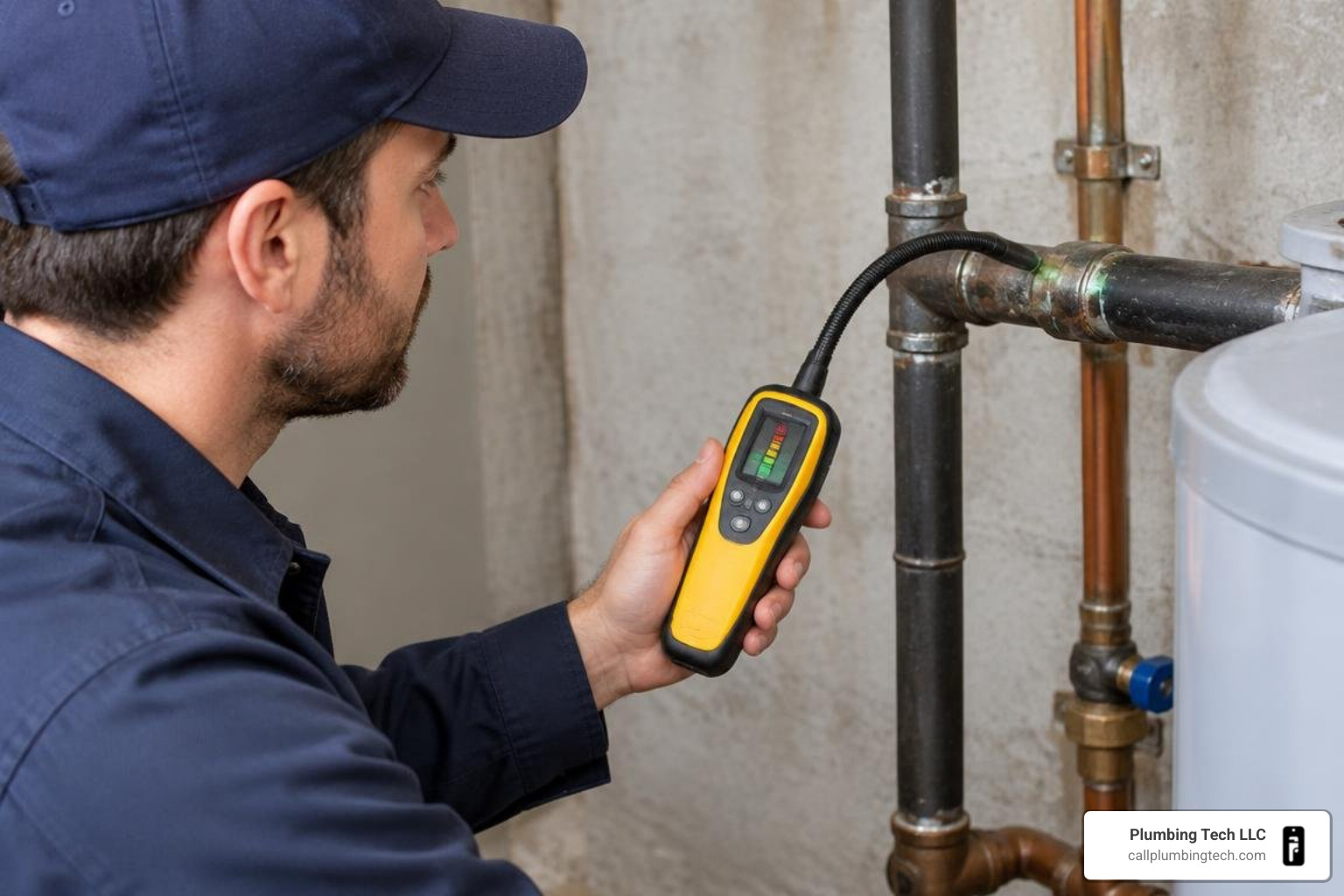
- Diagnostic and Pressure Testing Time: Detecting micro-leaks within walls or underground runs requires calibrated electronic equipment, pressure decay testing, and careful analysis.
Estimating Costs Across Different Appliance Lines and Installations
Installing or repairing lines for high-output appliances involves precise sizing to ensure proper delivery pressure. If a pipe is undersized, modern appliances will suffer from poor performance and incomplete combustion.
- Standby Whole-Home Generators: These units require dedicated high-volume lines to handle high fuel loads during power outages.
- Gas Cooktops and Kitchen Ranges: Safe installation requires transitioning from rigid piping to approved flexible lines. Reviewing flexible vs. rigid code requirements for appliance lines helps clarify these material distinctions.
- Outdoor Gas Pool Heaters: These units often require long, trenched outdoor runs that demand weather-resistant materials, secure transition risers, and high-volume regulators.
- High-Efficiency Boilers and Commercial Heaters: Larger heating equipment needs correctly balanced lines to maintain steady burner pressure. For commercial systems, commercial gas heater repair and troubleshooting guidelines provide deeper insights into complex fuel delivery networks.
How Licensed Contractors Perform Safe Gas Piping Work
Licensed technicians follow strict mechanical codes to ensure that every fitting and connection can safely handle working gas pressure.
When repairing black steel pipe, contractors follow a precise sequence:
- System Depressurization: The technician shuts off the main gas supply valve, locks it out, and bleeds residual gas from downstream fixtures.
- Combustible Gas Verification: Using a calibrated electronic gas sniffer, the technician confirms zero gas flow before cutting into any line.
- Precision Pipe Cutting: The damaged section is cut out using a rigid pipe cutter to ensure clean, square ends without burrs.
- NPT Threading: Using an American National Standard Taper Pipe Thread (NPT) die, the technician cuts precise tapered threads onto the existing pipe ends, using threading oil to preserve metal integrity.
- The Double-Seal Application: To achieve a reliable, gas-tight seal, technicians wrap threads clockwise with yellow PTFE gas tape, followed by an overcoat of anaerobic pipe dope.
- Fitting and Union Assembly: The technician installs a new black iron nipple and a ground-joint union, using two pipe wrenches in a counter-balancing motion to achieve proper torque without over-stressing adjacent fittings.
- Pressure Decay Testing: The line is isolated and pressurized with air to several times its normal operating pressure. A test gauge is monitored to verify that no pressure drops occur over a specified testing window.
Why DIY Gas Line Repairs Pose Extreme Safety Risks
Attempting to repair gas lines without proper licensing, tools, and training creates severe risks. A single loose connection can cause fuel accumulation, resulting in catastrophic fire or explosion.
- Incorrect Sealants and Tapes: Using standard white plumbing tape instead of high-density yellow PTFE tape allows hydrocarbons to break down the seal, leading to leaks.
- Improper Pipe Materials: Installing galvanized piping instead of black iron pipe can cause internal zinc coatings to flake off over time. These flakes travel downstream and clog delicate appliance valves and burner orifices.
- Thread Stripping and Torque Failure: Without calibrated pipe wrenches and correct alignment, threads can cross or strip, producing hidden leaks behind walls.
- Insurance and Legal Invalidation: Most homeowner insurance policies require gas modifications to be completed by licensed contractors under municipal permits. Unpermitted DIY work can void coverage for any resulting property damage.
Proactive Maintenance Tips for Residential Gas Lines
While active repairs must always be handled by licensed contractors, homeowners can take proactive steps to monitor system health between professional inspections:
- Conduct Periodic Visual Inspections: Check exposed gas pipes in your basement, crawlspace, or utility room for signs of rust, surface corrosion, loose pipe hangers, or physical damage.
- Monitor Appliance Flame Quality: A healthy gas burner produces a crisp, steady blue flame. Yellow or flickering orange flames indicate incomplete combustion, which may point to incorrect line pressure, a clogged burner, or poor ventilation.
- Protect Outdoor Pipe Runs: Keep exterior gas meters and above-ground risers clear of heavy vegetation, ice accumulation, and mulch buildup to prevent moisture-related corrosion.
- Maintain Pilot Lights and Burners: Keeping components clean helps avoid emergency service calls. Practical steps to unclog your pilot light orifice can help you keep heating appliances operating smoothly.
- Install Carbon Monoxide and Gas Alarms: Place certified methane and carbon monoxide detectors on every level of your home, especially near utility rooms and sleeping areas.
- Schedule Annual Professional Inspections: Have a licensed professional test your gas lines annually with electronic detectors and pressure gauges to identify minor issues before they become hazards.
Frequently Asked Questions about Gas Line Repairs
How long does a typical gas line repair take?
Most standard residential gas line repairs take between two and four hours once the leak is located. Complex jobs involving underground excavation, deep trenching, or lines concealed inside finished walls may take longer. After completing the physical repair, the contractor must run a pressure decay test to verify safety before the utility provider restores fuel service.
Can licensed plumbers run new gas lines for generators and pool heaters?
Yes. Licensed plumbing and gas contractors are certified to size, design, trench, and install dedicated gas lines for high-demand outdoor equipment like standby generators and pool heaters. They calculate the total British Thermal Unit (BTU) requirements of your appliances to ensure the supply line delivers adequate volume without starving other household fixtures.
What should you avoid doing if you suspect a gas leak?
If you smell natural gas or suspect a line is compromised, do not touch any electrical switches, unplug devices, use landline or cellular phones indoors, or operate garage door openers. Even minor electrical arcs from flipping a light switch can ignite accumulated gas. Do not start cars in an attached garage, light matches, or try to locate the leak with an open flame. Evacuate the property immediately and call emergency services from outdoors.
Conclusion
Gas line issues require immediate, careful attention. Whether you are dealing with an aging pipe, updating appliances, or responding to an emergency leak, hiring certified professionals ensures that all work meets local mechanical codes and passes pressure tests.
For homeowners in Strongsville, OH, Richfield, OH, and communities across Greater Cleveland, Plumbing Tech LLC provides reliable residential and commercial gas piping services. As a veteran-owned business with over twenty-five years of combined plumbing and gas line experience, we use modern diagnostics, rigorous pressure testing, and code-compliant installation methods backed by a 100% satisfaction guarantee. If you notice signs of pipe damage or need new lines installed, reach out to our team for trusted local plumbing and gas line solutions to keep your home safe and comfortable.