What Affects the Cost to Change a Water Heater?
The cost to change a water heater depends mainly on the type and size you choose, the work needed to install it, and local labor rates. Replacing a tank with a similar model is usually the simplest option. Switching to tankless or a heat pump model may require changes to wiring, gas lines, or venting.
For a useful estimate in Greater Cleveland, ask for an itemized quote that includes the heater, labor, permits, any code upgrades, and removal of the old unit.
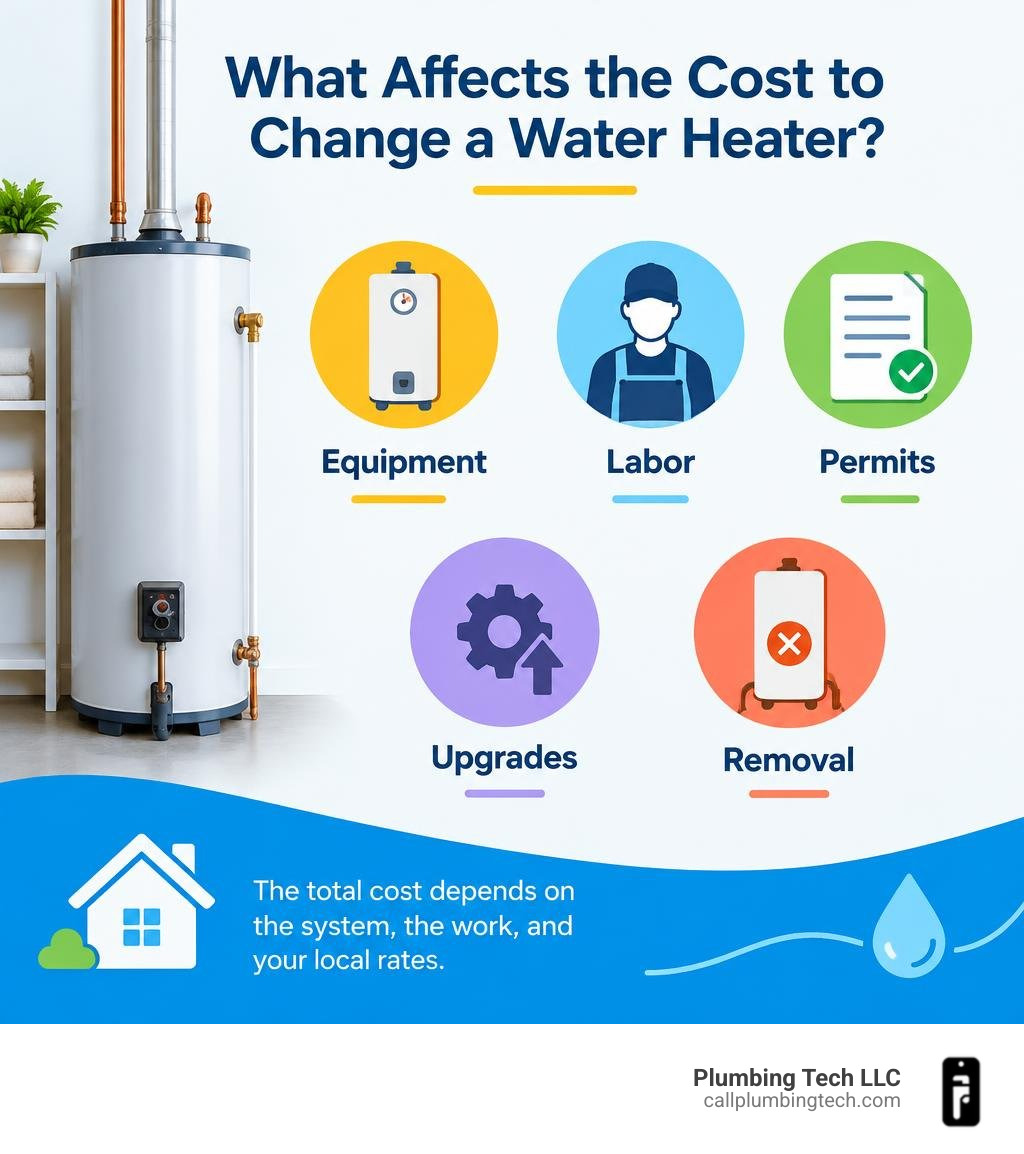
Common cost to change water heater vocab:
2026 Average Cost to Change Water Heater by System Type
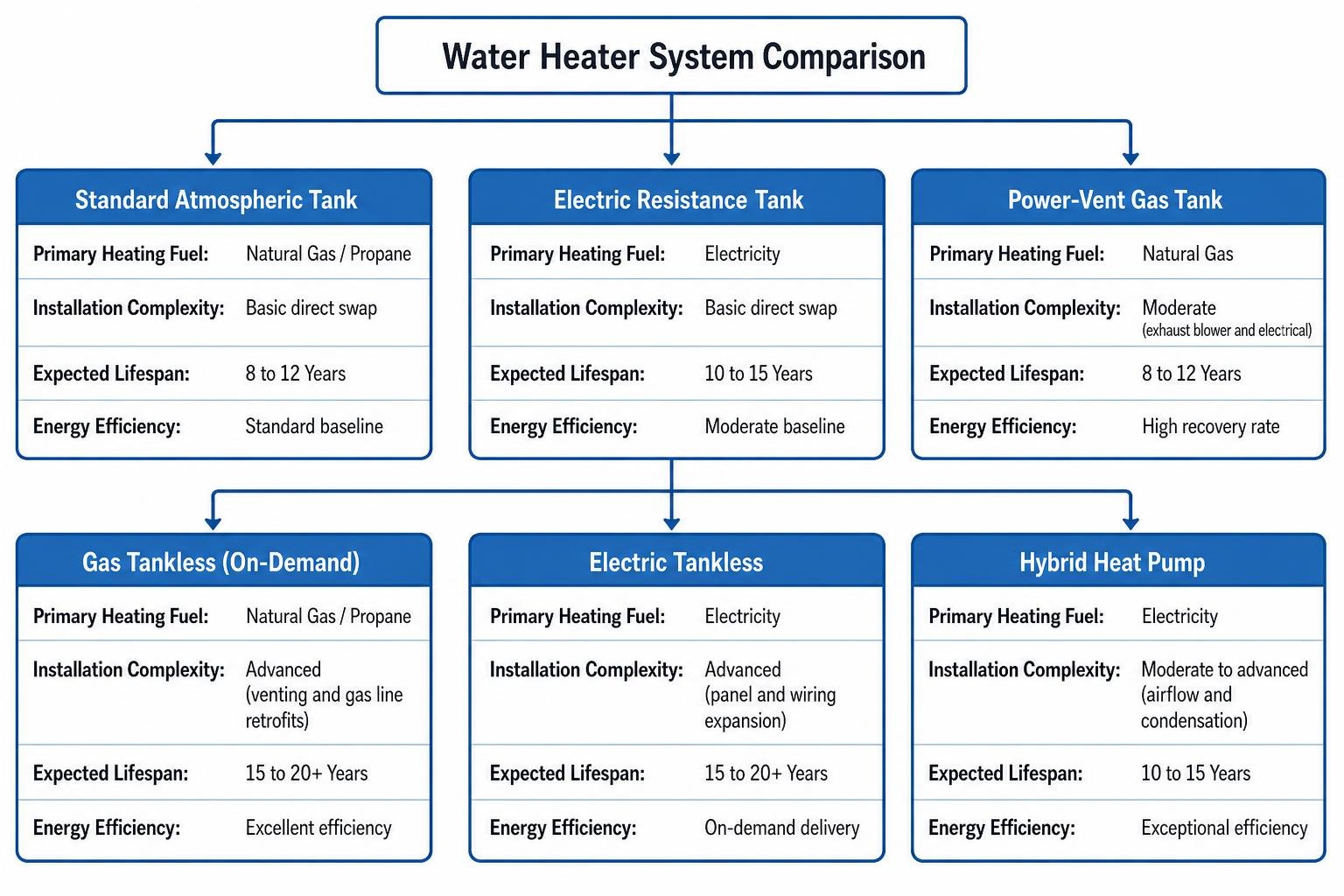
When planning a replacement in November 2026, selecting the right equipment category is your first major decision. Water heaters come in various designs, each offering distinct advantages regarding purchase expenses, installation complexity, and long-term utility performance. The overall investment varies widely based on whether you choose a conventional storage tank, a high-efficiency on-demand system, or an advanced hybrid heat pump.
Homeowners evaluating their options often decide to ditch your old tank and choose a continuous water heater today to gain endless hot water and free up valuable utility space. Alternatively, reviewing the complete guide to comparing gas water heaters helps determine if staying with natural gas infrastructure provides the optimal balance of efficiency and convenience for your home.
| Water Heater System Type | Primary Heating Fuel | Installation Complexity | Expected Operational Lifespan | Energy Efficiency Profile |
|---|---|---|---|---|
| Standard Atmospheric Tank | Natural Gas / Propane | Basic direct swap | 8 to 12 Years | Standard baseline |
| Electric Resistance Tank | Electricity | Basic direct swap | 10 to 15 Years | Moderate baseline |
| Power-Vent Gas Tank | Natural Gas | Moderate (exhaust blower and electrical) | 8 to 12 Years | High recovery rate |
| Gas Tankless (On-Demand) | Natural Gas / Propane | Advanced (venting and gas line retrofits) | 15 to 20+ Years | Excellent efficiency |
| Electric Tankless | Electricity | Advanced (panel and wiring expansion) | 15 to 20+ Years | On-demand delivery |
| Hybrid Heat Pump | Electricity | Moderate to advanced (airflow and condensation) | 10 to 15 Years | Exceptional efficiency |
Traditional Storage Tank Systems
Traditional storage tank systems remain the most common choice across residential properties. These units heat and maintain a reserve of water inside an insulated cylinder, ensuring a dedicated supply is constantly ready for domestic use.
Natural gas tank models utilize a bottom burner and an atmospheric draft hood to exhaust combustion fumes through a metal chimney flue. Electric tank models employ upper and lower internal electric immersion elements to heat the water directly inside the vessel without producing combustion gases.
Opting for a direct, like-for-like storage tank replacement generally represents the most budget-friendly upfront option because it connects to existing water lines, electrical circuits, and exhaust pathways with minimal structural alterations. For practical perspectives on managing standard equipment options, reviewing a water heater replacement cost guide by Bob Vila provides helpful baseline context.
On-Demand Tankless and Hybrid Heat Pump Units
Tankless water heaters, also known as continuous flow or on-demand systems, heat water only when a plumbing fixture calls for it. Cold water travels through a high-output heat exchanger, eliminating the continuous energy standby loss of keeping 40 to 50 gallons hot around the clock. However, gas tankless models require adequate gas supply lines and dedicated sealed direct-vent exhaust pipes. Electric tankless systems require substantial electrical current, which can necessitate heavy wiring additions.
Hybrid heat pump water heaters utilize advanced thermal transfer technology. Rather than relying solely on electric resistance coils, a hybrid system extracts ambient warmth from the surrounding basement or utility room air and transfers it into the water tank via a compressor cycle. These units operate with remarkable efficiency, consuming roughly a quarter of the electricity of conventional electric tanks.
While hybrid models carry higher initial equipment expenses, regional utility rebates and annual electric bill reductions help offset the initial investment over the operating lifespan of the appliance.
Key Factors That Influence Replacement Pricing
Every home layout is unique, meaning identical water heaters can involve different project requirements depending on structural and utility conditions. Key cost variables include fuel supply accessibility, plumbing pipe alignment, physical access to the installation area, and local building code mandates.
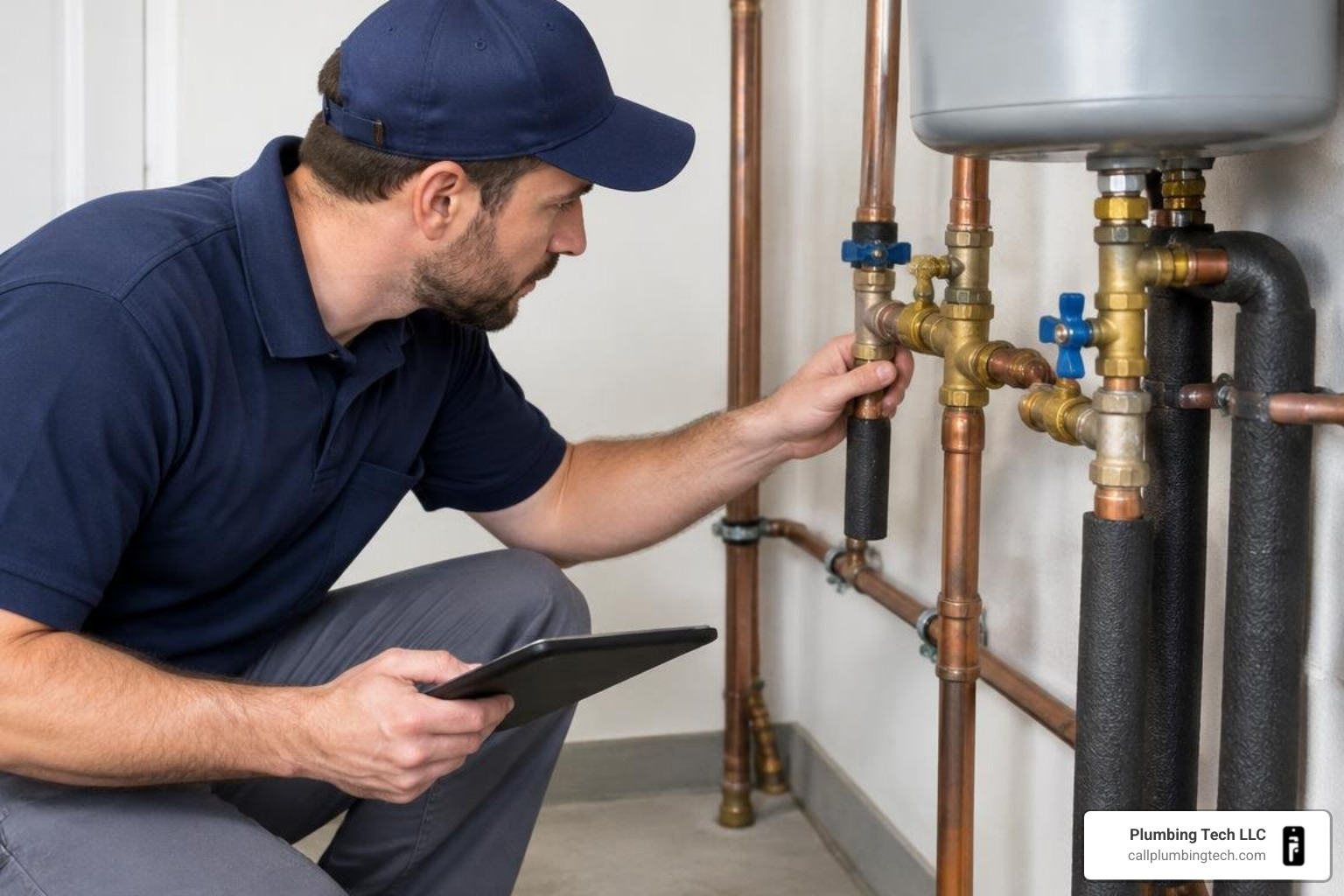
When homeowners prepare for a replacement, learning how to compare water heater installation costs in 5 simple steps ensures they obtain comprehensive, itemized quotes that avoid unexpected change orders.
Major technical factors that influence your project scope include:
- Utility Conversions: Switching from electric to natural gas requires installing new rigid or flexible gas piping, shut-off valves, and sediment traps. Converting from gas to high-demand electric requires dedicated high-amperage breakers and wiring runs from the main service panel.
- Venting Configurations: Upgrading to a power-vent or tankless setup requires running dedicated PVC, CPVC, or polypropylene piping through exterior walls, along with electrical receptacles to power motorized exhaust blowers.
- Plumbing Upgrades: Integrating updated shut-off valves, dielectric unions to prevent galvanic corrosion, and flexible stainless steel water connectors ensures reliable performance.
- Drainage and Containment: Adding secondary drain pans and routing temperature-and-pressure relief valve discharge lines to approved drains prevents moisture intrusion.
Tank Capacity and the Cost to Change Water Heater Systems
Selecting the proper storage capacity ensures your household maintains steady hot water without paying to heat unused reserves. Standard residential tank sizes range from 30 to 80 gallons. Sizing depends on the number of occupants and peak usage patterns, such as multiple showers or appliances running at the same time.
Reviewing AO Smith 40 gallon water heaters for tank sizing highlights why matching peak demand, known as the First Hour Rating, is vital. A 40-gallon tank suits smaller homes with 1 to 2 occupants, while 50-gallon tanks serve 3 to 4 people. Homes with large soaking tubs or high simultaneous demand often require 75- to 80-gallon tanks.
Choosing an oversized tank raises initial purchase expenses and increases ongoing standby heat loss, while an undersized tank leads to frequent run-outs and thermal stress on heating elements.
Regional Location and Groundwater Temperature
Geographic climate plays a direct role in water heater sizing and overall operational wear. In Northern Ohio communities like Strongsville and Richfield, winter incoming groundwater temperatures can drop between 40 and 50 degrees Fahrenheit.
Colder supply water requires heating equipment to achieve a 70-to-80-degree temperature rise to reach standard 120-degree domestic delivery levels. This added heating burden requires higher burner outputs or greater electrical draw, which accelerates thermal stress on interior glass linings and heating elements compared to warmer southern climates.
Additionally, closed municipal water systems in these areas require dedicated thermal expansion tanks to absorb excess water volume as it heats, protecting both the tank and indoor plumbing from elevated pressure spikes.
Labor Expenses and Professional Installation Requirements
Professional labor accounts for a significant portion of any water heater replacement project. Installing water heating equipment requires licensed trade expertise to manage high-voltage electrical circuits, pressurized natural gas lines, potable water systems, and toxic combustion venting.
Working with an experienced team provides peace of mind that the job meets current safety standards. Following an ultimate checklist for choosing a hot water service helps homeowners verify trade qualifications, warranty coverage, and written scope details before work starts. Additional guidance on trade best practices can be found in Everything You Need to Know to Replace a Water Heater on This Old House.
Labor Breakdown and the Cost to Change a Water Heater
A direct like-for-like replacement of a standard storage tank typically requires two to four hours of plumbing labor under normal site conditions. During a standard installation, technicians perform several key tasks:
- Shutting down fuel supplies, draining the standing water volume, and disconnecting gas, electrical, and water lines.
- Hauling away the heavy, sediment-laden old appliance for proper recycling and disposal.
- Positioning and leveling the new unit, adjusting for modern dimension changes and insulation thicknesses.
- Connecting water lines with dielectric fittings, installing shut-off valves, and securing gas lines with sediment traps.
- Connecting venting runs to prevent combustion gas leaks and installing thermal expansion tanks.
- Filling the vessel completely, purging air from household fixtures, conducting gas pressure and water leak tests, and calibrating temperature controls.
When retrofitting from a tank to a tankless unit, labor hours increase significantly. Rerouting plumbing lines to a wall-mounted location, running intake and exhaust venting through exterior walls, and upgrading gas or electrical supply lines expand the overall project timeline.
Permits, Code Upgrades, and Safety Regulations
Municipal building departments require permits and post-installation inspections for residential water heater replacements. Permitting ensures that combustion exhaust, backflow prevention, and fuel connections adhere strictly to local building codes.
Critical code compliance items that may require updates during a replacement include:
- Thermal Expansion Tanks: Essential on closed plumbing systems equipped with check valves or pressure-reducing valves to prevent high-pressure damage.
- Safety Relief Discharge Lines: Temperature and pressure relief valves must feature full-bore discharge pipes routed toward a drain or floor to safely release accidental overpressure.
- Combustion Air and Vent Sizing: Ensuring gas heaters receive adequate oxygen for clean combustion and that chimney flues or power vents safely exhaust carbon monoxide.
- Drip Pans and Drain Routing: Installing containment pans under tanks located in finished living areas or utility closets to mitigate leak damage.
Deciding Between Repair and Full Replacement
When a water heater shows signs of trouble, deciding whether to repair a specific part or replace the entire system comes down to the age of the unit, overall tank condition, and cumulative repair expenses.
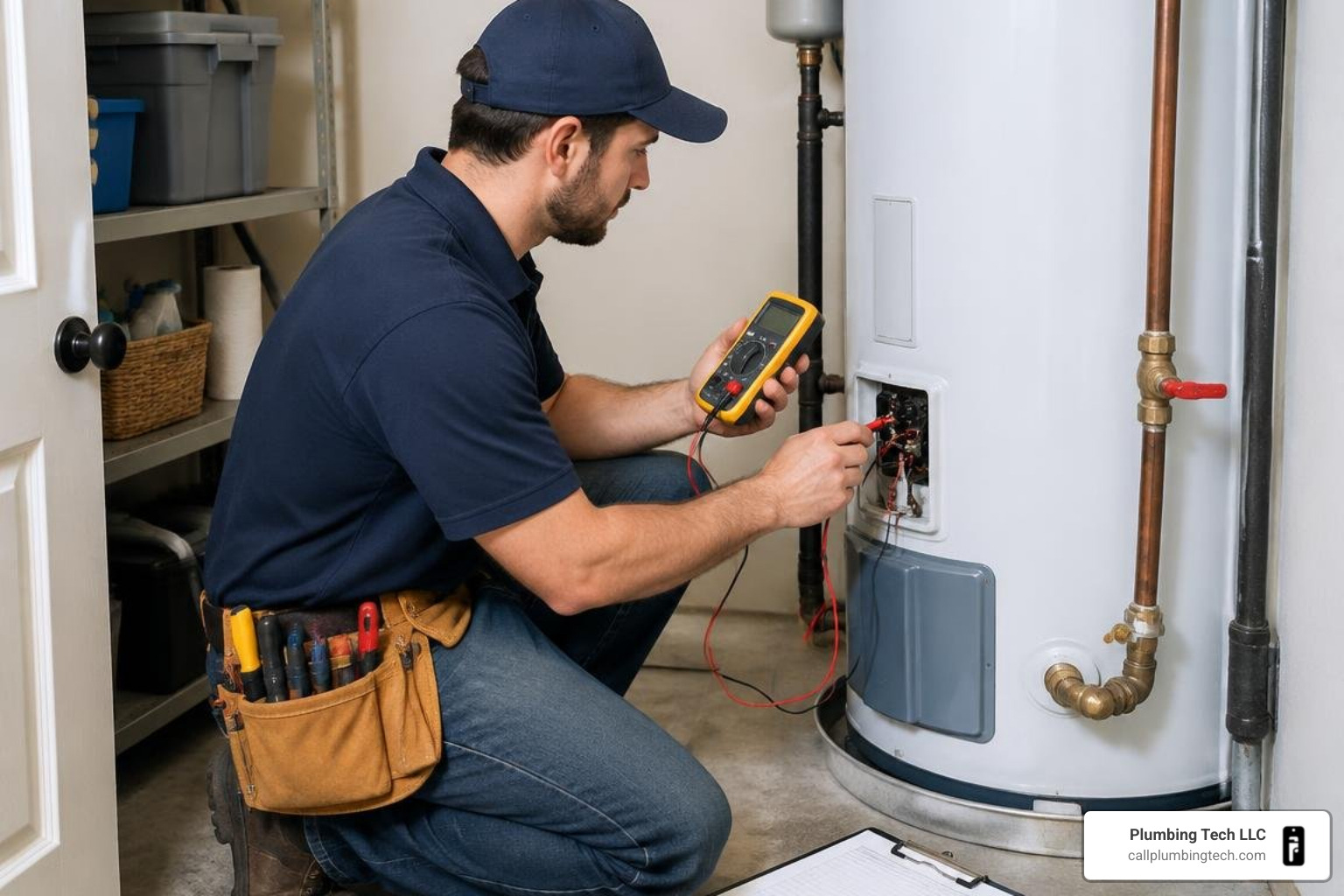
Understanding how to conquer common water heater repair challenges helps identify when a basic component fix is worthwhile. Homeowners can also review simple diagnostic steps for common water heater repairs to identify minor electrical or supply issues before scheduling a service visit.
A helpful guideline is the 50 percent rule: if an aging unit is past 8 years old and the estimated repair expense approaches 50 percent of a new installation, replacement is the more reliable long-term investment.
Warning Signs of Water Heater Failure
Water heaters rarely fail without early warning signs. Paying attention to performance shifts helps you schedule a planned replacement before an active leak causes property damage.
- Rusty or Discolored Water: Brownish tinting appearing exclusively on the hot water supply indicates internal steel tank corrosion or an exhausted anode rod.
- Rumbling and Popping Sounds: Heavy sediment accumulation on the bottom of the tank traps water underneath, creating boiling steam pockets and knocking noises.
- Moisture or Pooling Water: Active dampness around the base of the tank usually signals an internal vessel fracture that cannot be repaired.
- Inconsistent Temperatures: Lukewarm water or short-lived hot water supply often points to failed heating elements, broken dip tubes, or control board wear. Reviewing 5 signs you need a new water heater thermostat can help pinpoint if temperature issues are isolated to the control assembly.
Lifespan Expectations and Maintenance Value
Conventional gas and electric storage water heaters provide an average service life of 8 to 12 years. On-demand tankless units often run for 15 to 20 years or longer when properly serviced.
Routine maintenance significantly extends equipment lifespan. Scheduling annual tank flushes removes mineral sediment, and inspecting the sacrificial anode rod every 2 to 3 years protects the internal steel tank from corrosion.
Replacing a unit proactively around the 10-year mark helps prevent emergency failures, avoids unexpected after-hours service calls, and delivers immediate utility savings through improved energy efficiency standards.
Frequently Asked Questions About Water Heater Replacement
How much does it cost to change a 50-gallon water heater in 2026?
The total investment to replace a 50-gallon water heater depends on fuel source, venting design, and any code upgrades needed for your plumbing layout. Natural gas units, electric storage tanks, and hybrid heat pump models each carry different equipment and labor requirements. Direct like-for-like replacements are the simplest, while projects requiring new venting, electrical panel work, or line relocations involve a broader scope of work.
Is it worth replacing a tank system with a tankless water heater?
Upgrading to a tankless system is often a smart investment for households seeking continuous hot water, lower standby energy use, and a compact wall-mounted profile. While tankless installations involve additional upfront work for dedicated venting and supply line sizing, their extended lifespan of 15 to 20 or more years helps balance out the initial conversion expenses over time.
What safety and code requirements apply to water heater installation?
Water heater replacements must comply with local plumbing and mechanical codes to ensure safe operation. Requirements include acquiring municipal permits, verifying combustion exhaust draft to prevent carbon monoxide buildup, installing thermal expansion tanks on closed water systems, and piping temperature-and-pressure relief valves to approved drains. Working with licensed plumbing professionals ensures all installations meet manufacturer warranty terms and local safety guidelines.
Conclusion
Planning a water heater replacement before an unexpected failure keeps your home comfortable, safe, and energy efficient. Evaluating equipment styles, storage capacity, and professional installation requirements ensures you select the best solution for your household needs.
Plumbing Tech LLC delivers reliable residential and commercial plumbing services across Greater Cleveland, OH, including Strongsville and Richfield. As a veteran-owned company with certified backflow specialists, modern diagnostic equipment, and over 25 years of combined trade experience, our team provides trusted craftsmanship backed by a 100% satisfaction guarantee.
Contact our team today to schedule your professional water heater repair and installation service.