Commercial Gas Heater Repair: A Practical Troubleshooting Guide for Facility Managers
Introduction
A practical commercial gas heater repair starts with a systematic diagnostic sequence. Verify supply voltage and the 24-volt control transformer, measure static and manifold gas pressure with a digital manometer, inspect flame rectification signals at the flame sensor, and test continuity across high-limit switches, roll-out sensors, air proving switches, and exhaust draft dampers. These steps isolate the most common causes of no-heat calls before you replace parts or call for service.
A sudden breakdown in your commercial heating system can disrupt business operations, drive up energy expenses, and create serious safety hazards for staff and building occupants. Facility managers face the constant challenge of maintaining seamless uptime while managing heating asset lifecycles across busy commercial properties.
When equipment stops heating, a systematic diagnostic process is critical to restoring comfort safely. Navigating these heating challenges requires clear troubleshooting workflows, a solid understanding of fuel hazards, and strict adherence to modern safety codes.
Critical Safety Precautions and Emergency Gas Leak Protocols
Safety comes first whenever you manage commercial gas appliances. Commercial heating units consume large volumes of fuel, meaning any fuel leak or exhaust malfunction poses immediate hazards. Natural gas is lighter than air and rises, while propane (LP gas) is heavier than air and settles near floors and basements. That low-settling property makes propane leaks especially tricky to spot without dedicated floor-level detectors.
If anyone detects a rotten-egg sulfur odor, hears a distinct hissing near supply lines, or triggers a gas alarm, follow strict evacuation procedures immediately:
- Evacuate all personnel from the mechanical area and the building immediately.
- Do not operate light switches, power tools, cell phones, or any electrical controls that could cause an electric spark.
- If it is safe and accessible to do so from outside the hazard zone, close the main exterior gas shutoff valves.
- Contact your local gas utility provider and the local fire department once you reach a safe distance.
- Reach out for professional emergency plumbing services to locate and repair the line integrity issue before restoring power or fuel.
Managing gas appliances safely requires following standard safety-first protocols for gas connection repairs to protect property and personnel. Never use an open flame to search for fuel leaks. Technicians use non-corrosive bubbling leak detection solutions and calibrated combustible gas sniffers.
Mechanical rooms must also maintain adequate combustion air intake openings. Under the ANSI Z223.1 National Fuel Gas Code venting guidelines, confined mechanical spaces need two permanent openings for combustion air, ensuring steady burner operation without exhaust backdrafts.
Common Faults and Step-by-Step Commercial Gas Heater Repair Diagnostics
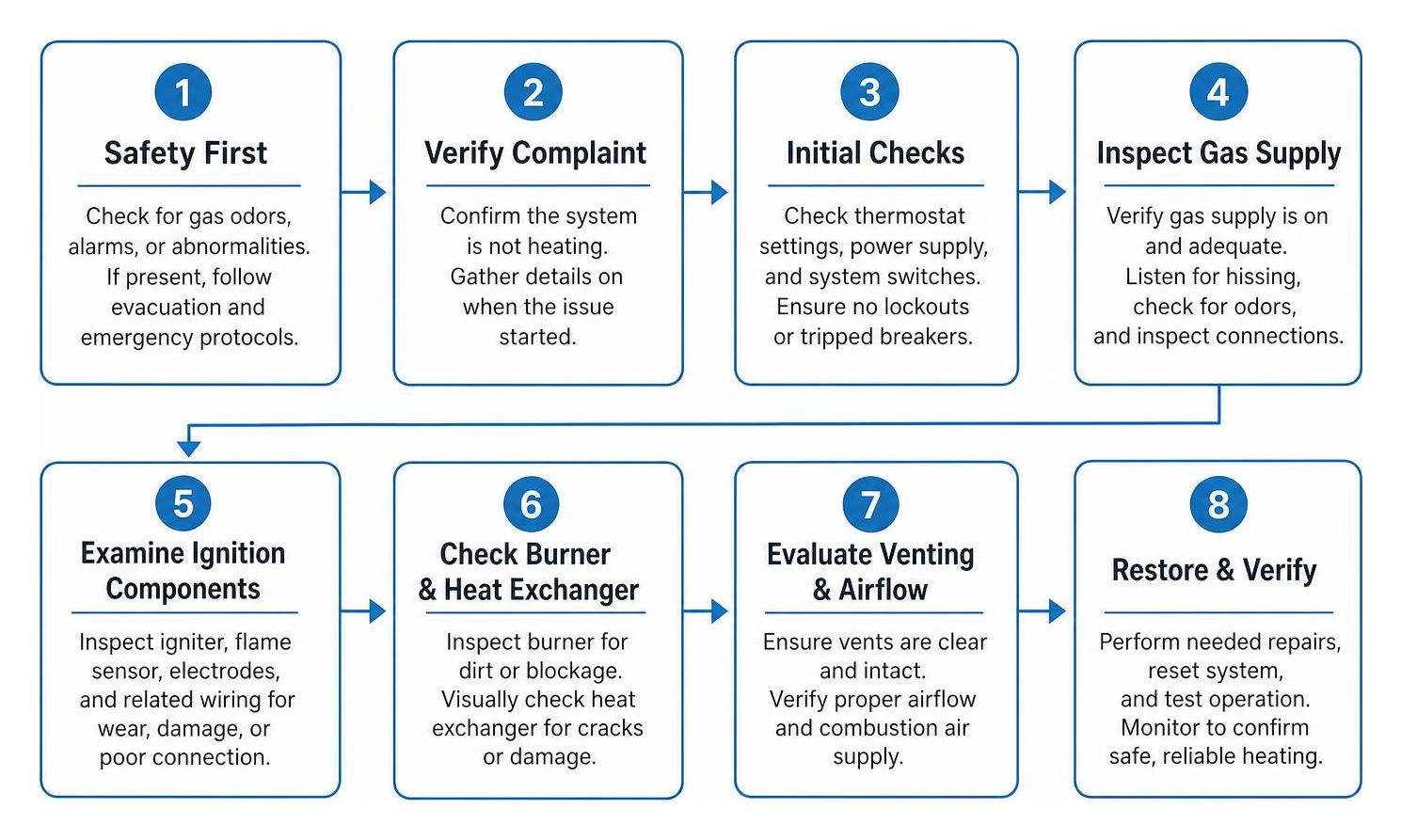
When managing a commercial gas heater repair, systematic testing prevents unnecessary guesswork and wasted labor hours. Modern commercial heaters use electronic control modules that record specific flash patterns or digital error codes to highlight system lockouts.
A thorough diagnostic procedure follows a clear sequence:
- Verify Supply Voltages and Transformers: Ensure line voltage matches unit specifications and that the 24-volt step-down control transformer delivers steady power to the control circuit board.
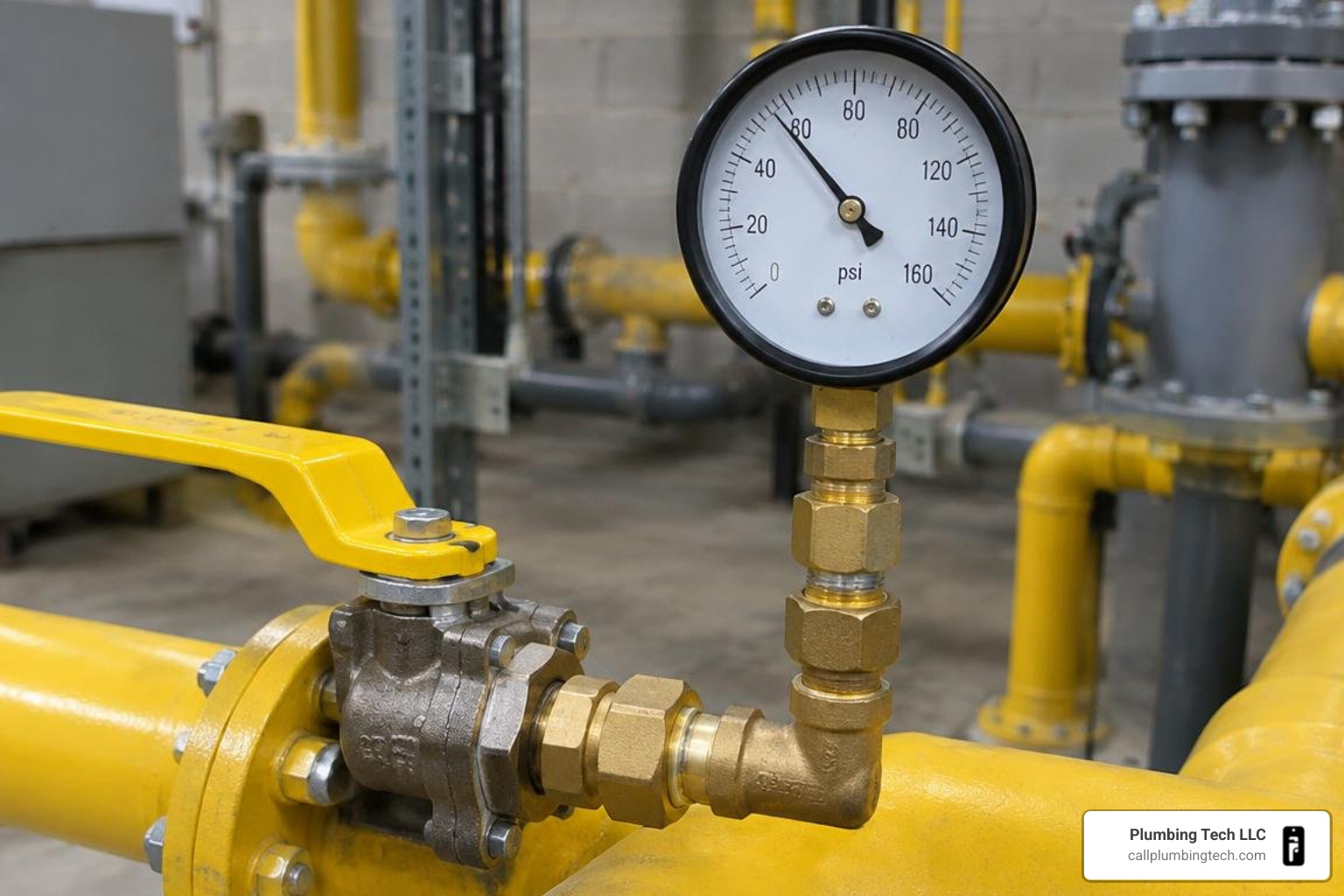
- Check Gas Delivery Pressure: Use an electronic digital manometer to test static supply pressure and dynamic running manifold pressure against the unit rating plate specifications.
- Evaluate Flame Rectification Signals: Measure the microamp signal generated across the flame sensing rod to confirm the board recognizes burner ignition.
- Inspect Safety Switches: Check continuity across high-limit switches, roll-out sensors, air proving switches, and exhaust draft dampers with a multimeter.
If gas supply pressure drops below the required threshold, the issue may involve upstream pipe sizing, regulators, or line blockages requiring expert gas line repair to restore fuel delivery.
Ignition Modules, Thermocouples, and Pilot Flame Troubleshooting
Commercial heaters rely on intermittent pilot systems, direct spark igniters, or hot surface igniters to start the main burners. Over time, carbon deposits, oxidation, and airborne dust coat the flame sensors and spark assemblies, causing nuisance shutdowns.
When a flame sensor is coated in soot, it cannot conduct the microamp current required for flame rectification. The control board assumes the flame failed to ignite and shuts down the gas valve within seconds to prevent raw fuel accumulation. Cleaning the sensor rod with fine abrasive cloth often restores current, though worn ignition modules and cracked ceramic insulators require outright replacement.
For older atmospheric equipment using standing pilots, millivolt drop across the thermocouple or thermopile is the most common failure point. A healthy thermocouple should generate 20 to 30 millivolts of direct current when heated by the pilot flame. If the voltage drops below safe operating limits, the safety magnet drops out and shuts the pilot valve. For step-by-step guidance on restoring pilot operation safely, review our walkthrough on relighting and restoring commercial hot water systems.
Heat Exchangers, Venting Integrity, and Carbon Monoxide Prevention
The heat exchanger transfers thermal energy from burning fuel into your building air or domestic water supply while keeping combustion exhaust gases isolated. Metal fatigue, thermal stress, rust, and chemical corrosion can eventually crack the heat exchanger walls.
A compromised heat exchanger is a severe safety hazard that can vent deadly carbon monoxide into occupied spaces. Warning signs of a failed heat exchanger include:
- Excessive soot accumulating around burner ports or draft diverters.
- Burner flames that flicker, roll out, or change from a crisp blue flame to a lazy, waving yellow flame when the blower starts.
- Unusual chemical odors or burning smells throughout the building ductwork.
- Moisture or heavy corrosion forming along the outer cabinet panels and flue connections.
Technicians perform combustion analysis with specialized flue gas analyzers to measure carbon monoxide levels, oxygen percentages, and stack temperatures. Proper venting configurations must always align with commercial gas water heater installation standards to ensure flue products exhaust safely outside the facility.
Gas Valves, Pressure Regulators, and Thermal Expansion Tanks
The gas control valve regulates fuel flow into the burner manifold using electrical solenoids managed by the primary controller. If an internal solenoid coil shorts out or internal diaphragms stick, the heater will fail to fire or will experience erratic pressure drops during peak demands.
In commercial gas water heating setups, water pressure and temperature management require equal care. Water heated inside a closed plumbing loop creates thermal expansion. Without a functioning thermal expansion tank, pressure spikes can trip temperature and pressure relief valves, stress fittings, and damage heat exchangers.
Thermostat settings require careful balance across commercial properties. Water temperatures over 125 degrees Fahrenheit can cause severe scalding burns within seconds, while temperatures set too low risk bacterial growth like Legionella. Installing certified thermostatic mixing valves lets you store water at sanitizing temperatures while delivering safe, tempered water to end fixtures.
Preventive Maintenance Schedules and Equipment Lifecycle Planning
Preventive maintenance extends the lifespan of commercial gas heating assets and lowers total operating costs. Skipping routine service increases emergency repairs, elevates fuel utility bills, and risks safety shutdowns.
Commercial heating appliances should receive professional servicing at least once every two years. For systems over ten years old or units running under constant commercial demand, schedule maintenance annually before the heating season begins.
A standard commercial maintenance visit covers:
- Inspecting and cleaning main burner assemblies, orifices, and pilot assemblies.
- Brushing and vacuuming combustion chambers, flue collectors, and heat exchangers.
- Testing electronic flame rectification signals, ignition controls, and limit safety devices.
- Verifying dynamic manifold gas pressure and clocking the gas meter for input rate.
- Performing flue gas combustion analysis to test thermal efficiency and draft.
- Flushing mineral sediment out of commercial boilers and water storage vessels.
- Checking the operation of thermal expansion tanks and temperature-pressure relief valves.
Managing these mechanical maintenance schedules alongside your general facility infrastructure is simple when coordinated through comprehensive commercial plumbing services.
Professional Commercial Gas Heater Repair and Licensing Requirements
Commercial gas equipment operates under strict local mechanical, fuel gas, and plumbing codes. Repairs require certified technicians who understand high-capacity gas manifolds, complex flue drafts, and commercial control circuitry.
Unqualified maintenance work can void equipment manufacturer warranties, violate local building codes, and risk insurance cancellations if an accident occurs. Licensed contractors carry active commercial liability insurance, obtain necessary mechanical permits, and use Original Equipment Manufacturer (OEM) parts engineered for your exact unit.
Evaluating the 50% Rule for Commercial Gas Heater Repair vs Replacement
Facility managers must constantly decide whether an aging heating unit warrants another repair or if replacement is the smarter financial choice. The 50% rule offers a dependable guideline: if the total cost of a repair exceeds 50% of the cost to install a new high-efficiency unit, replacement is generally the best long-term option.
Equipment age is another major factor. Most commercial atmospheric gas heaters have an expected service life of 10 to 15 years, while high-efficiency condensing units last 15 to 20 years with proper care.
| Decision Factor | Recommend Repair | Recommend Replacement |
|---|---|---|
| Equipment Age | Under 8 to 10 years old | Over 12 to 15 years old |
| Repair Cost Ratio | Less than 30% of replacement cost | Greater than 50% of replacement cost |
| Frequency of Breakdowns | First failure in several heating seasons | Repeated seasonal failures and downtime |
| Energy Efficiency | Near modern baseline efficiency ratings | Outdated system with climbing fuel bills |
| Heat Exchanger Status | Intact, clean, and structurally sound | Cracked, severely rusted, or leaking |
| Part Availability | OEM components readily available | Discontinued or obsolete components |
Upgrading to modern condensing gas equipment can cut fuel usage by up to 20% to 30%. Local gas utilities also provide commercial energy efficiency rebates that help offset initial equipment replacement investments.
Frequently Asked Questions About Commercial Gas Heating Systems
What are the typical diagnostic and repair costs for commercial gas heaters?
Commercial repair expenses depend on the failed part, heater capacity, and required labor hours. Minor repairs like flame sensor cleanings, thermocouple swaps, or pressure switch replacements require minimal parts, while complex jobs like blower motor rebuilds, gas valve replacements, or heat exchanger repairs require higher labor investments. Technicians generally apply an initial diagnostic fee toward the completed repair.
How can facility managers detect unsafe carbon monoxide levels from gas heaters?
Carbon monoxide is completely colorless, tasteless, and odorless, making digital detection essential. Facilities should maintain hardwired commercial carbon monoxide detectors with battery backups throughout all equipment rooms and adjacent tenant areas.
Physical warning signs include sooting around burner trays, yellow-tipped burner flames, condensation on nearby cool surfaces, and draft hood exhaust spillage. If alarms sound or occupants experience headaches or dizziness, evacuate immediately and call emergency services.
How often should commercial gas heating equipment receive professional servicing?
Commercial gas heaters should undergo a thorough professional service at least every two years. For units older than 10 years or those supporting continuous year-round operational demands, annual maintenance is strongly recommended. Regular tune-ups keep units running cleanly, verify safety switches, and catch minor wear before it causes mechanical downtime.
Conclusion
Keeping your commercial gas heating equipment running safely and efficiently protects your building, controls energy overhead, and prevents sudden business interruptions. Following a structured troubleshooting workflow, addressing safety warning signs early, and scheduling regular preventive maintenance will help you maximize equipment life and protect building occupants.
Plumbing Tech LLC delivers reliable, code-compliant commercial plumbing and gas heating solutions across Greater Cleveland, OH. Backed by over 25 years of combined industry experience, our veteran-owned team provides modern diagnostics, 24/7 emergency response, and a 100% satisfaction guarantee.
Whether your facility requires urgent system troubleshooting, routine safety inspections, or a full system upgrade, count on our licensed team for dependable commercial water heater repair and installation and gas service. Reach out today to schedule your commercial heating inspection.