Choosing the Best Pipe for Plumbing Hot and Cold Water Lines
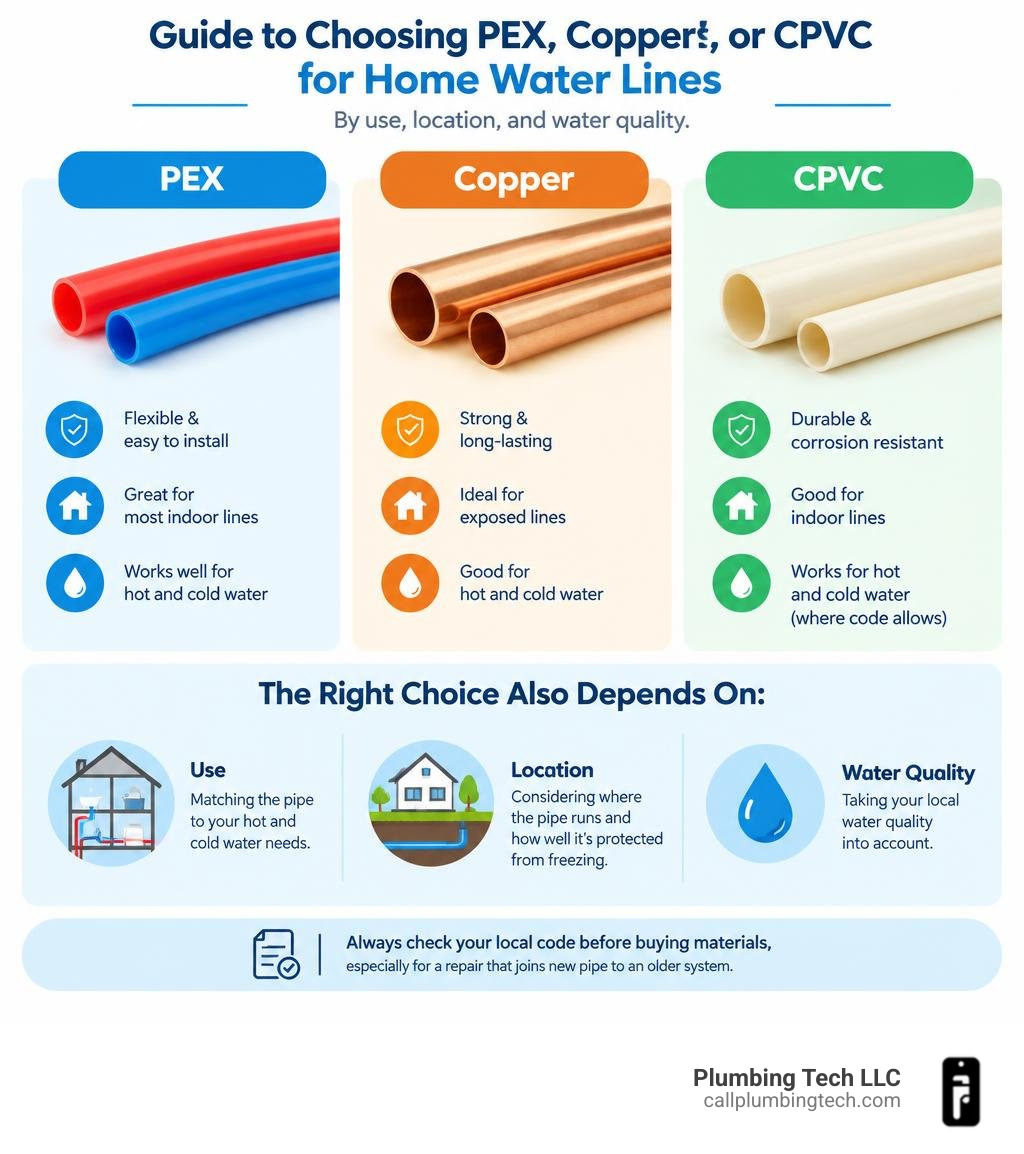
For most indoor hot and cold water lines, PEX is the best pipe for plumbing when flexibility and easy installation matter most. Copper is a strong choice for exposed lines and long-term durability. CPVC is another option for hot and cold water where local code allows it. Standard PVC belongs in drains or other approved cold-water uses, not indoor hot-water lines.
In Greater Cleveland, the right choice also depends on where the pipe runs, your water quality, and how well the line is protected from freezing. Check local code before buying materials, especially for a repair that joins new pipe to an older system.
Learn more about best pipe for plumbing:
Core Materials: Comparing the Best Pipe for Plumbing Water Lines
When replacing aging water lines or roughing in a new addition, three primary materials dominate residential potable water distribution: copper, PEX, and CPVC. Each material behaves differently under pressure, reacts distinctively to municipal water additives, and requires specific installation methods.
| Material | Expected Lifespan | Max Operating Temp | Primary Joint Method | Common Applications |
|---|---|---|---|---|
| Rigid Copper | 50 to 80 years | 400°F+ | Solder (sweat) or press fittings | Whole-home supply, exposed utility runs, boiler loops |
| PEX Tubing | 40 to 50 years | 200°F at 80 psi | Expansion (PEX-A) or crimp (PEX-B) | Retrofits, interior branch supply, radiant floor systems |
| CPVC Pipe | 40 to 50 years | 200°F at 100 psi | Solvent cement welding | Hot and cold indoor supply, budget-conscious builds |
| Schedule 40 PVC | 25 to 40+ years | 140°F | Solvent cement welding | Drain, waste, vent (DWV), exterior cold irrigation |
Understanding how these core options perform inside your walls helps ensure clean drinking water, steady pressure, and leak-free reliability for decades.
Copper Piping for Durability and Potable Water Safety
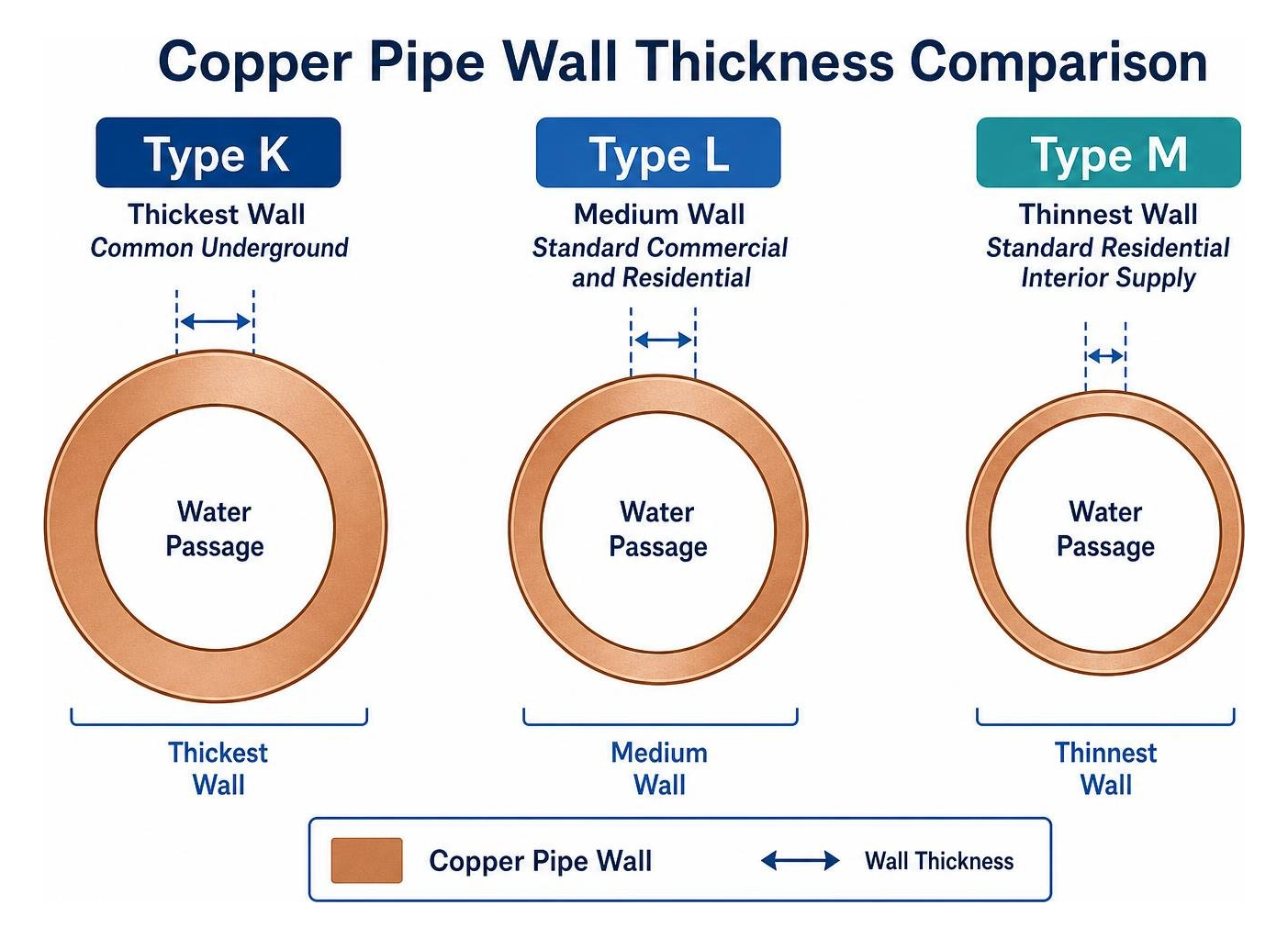
Copper has served as the backbone of residential plumbing systems across the United States for over 70 years. Plumbers divide rigid copper into distinct wall thicknesses, primarily Type K (thickest wall, common underground), Type L (medium thickness, commercial and residential standard), and Type M (thinnest wall, standard residential interior supply).
Type M and Type L rigid copper lines are joined by sweating fittings with a torch and lead-free solder, or by using modern mechanical press-connect tools. Copper is naturally biostatic, meaning it inhibits bacterial growth within the pipe. It is completely impermeable to outside contaminants, fireproof, and highly resistant to physical impact.
However, rigid copper systems can experience pinhole leaks over time if the water supply is slightly acidic or carries high concentrations of abrasive particulates. When older metal lines develop localized issues, knowing how to properly repair damaged copper pipes using clamps, soldered couplings, or transition fittings can keep a minor drip from causing catastrophic structural water damage.
PEX Tubing as the Best Pipe for Plumbing Retrofits and Flexibility
Cross-linked polyethylene, universally known as PEX, has become the leading material for modern home repiping. PEX is flexible enough to snake through stud cavities and subfloors with minimal drywall removal. This flexibility dramatically reduces the total number of fittings required behind finished walls, eliminating the most common failure points in residential plumbing.
When evaluating supply pipe materials: copper vs PEX vs CPVC, PEX stands out for its variety of manufacturing grades:
- PEX-A: Produced using the Engel method, PEX-A is the most flexible variation. It features thermal memory, allowing you to expand the pipe end using a dedicated expansion tool before inserting a fitting. The pipe then shrinks back around the sleeve to create a watertight seal.
- PEX-B: Formed via the silane method, PEX-B is stiffer than PEX-A. It is assembled using copper crimp rings or stainless steel clamps over barbed insert fittings.
- PEX-C: Manufactured using electronic irradiation, PEX-C is the stiffest form and is often used for short repair segments or hydronic heating loops.
PEX is also deployed in home run manifold systems, where individual lines run from a central distribution hub directly to each fixture without intermediate hidden joints. PEX must never be installed outdoors or in areas with direct sunlight, as ultraviolet radiation breaks down the molecular bonds of cross-linked polyethylene, causing premature wall cracking.
CPVC and PVC Options for Budget and Drainage
Chlorinated polyvinyl chloride (CPVC) is a rigid thermoplastic engineered by adding extra chlorine molecules to standard PVC resin. This chemical modification allows CPVC to handle fluid temperatures up to 200°F, making it suitable for both hot and cold potable water lines inside the home.
CPVC pipe connects using a chemical solvent cement process that fuses the fitting and pipe into a single piece. Unlike copper, CPVC is completely immune to degradation from chlorine, chloramine disinfectants, and acidic water. However, CPVC can become brittle as it ages in dry environments, making it vulnerable to impact damage or vibration stress.
Standard polyvinyl chloride (PVC), typically sold as Schedule 40, cannot handle temperatures above 140°F. For this reason, modern plumbing codes prohibit standard white PVC for indoor pressurized hot water delivery. PVC remains the gold standard for drain, waste, and vent systems, as well as exterior cold irrigation runs. Detailed reviews of types of plumbing pipes show that misapplying PVC to pressurized domestic hot water lines often results in pipe warping, joint separation, and major water leaks.
Hot vs Cold Water Supply Line Performance
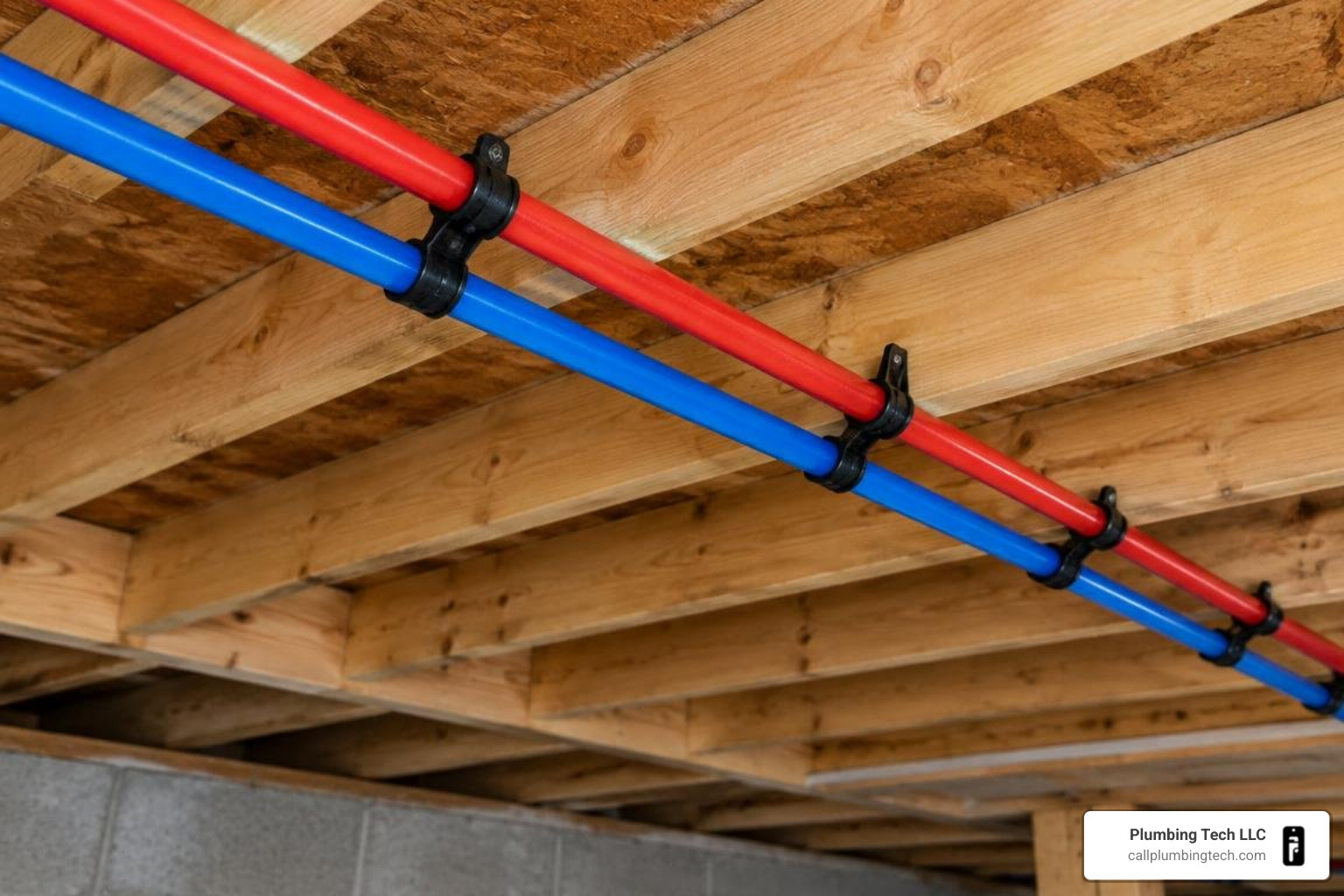
Distributing hot and cold water requires pipe materials that can withstand varying pressures, continuous thermal expansion, and aggressive water treatment chemistry. While a cold-water line remains at a stable ambient temperature, hot-water supply lines expand and contract every time a faucet opens and closes.
Thermal Expansion and Pressure Ratings
When hot water flows through a system, plastic and metal pipes expand along their length. Rigid copper expands moderately, but plastic pipes like PEX expand at a much higher rate. Plumbers accommodate this by leaving slack in PEX runs and installing support brackets that allow the tubing to slide freely without rubbing against wood framing or sharp metal edges.
Fitting geometry also plays a major role in dynamic water pressure. Insert fittings used in PEX-B systems fit inside the pipe, slightly narrowing the inner diameter at every junction. In contrast, CPVC socket fittings slip over the outside of the pipe, maintaining a full internal waterway. Research published in ASPE Pipeline on choosing residential plumbing systems shows that a half-inch 90-degree PEX insert fitting can create significantly higher hydraulic friction loss compared to a full-bore socket fitting. When planning high-flow installations, such as multiple showerheads in a primary bathroom, sizing supply runs correctly prevents sudden drops in water pressure.
Selecting the Best Pipe for Plumbing in Freezing Climates
In cold regions like Northeast Ohio, sub-zero winter temperatures can cause uninsulated pipes in exterior walls, crawlspaces, and unheated basements to freeze. When water freezes, it expands by approximately 9 percent, generating immense internal hydraulic pressure.
Rigid metal pipes like copper, as well as brittle thermoplastics like aged CPVC, have rigid walls that cannot stretch. When ice blocks the line, the pressure spike ruptures the pipe wall or splits soldered joints. PEX tubing possesses radial elasticity, allowing the pipe wall to expand slightly to accommodate freezing water and then return to its original shape once thawed.
While PEX offers superior freeze resistance, no plumbing system is entirely immune to severe deep-freeze conditions, especially around metal connection fittings. Preparing your home with reliable emergency pipe repair options ensures you can control sudden winter leaks before significant structural damage occurs.
Key Factors in Choosing Pipe Materials
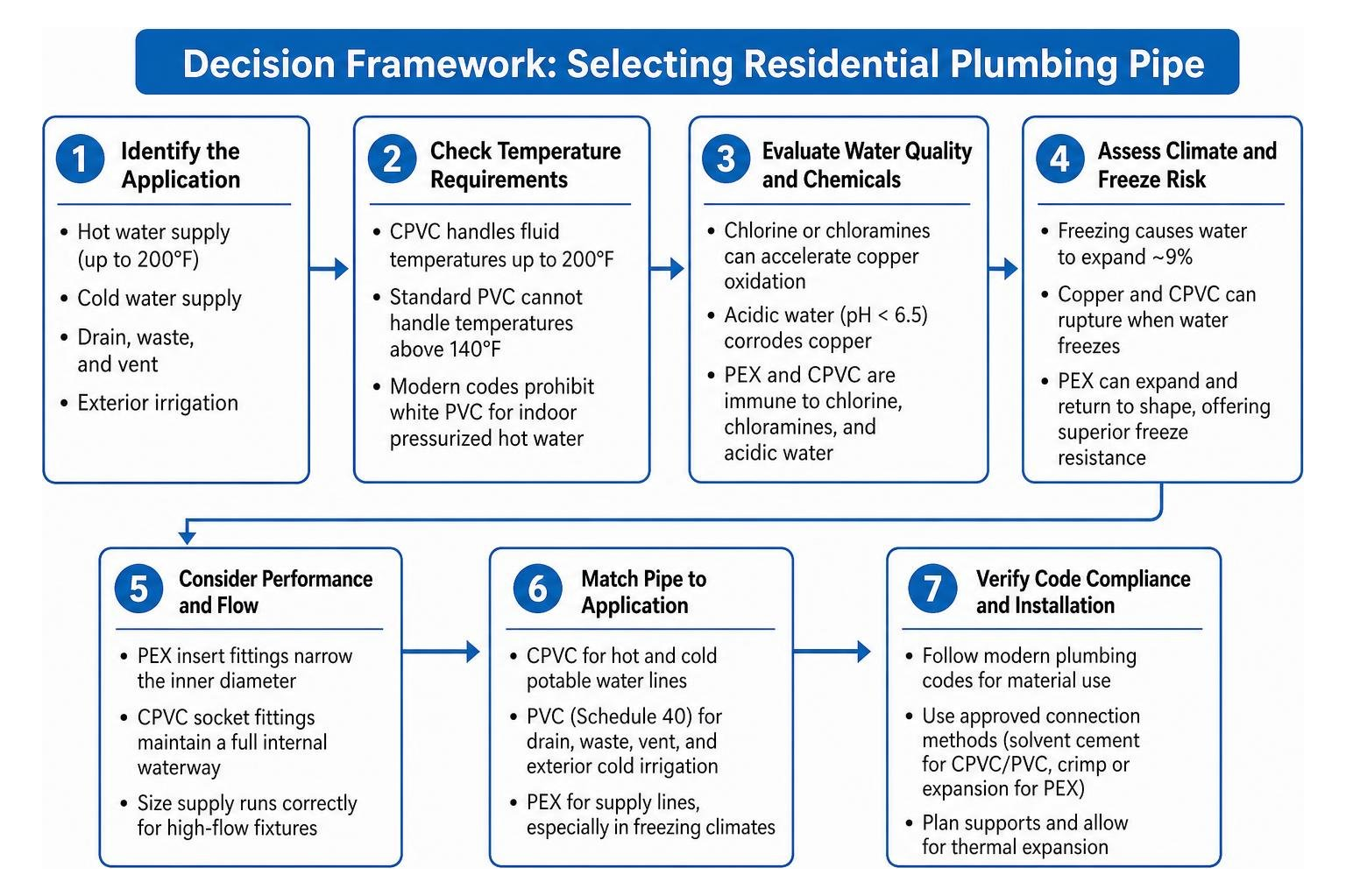
Selecting the ideal piping for a whole-house repipe or minor addition requires balancing localized water conditions, installation parameters, and municipal code requirements.
Water Quality and Chemical Resistance
Your municipal water source directly impacts pipe lifespan. Municipalities often treat tap water with chlorine or chloramines to eliminate bacteria. While necessary for sanitation, these disinfectants can accelerate the oxidation of copper piping under high temperatures, leading to pitting corrosion and pinhole leaks.
Well water with a low pH level (acidic water below 6.5) quickly strips the protective internal patina from copper pipes, releasing trace copper into your water and turning fixtures blue-green. In contrast, plastic materials like PEX and CPVC are completely immune to acidic mineral corrosion.
When combining existing metal lines with new plumbing, plumbers install dielectric unions or brass adapters to eliminate galvanic corrosion caused by dissimilar metals in contact.
Installation Complexity and Long-Term Costs
Every pipe material brings unique labor demands and equipment needs:
- Copper: Requires specialized tools, propane or MAPP gas torches, flux, solder, and burn pads. Sweating copper joints requires mechanical precision and fire safety precautions inside wall cavities.
- PEX: Highly cost-effective and fast to install. PEX requires crimp rings, clamps, or specialized mechanical expansion tools, along with simple plastic tubing cutters. Its bend radius allows continuous runs around joists, drastically cutting down on fitting counts.
- CPVC: Requires hand saws or plastic pipe cutters and a two-step solvent cement and primer application. It requires adequate ventilation during installation to manage solvent fumes.
While copper raw materials carry a higher investment cost, copper retains strong resale value and mechanical durability. PEX provides the lowest total installed cost, saving substantial labor time during large-scale residential installations.
Drain, Waste, and Vent (DWV) and Underground Piping
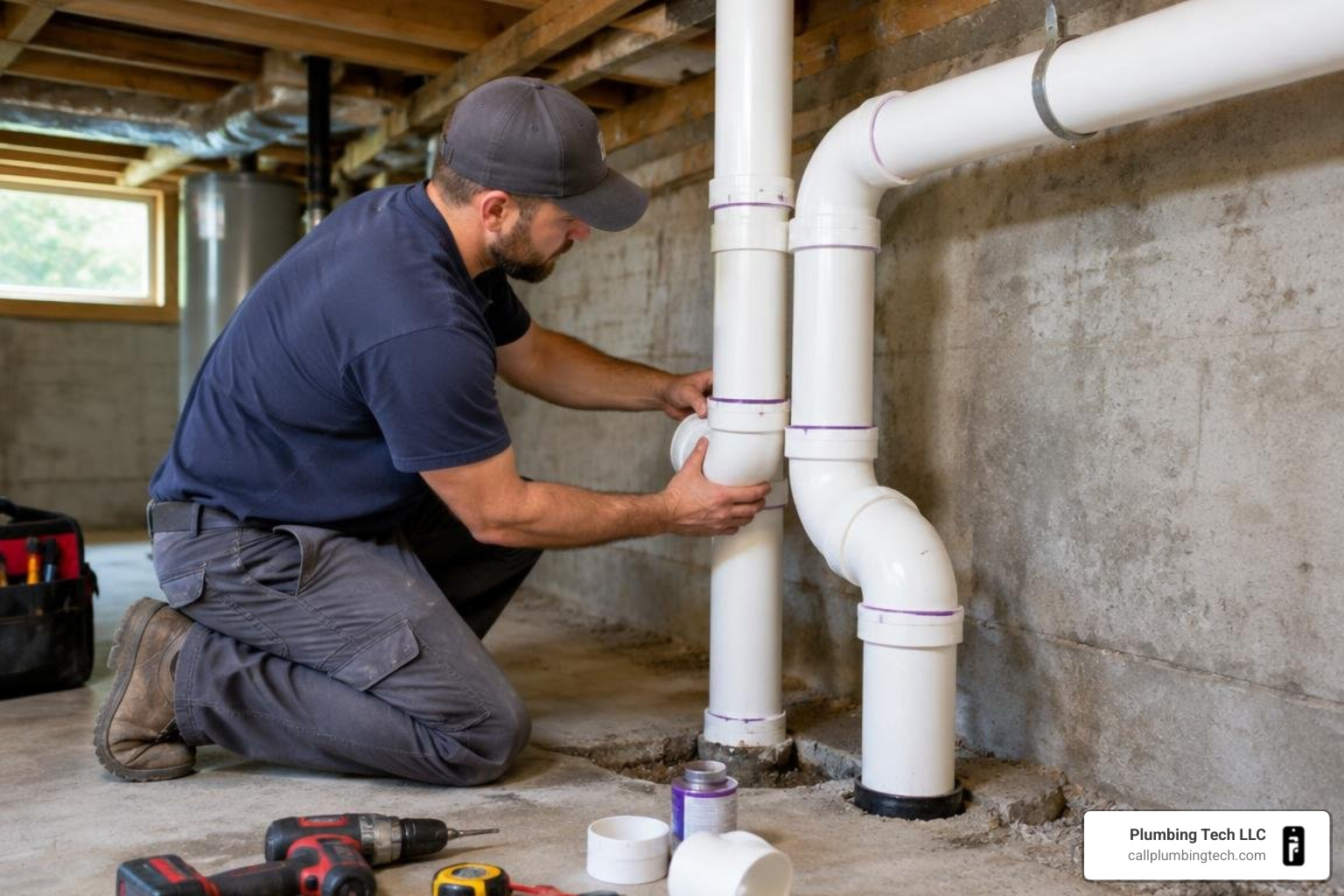
Potable water supply represents only half of your home plumbing system. Wastewater discharge and atmospheric venting require pipe materials designed specifically for non-pressurized, gravity-fed flow.
Gravity-Fed DWV Materials
Drain, waste, and vent lines carry greywater from sinks and showers, blackwater from toilets, and sewer gases safely out through the roof. The most common DWV materials include:
- Schedule 40 PVC: The standard material for residential drainage. It features smooth interior walls that resist build-up and scale. White Schedule 40 PVC is lightweight, cost-effective, and easy to join with solvent cement.
- ABS Pipe: A black rigid plastic commonly used in DWV applications. ABS does not require a separate primer step before solvent cementing, though it is more sensitive to direct sunlight than PVC.
- Cast Iron: Historically standard in older homes, heavy cast iron is still installed in multi-story homes and high-end construction. The dense walls of cast iron naturally dampen the rushing sound of draining wastewater inside living room and bedroom walls.
Maintaining smooth drainage paths prevents costly backups. Implementing proven drain solutions that keep pipes clear preserves the integrity of your gravity DWV system over decades of use.
Main Service and Exterior Water Lines
The underground pipe connecting your municipal water meter or private well to your home foundation faces heavy soil loads, moisture, and ground freezing cycles.
High-Density Polyethylene (HDPE) and medium-density blue MDPE are the preferred choices for underground main water services. These heavy-duty continuous coils eliminate underground joints between the street stopcock and the home main shut-off valve. They resist root intrusion, ground shifting, and freezing soil conditions.
Exterior gas and appliance lines follow separate material codes. Knowing what code standards require for appliance lines ensures combustible fuel supplies remain completely isolated from plumbing water systems.
Frequently Asked Questions About Residential Plumbing Pipes
Can different plumbing pipe materials be mixed in one home?
Yes, different pipe materials can be mixed safely if proper transition fittings are used. When connecting copper to galvanized steel, you must install a dielectric union or a long brass nipple to prevent galvanic corrosion, which occurs when dissimilar metals exchange electrons in water.
When transitioning between rigid copper, CPVC, or PEX, plumbers use approved push-to-connect fittings, compression adapters, or threaded male and female transition couplings. Never connect standard PVC directly to hot water heaters or metal supply lines inside living spaces.
What is the safest pipe material for drinking water?
All modern plumbing pipes approved by the International Plumbing Code (IPC) and Uniform Plumbing Code (UPC) must meet NSF/ANSI Standard 61 for potable water safety. Rigid copper with lead-free solder has a long track record of safety, adding no organic compounds to drinking water while naturally resisting microbial growth.
Certified PEX-A and PEX-B lines are thoroughly tested to confirm they do not leach hazardous volatile organic chemicals (VOCs) or toxic substances into running tap water. To ensure safe drinking water, always verify that any plastic pipe bears the NSF-pw or NSF 61 mark on its exterior print stream.
How long do modern PEX and copper pipes last?
Under normal operating conditions, rigid copper pipes last between 50 and 80 years, while modern PEX tubing is rated for an expected lifespan of 40 to 50 years.
Actual pipe longevity depends on water chemistry, operating temperatures, and static system pressure. Water supplies with high mineral hardness or balanced neutral pH help pipes reach their maximum rated lifespans, while untreated acidic well water or excessive water velocity can shorten service life.
Conclusion
Choosing the right plumbing pipe depends on your budget, water chemistry, local building codes, and whether you are working on an exposed utility room or snaking lines through existing drywall. PEX offers unmatched flexibility and freeze resistance for indoor retrofits, copper provides time-tested durability and fire resistance, and Schedule 40 PVC remains the ideal solution for sanitary drainage.
If you are planning a whole-house repiping project, resolving frequent water line leaks, or updating aging utility connections in Greater Cleveland, trust the experienced team at Plumbing Tech LLC. We provide professional installations, backflow certifications, and comprehensive plumbing services backed by modern technology, a 100 percent satisfaction guarantee, and over 25 years of combined trade experience. Contact our team today to evaluate your home plumbing and select the ideal piping system for your project.