Gas Water Heater Leaking From the Bottom? Act Now
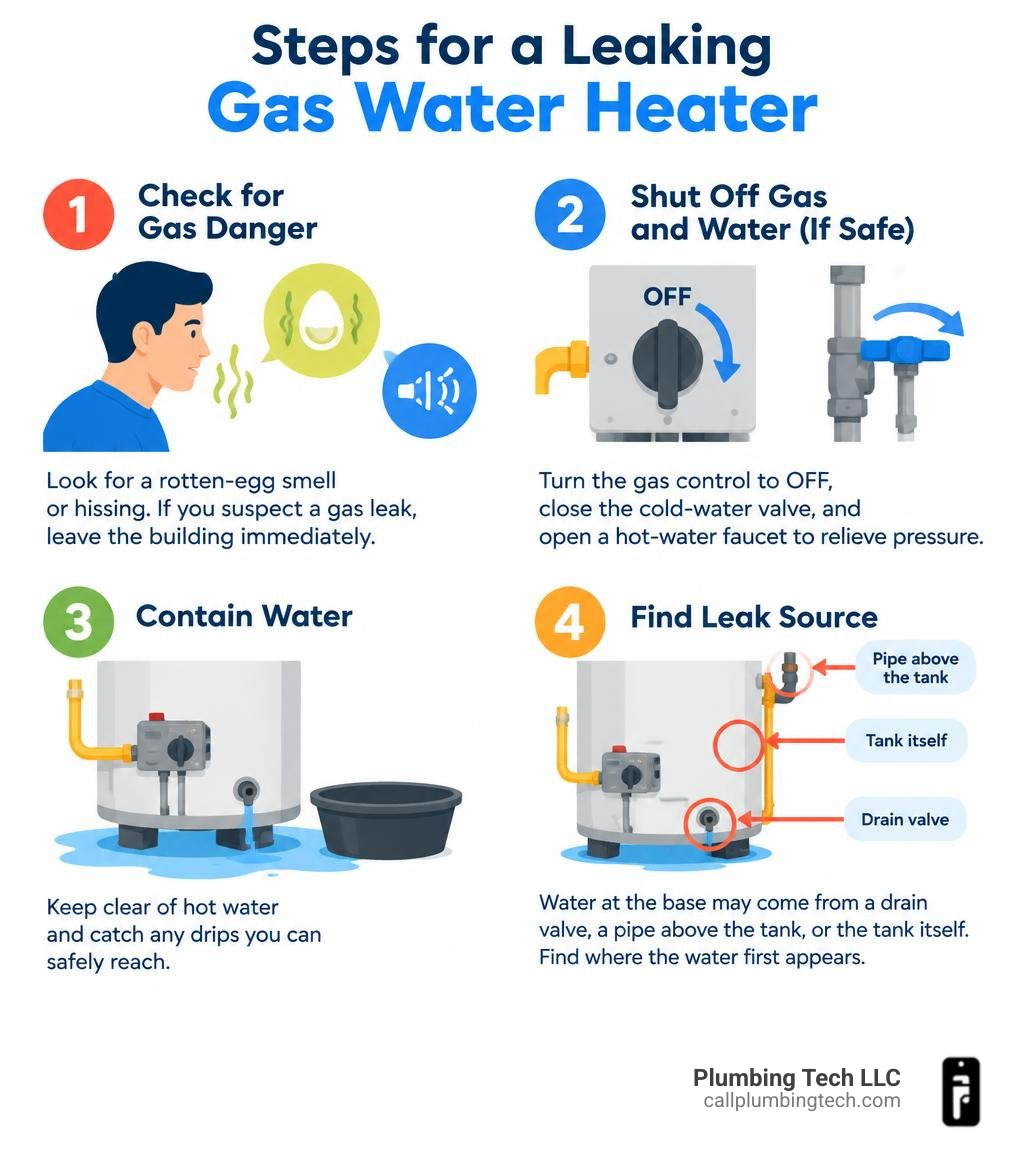
If you find a gas water heater leaking from the bottom, first check for a rotten-egg smell or hissing. If you suspect a gas leak, leave the building immediately. Do not touch switches or valves. Call your gas utility or 911 from outside.
If there is no sign of a gas leak, turn the heater’s gas control to OFF, close the cold-water valve feeding the tank, and open a hot-water faucet to relieve pressure. Keep clear of hot water and catch any drips you can safely reach.
Water at the base may come from a drain valve, a pipe above the tank, or the tank itself. A leaking component may be repairable, but a leaking tank needs replacement. The next step is to find where the water first appears.
Gas water heater leaking terminology:
Immediate Safety Steps to Stop Water and Gas Flow
When water pools around your appliance, acting fast prevents extensive structural damage to your flooring, drywall, and finished basement spaces. Water heaters store between 40 and 50 gallons of water under continuous municipal pressure. If that containment fails or a connection breaks loose, the water will keep flowing until someone stops it at the supply source.
First, stay calm and assess the environment. Avoid stepping into standing water if electrical cords, nearby appliances, or wiring sit submerged in the pool. If the area is safe to enter, focus on cutting off both the energy source and incoming water volume. While addressing the leak, utilizing quick fixes for household leaks can help contain the spread of moisture across your floor.
How to Safely Shut Down Gas and Water Lines
To shut off the water feeding the unit, look at the top of the tank. You will see two pipes entering the appliance. Locate the cold-water inlet line, which typically sits on the right side when you face the front label. Trace that pipe upward until you find a shutoff valve.
Depending on your plumbing age, you will encounter one of two valve types:
- Ball Valve: This features a straight handle. Turn the handle a quarter-turn until it sits perpendicular (at a 90-degree angle) to the pipe. This instantly cuts incoming flow.
- Gate Valve: This features a round wheel handle. Turn the wheel clockwise until it stops completely. If the valve is older and corroded, turn it slowly without forcing it to avoid snapping the internal stem. If water continues flowing past a closed gate valve, shut off your home’s main water meter valve instead.
Once the cold-water valve is closed, head to a nearby sink on an upper level or in a laundry basin. Turn on a hot-water tap completely and let it run until water stops flowing. This critical step bleeds trapped pressure out of the tank and stops the pressure from forcing water out of the leak point.
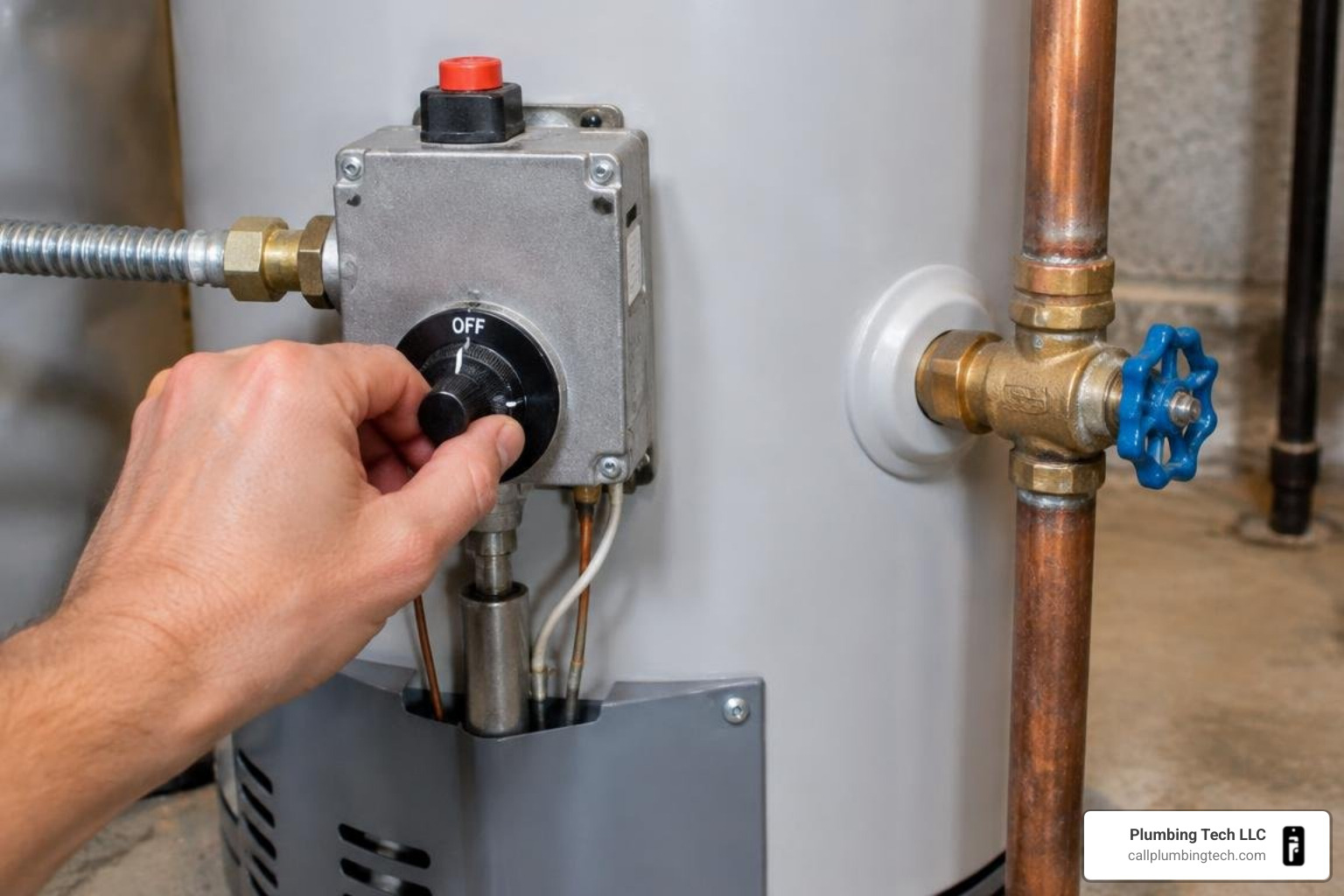
Next, manage the fuel supply. Locate the gas control valve box mounted on the lower front exterior of the tank. Turn the main temperature dial down to “VACATION” mode or rotate the primary control knob to “OFF”. If you plan to leave the house or wait for service, rotating the knob to “OFF” is the safest protocol.
Gas Leak Warning Signs and Fire Hazards
Natural gas is naturally odorless, colorless, and highly combustible. Utilities add a chemical called mercaptan to create a distinct sulfur or rotten-egg scent so homeowners can detect airborne leaks immediately. If your water heater develops a leak in the fuel supply line or gas control assembly, it creates an extreme fire, explosion, and asphyxiation hazard.
Watch for these warning signs near your unit:
- A persistent rotten-egg or sulfur odor near the tank base or supply line.
- A hissing, whistling, or roaring sound near the gas pipe fittings or control box.
- The pilot light repeatedly blowing out, or displaying a lazy yellow or flickering flame instead of a crisp, steady blue cone.
- Visible soot, burn marks, or scorching around the combustion chamber door or draft hood.
- Physical symptoms including dizziness, headaches, nausea, or burning eyes while standing near the utility room.
Incomplete combustion can also produce carbon monoxide, an invisible, odorless toxin. If you observe any of these red flags, do not flip light switches, do not unplug appliances, and do not use your cell phone inside. Evacuate everyone from the home immediately, leave doors open behind you, and call your gas utility or 911 from a safe distance outside. Once the utility clears the area, follow safe gas connection repairs to resolve any line or fitting damage.
Common Causes of a Gas Water Heater Leaking from the Bottom
Finding water pooled around the bottom of the heater does not automatically mean the entire appliance has collapsed. Water flows downward along the outer metal jacket, meaning a leak starting at the very top can travel inside the insulation blanket and emerge at the base ring.
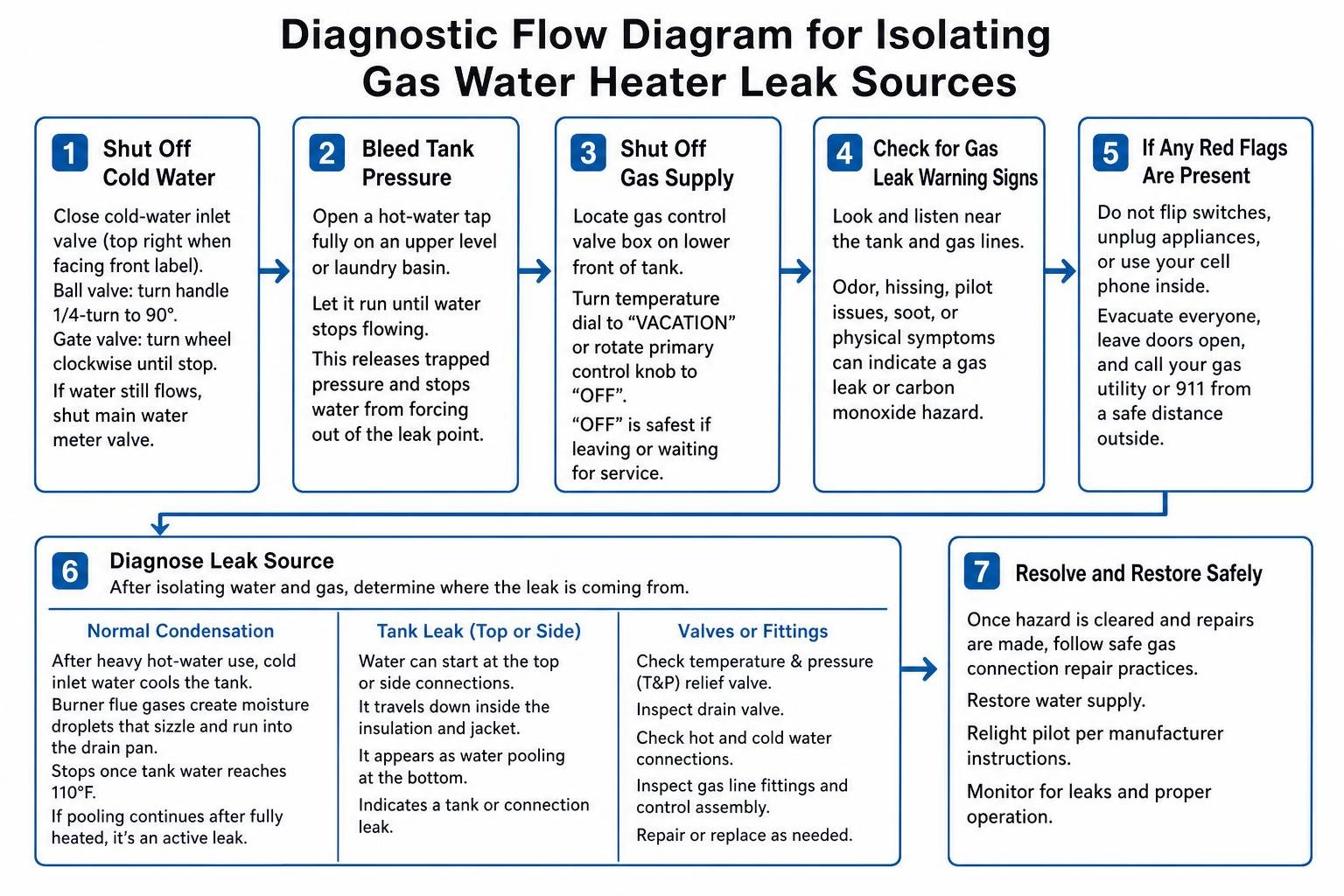
Before assuming the worst, check for thermal condensation. When a large volume of hot water is drawn from the tank, incoming cold water cools the steel vessel rapidly. When the gas burner ignites underneath, warm flue gases strike the cold tank surface, producing moisture droplets. These droplets accumulate, drip onto the hot burner with a sizzling sound, and run down into the drain pan.
According to the Technical Bulletin on water heater puddle indicators, normal operational condensation stops once the internal water temperature reaches 110 degrees Fahrenheit. If the water continues pooling after the tank is fully heated, you have an active plumbing leak.
Diagnosing a Gas Water Heater Leaking from the Tank vs Valves
To determine whether the leak originates from an external fitting or the inner vessel, dry the tank exterior and floor thoroughly with old towels. Use a bright flashlight to inspect all possible entry and exit points.
The primary bottom component is the drain valve, located a few inches above the floor. Traditional tanks use plastic or brass drain valves for annual flushing. If the internal rubber washer degrades or sediment gets trapped in the valve seat, water will seep from the threaded outlet. If you notice moisture here, installing an inexpensive brass garden hose cap with a rubber washer onto the outlet can temporarily halt the drip.
If the drain valve is completely dry, but water seeps out from under the bottom metal rim or through the combustion chamber access door, the internal glass-lined steel tank has likely fractured. Over years of thermal expansion and contraction, mineral sediment settles on the tank bottom. This sediment insulates the water from the gas burner, causing the bottom steel head to overheat, warp, and rust through. When troubleshooting common water heater challenges, a breached internal tank cannot be patched or welded and requires total unit replacement.
Leaking Temperature and Pressure Relief Valve or Discharge Pipe
Every residential water heater incorporates a Temperature and Pressure (T&P) relief valve. This critical safety device is installed either on the top of the tank or high on the side. It connects to a copper or plastic discharge pipe that extends downward toward the floor or a drain pan.
Inside the T&P valve, a heavy-duty spring holds a seat washer closed against tank pressure:

When internal water temperature exceeds 210 degrees Fahrenheit or internal pressure climbs over 150 psi, the spring compresses, opening the valve to release water and prevent an explosion.
A discharge pipe dripping onto the floor can point to several distinct issues:
- Thermal Expansion in Closed Systems: If your municipal water connection has a backflow preventer or check valve, heating water expands with nowhere to go. Without a functional expansion tank, the extra volume pushes internal pressure past 150 psi.
- Excessive Household Water Pressure: Normal residential water pressure should measure between 40 and 60 psi. If city supply pressure spikes above 80 psi, it forces the T&P valve to vent.
- Corroded or Defective Valve: Mineral scale can coat the valve seat, preventing it from sealing tightly after a routine safety test.
If you suspect high pressure, testing the discharge line and matching it against external water lines will reveal if the valve is failing or simply doing its job to protect your home.
Gas Control Valve and Threaded Connection Leaks
The gas control valve thermostat is the rectangular control unit screwed directly into the lower front of the tank. The back of this control unit features a long brass probe that inserts into the water storage area through a threaded tank spud.
Over time, the factory pipe joint compound or Teflon tape sealing these threads can degrade, allowing water to weep along the threads and run down the front jacket into the burner pan. Additionally, internal seal failures inside older control bodies can allow slow water drips to form behind the plastic casing. If your water is overheating or fluctuating wildly, review these steps for identifying faulty water heater thermostats to pinpoint whether the control assembly needs resealing or complete replacement.
Repair vs. Replace: Deciding the Best Solution
When facing an active leak, homeowners must weigh the expense of component repairs against installing a brand-new water heating system. Traditional storage tank water heaters feature an expected operational lifespan of 8 to 12 years. If your unit is approaching or past this age range, investing in major component repairs rarely makes financial sense.
Plumbing professionals recommend using the standard 50 percent rule: if the total cost of parts and labor approaches or exceeds half the price of a full replacement, buying a modern unit is the smarter long-term investment.
| Problem Location | Typical Fix Required | Repair Viability | Lifespan Impact |
|---|---|---|---|
| Drain Valve | Replace washer or install brass valve | Highly cost-effective | Extends component life |
| T&P Relief Valve | Replace valve or add expansion tank | Highly cost-effective | Restores pressure safety |
| Top Pipe Nipples | Reseal fittings or replace dielectric nipples | Moderate repair | Eliminates top corrosion |
| Gas Control Spud | Drain tank, reseal threads, or swap unit | Moderate to high | Solves localized leak |
| Internal Tank Seam | None available | Non-repairable | Requires full replacement |
When researching equipment options, check out our comprehensive guide to selecting modern gas water heaters to compare storage capacities, venting designs, and recovery ratings.
Is a Gas Water Heater Leaking an Urgent Emergency?
A leaking water heater can escalate from an annoyance to a major structural emergency depending on the leak’s location and rate of flow. When an internal tank corrodes through, what begins as a minor drip from the bottom rim can become a steady stream within 24 to 72 hours as pressurized water tears through weakened steel.
To determine if you need immediate after-hours service or can wait for regular scheduling, consider these factors:
- Active Water Gushing: If water is spraying, flooding the floor, and cannot be stopped by closing the cold-water inlet valve, you have a plumbing emergency that requires an immediate main shutoff and prompt professional service.
- Gas Odors or Soot Present: Any sign of leaking gas or compromised exhaust venting demands emergency intervention.
- Isolated Component Drips: If you isolated the leak to a weeping drain valve or a loose top fitting, and you can catch the water in a bucket after shutting the inlet valve, you can safely wait for standard business hours.
Upgrading to Tankless or Continuous Hot Water Systems
If your tank has failed due to bottom corrosion, you do not have to replace it with another large storage vessel. Many homeowners opt to remove the tank entirely and install a continuous, tankless water heater.
Tankless units heat water on demand using high-efficiency gas burners only when a faucet opens. Because they do not store 40 to 50 gallons of standing water, they eliminate the risk of catastrophic bottom tank corrosion and flooding. Tankless systems also reduce energy consumption by up to 30 percent while offering an operating lifespan of 20 years or more. Explore the benefits of switching to a continuous water heater to see if an on-demand setup fits your household’s peak hot water demands.
Maintenance Habits to Prevent Future Tank Leaks
Routine preventative maintenance is the single most effective way to protect a gas water heater from premature corrosion, leaks, and early failure. Mineral deposits naturally drop out of heated water and settle as a dense sludge layer across the tank floor.
Follow these essential maintenance habits annually:
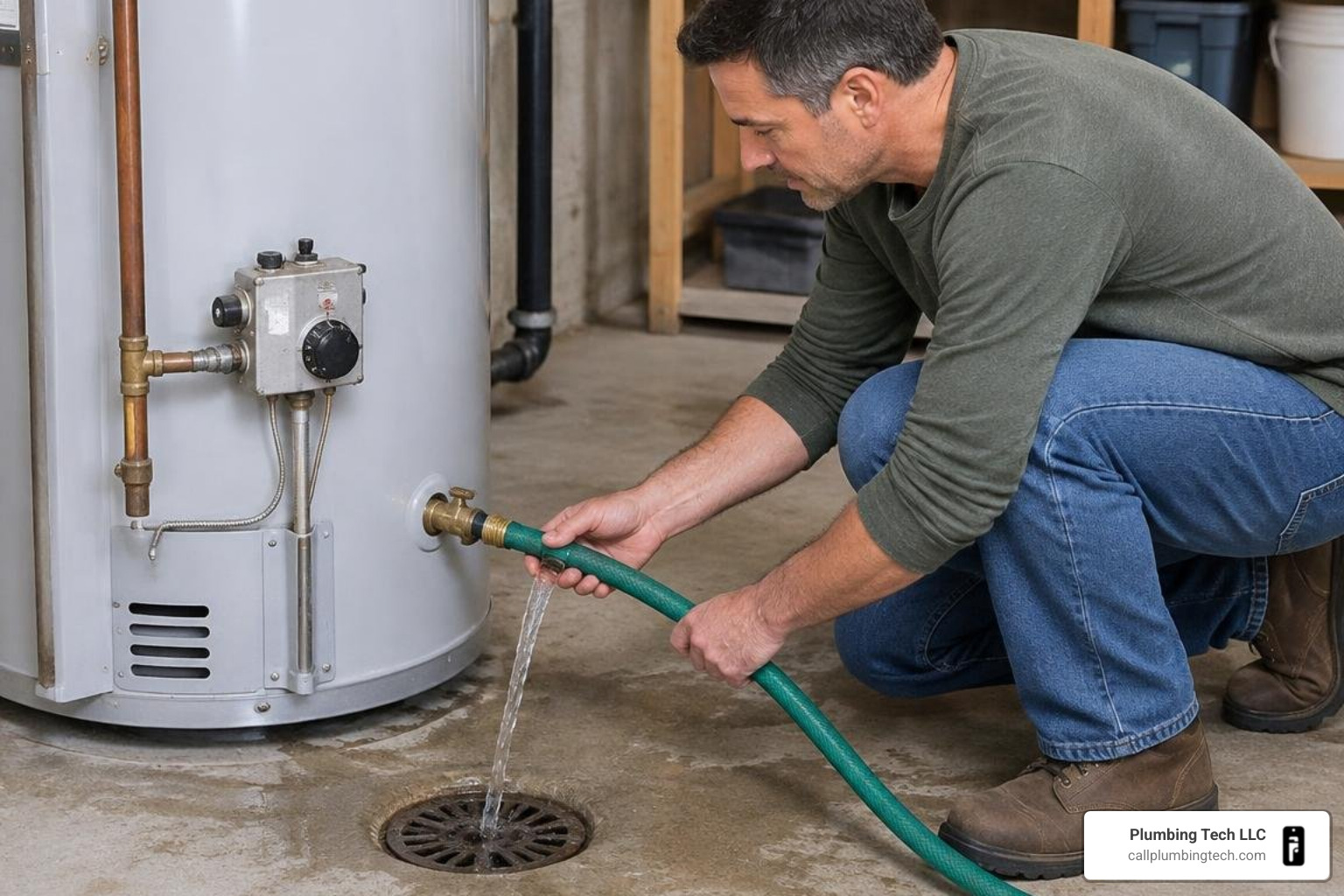
- Flush the Tank Annually: Attach a standard garden hose to the bottom drain valve, run the other end to a floor drain or outdoor area, and open the valve to flush out accumulated sediment.
- Inspect the Sacrificial Anode Rod: The anode rod is a magnesium or aluminum core inside the tank that attracts corrosive elements, sacrificing itself to shield the steel tank walls. Check our detailed walkthrough on how to replace a sacrificial anode rod every two to three years before it fully deteriorates.
- Verify Household Water Pressure: Use a simple screw-on pressure gauge on an outdoor hose bib or laundry tap. Ensure home pressure stays between 40 and 60 psi. If it reads over 80 psi, install or adjust your home’s Pressure-Reducing Valve (PRV).
- Test the T&P Safety Valve: Lift the test lever on the relief valve briefly once a year to ensure water discharges freely and reseats tightly without continuous dripping.
Frequently Asked Questions About Leaking Gas Water Heaters
Can I still take a shower if my gas water heater is leaking?
We strongly advise against taking a shower or running hot water while your water heater is actively leaking. When you draw hot water, cold water rushes into the unit under high pressure to refill it. This pressurized inflow accelerates water escaping from the leak point, worsening floor damage.
Additionally, running a damaged gas unit can expose you to scalding hazards or fire risks if water contacts electrical switches, wiring, or burner controls. Shut off the system and leave it offline until it is inspected or replaced.
How fast can a minor water heater drip turn into a major flood?
A water heater leak can transition from a slow, intermittent drip to a complete structural rupture in as little as 24 to 72 hours. Because the steel tank operates under continuous line pressure between 40 and 80 psi, water constantly presses against weakened, corroded areas.
Once rust eats through the inner glass lining, the pressurized water quickly tears the opening wider. An uncontained rupture can release up to 50 gallons of standing water immediately, followed by hundreds of gallons of continuous municipal water across your living space until someone shuts the supply valve.
How do I safely relight the pilot light after inspecting a leak?
If you shut off your gas burner to dry and inspect the tank base and verified there are no gas or water leaks, you can restart the unit following the manufacturer instructions on the side label.
Ensure the combustion chamber is dry, turn the gas control knob to “PILOT”, hold down the pilot button to initiate fuel flow, and press the piezo igniter button until the flame lights. Hold the button for 30 to 60 seconds until the thermocouple registers heat, then switch the main knob to “ON”. For detailed visual steps, follow our step-by-step pilot relighting guide to restore hot water quickly and safely.
Conclusion
Finding water pooling beneath your gas water heater requires quick, decisive action. By isolating the fuel supply, closing the cold-water inlet, and relieving internal pressure, you protect your home from sudden flooding and costly restoration work. While simple component failures like leaking drain valves or loose pipe nipples can be resolved with quick repairs, an internal tank seam failure means it is time for a modern replacement.
At Plumbing Tech LLC, our veteran-owned team brings over 25 years of combined experience handling residential and commercial plumbing challenges across Greater Cleveland, including Strongsville and Richfield, OH. As certified backflow specialists, we arrive equipped with modern diagnostic tools and provide 24/7 emergency response backed by our 100% satisfaction guarantee.
Whether you need urgent leak containment, tank maintenance, or a high-efficiency replacement, turn to our team for trusted water heater repair and installation services to keep your hot water running safely and reliably.