How to Deodorize Your P-Trap Using Household Staples
Why P-Traps Develop Foul Odors
A smelly drain can ruin the comfort of your kitchen or bathroom. To clean a P-trap smell quickly, pour 1 cup of baking soda down the drain, follow it with 1 cup of white vinegar, let the mixture fizz for 30 minutes, then flush with hot tap water. If the fixture has not been used in weeks, the trap may simply be dry, so run water for 30 seconds to refill the water seal. These household staples remove the organic sludge and bacteria that cause most drain odors without damaging your pipes.
To solve the issue for good, it helps to understand how the plumbing beneath your fixture operates. Every standard fixture connects to a curved pipe known as a P-trap. The fundamental job of this U-shaped bend is to retain a small reservoir of water every time you turn off the tap. This standing water forms a physical barrier that stops toxic, smelly sewer gas from rising out of the city sewer or septic tank and into your living space.
When your plumbing operates normally, that barrier protects your indoor air quality around the clock. The gases lurking in sewer lines contain trace elements like hydrogen sulfide, which creates a distinct rotten-egg smell. Sewer lines also contain methane, carbon dioxide, and various airborne bacteria. You can learn more about understanding sewer gas dynamics to see why plumbing codes mandate these water seals in every home.
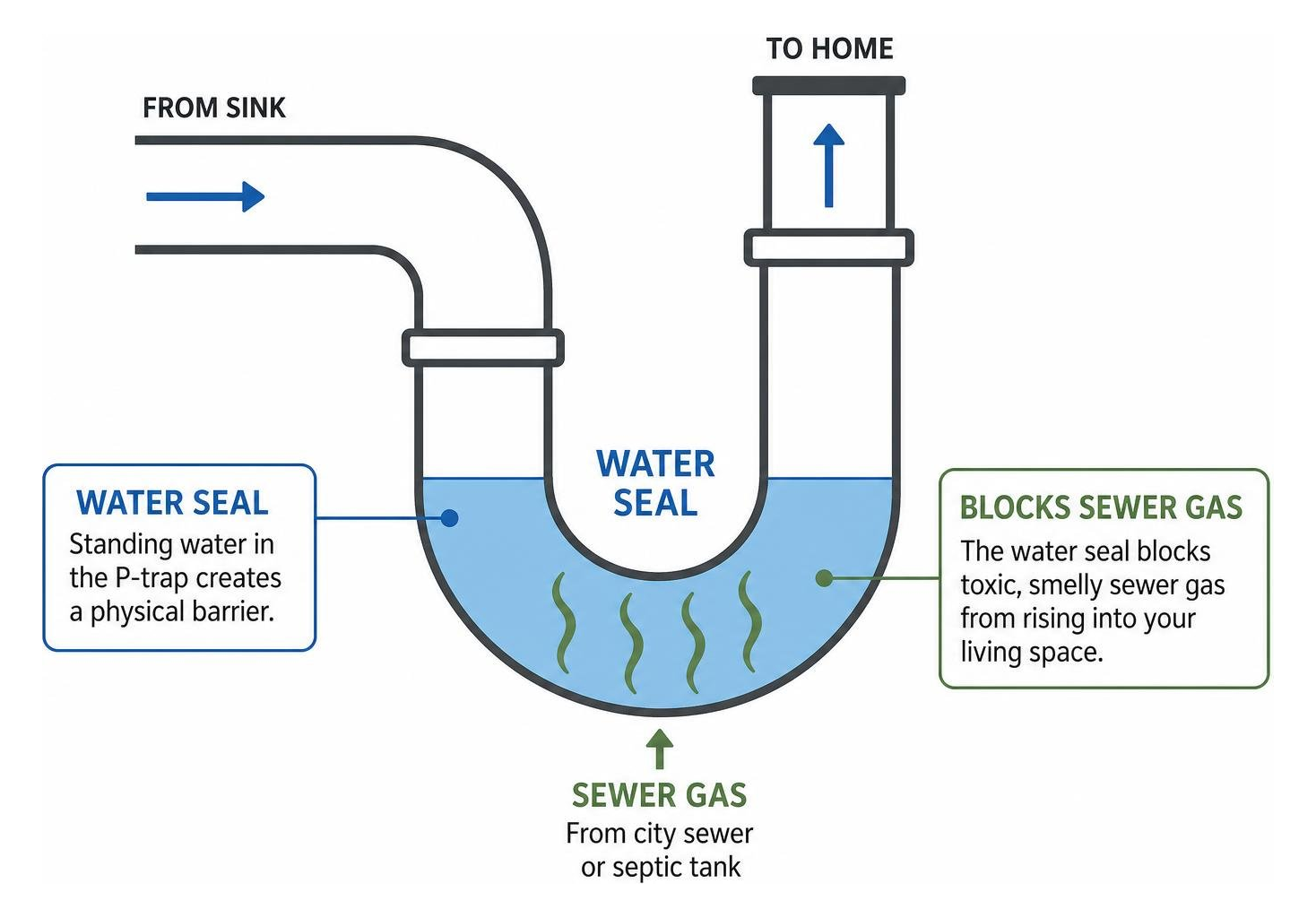
When bad smells escape, the issue usually comes down to two culprits. Either the protective water seal has vanished, or the inside walls of the trap have collected a thick coat of organic sludge. Hair, soap scum, grease, toothpaste, and tiny food particles stick to the curved walls of the pipe. Over time, bacteria feast on this accumulation, creating a slimy biofilm. This biofilm decomposes directly inside your drain, releasing unpleasant odors even when the water seal is full.
Dry Traps and Evaporation
One of the most frequent reasons a drain begins to smell is simple evaporation. When a sink, basement floor drain, or guest bathroom goes weeks without use, the standing water in the curve slowly turns to vapor. Without that liquid barrier, the path between the sewer line and your home sits wide open.
In standard indoor conditions, a trap can dry out in roughly three to six weeks. During the winter months in Greater Cleveland, running home heating systems dries out indoor air and accelerates this evaporation. Basement drains and utility sinks are especially prone to drying out because homeowners rarely run water into them directly. Learning the basics of diagnosing dry P-traps can help you identify whether a simple splash of water will fix your smelly room.
Blocked Plumbing Vents and Siphoning
Sometimes a P-trap loses its water seal even when you use the fixture regularly. This issue often stems from a compromised plumbing vent system. Every drainage network relies on vertical vent stacks that exit through your roof. These pipes draw in fresh air to equalize pressure so water flows smoothly down the drain pipes.
If birds build a nest in your roof vent, or if leaves, snow, or debris clog the pipe, negative pressure builds up inside the plumbing lines. When water drains from a washing machine or toilet, it creates a powerful suction effect. This suction pulls the standing water right out of nearby P-traps, leaving them dry. If you hear odd gurgling sounds coming from your sink when you flush a toilet, your vents may be struggling with pressure balance. Our team at Plumbing Tech LLC handles these venting issues through our comprehensive residential plumbing services.
Household Remedies vs. Chemical Drain Cleaners
When bad smells drift up from a drain, many homeowners reach for harsh chemical drain openers. While these products claim to dissolve buildup quickly, they often cause far more trouble than they solve.
Chemical drain openers rely on aggressive caustic agents, such as concentrated sodium hydroxide or sulfuric acid. These substances work by creating intense chemical heat inside your pipes. While that heat can melt grease, it also weakens your plumbing infrastructure, damages protective rubber gaskets, and puts your personal safety at risk. Safe pantry staples like baking soda, distilled white vinegar, table salt, and mild dish soap provide a gentle, effective alternative for routine cleaning.
| Feature / Factor | Natural Household Staples (Baking Soda & Vinegar) | Chemical Drain Cleaners (Lye & Acid-Based) |
|---|---|---|
| Pipe Safety | Safe for PVC, ABS, copper, and cast iron | Generates high heat that can warp PVC and corrode metal |
| Fixture Finishes | Gentle on chrome, nickel, and porcelain | Can tarnish, discolor, or etch metal and porcelain |
| Fume Hazard | Produces mild, harmless carbon dioxide gas | Emits toxic, irritating fumes that burn eyes and lungs |
| Septic Safety | Completely biodegradable and septic-safe | Destroys beneficial bacteria inside septic systems |
| Cost & Accessibility | Inexpensive pantry items you already own | Expensive single-purpose chemical bottles |
| Effect on Biofilm | Loosens organic sludge and neutralizes odors | Melts a small pathway without removing total odor |
Pipe Safety and Material Longevity
Modern homes rely heavily on PVC and ABS plastic drainage pipes connected by slip joints and rubber washers. When caustic chemical cleaners sit inside a plastic trap, the intense heat can warp the plastic fittings. Over time, this heat degrades the rubber seals that keep your joints watertight, leading to messy leaks inside your cabinets.
Older homes with vintage brass or galvanized steel pipes face an even greater risk from harsh chemicals. The acids eat away at the metal walls from the inside out, turning minor buildup into corroded, paper-thin pipes prone to sudden bursts. Using gentle household staples protects the structural integrity of your plumbing while keeping your sink free of foul smells.
Environmental and Health Impact
Pouring harsh chemicals down the sink introduces dangerous pollutants into local water systems and septic tanks. For homes that rely on septic tanks, chemical drain openers kill the beneficial bacteria needed to break down solid waste, leading to premature system backups.
The fumes from chemical cleaners can also irritate your eyes, nose, and respiratory tract. If you ever have to take the pipe apart after using a chemical cleaner, you risk chemical burns on your skin. Natural alternatives like vinegar, baking soda, and natural enzyme cleaners eliminate odors safely without polluting the environment or threatening your household health.
Step-by-Step Methods to Clean P-Trap Smell with Kitchen Staples
You do not need an arsenal of complex plumbing equipment to eliminate drain odors. A few basic kitchen staples and simple tools are all it takes to restore a clean, fresh-smelling drain.
Step 1: Using Baking Soda and Vinegar to Clean P-Trap Smell
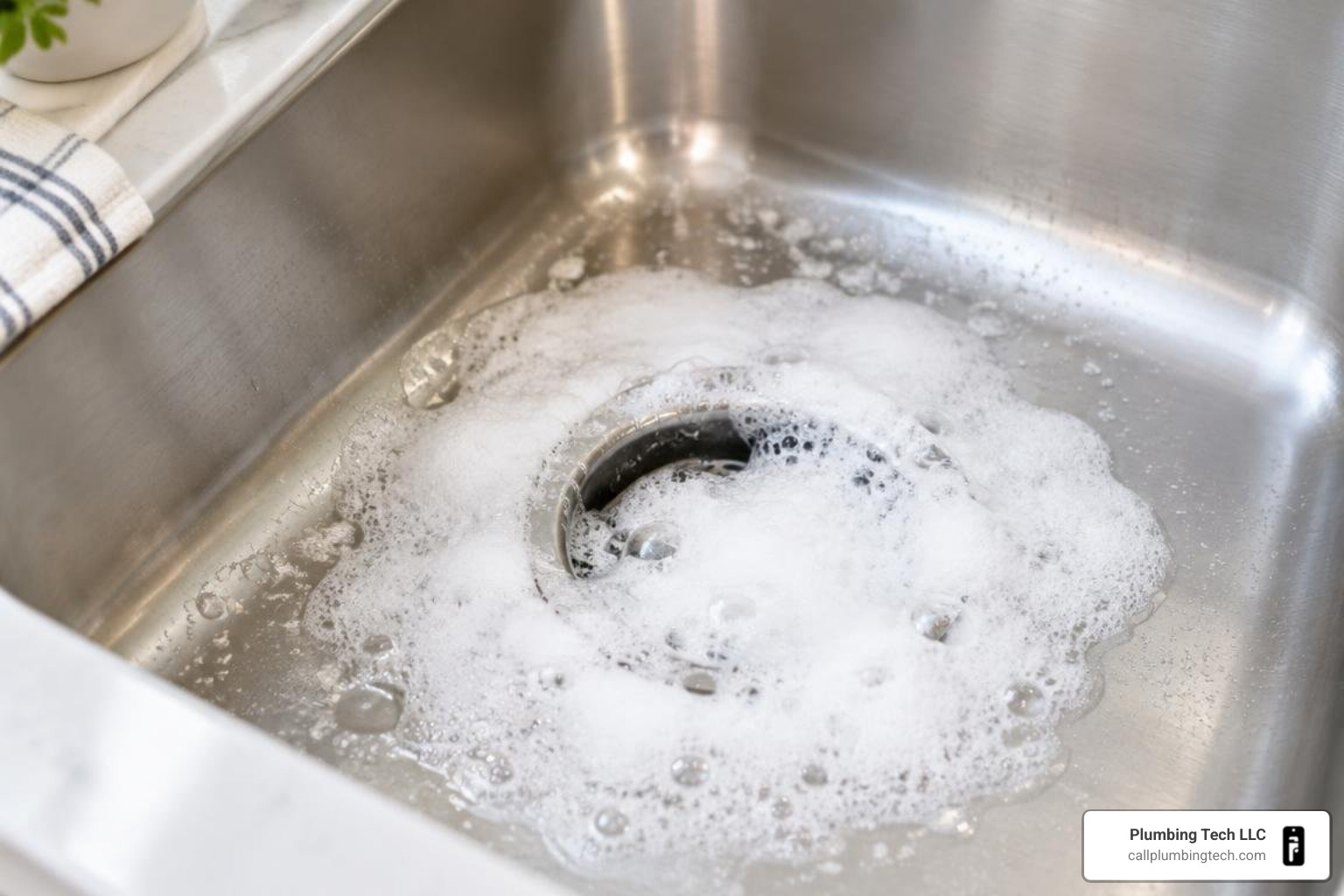
The combination of sodium bicarbonate (baking soda) and acetic acid (white vinegar) creates a gentle foaming reaction that loosens organic residue and breaks down smelly sulfur compounds.
- Flush with Warm Water: Run hot tap water down the drain for 60 seconds to warm the pipe walls and soften greasy buildup.
- Add Baking Soda: Pour 1 cup of dry baking soda straight down the drain opening. Use a wooden spoon handle to push the powder past the sink strainer if needed.
- Pour White Vinegar: Slowly pour 1 cup of distilled white vinegar over the baking soda. The mixture will fizz vigorously.
- Cover and Rest: Place a drain stopper or a clean rag over the drain opening to force the bubbling carbon dioxide foam down into the curved trap. Let the mixture sit undisturbed for 30 minutes.
- Flush Clean: Bring a large pot of tap water to a steaming heat and flush it down the drain. Turn on the hot water faucet and let it run for another minute to wash away the loosened debris.
Step 2: Adding Mineral Oil to Prevent Trap Evaporation
If the bad smell comes from a basement floor drain, a guest bathroom, or a utility sink that you rarely use, refilling the water is only a temporary fix. The water will evaporate again within a few weeks.
To create a lasting seal, pour about 1 to 2 quarts of clean tap water down the drain to fill the U-bend completely. Next, pour 2 to 3 tablespoons of pure mineral oil into the drain.
Because mineral oil is lighter than water, it floats to the top and creates a thin, odorless barrier. This liquid lid slows evaporation dramatically, keeping the water seal intact for months at a time. Never use vegetable oil, olive oil, or cooking grease for this trick. Cooking oils turn rancid, solidify, and attract drain flies, creating a brand new odor problem.
Step 3: Disassembling the Pipe to Clean P-Trap Smell Manually
When heavy organic buildup, trapped hair, or foreign objects settle in the bottom curve of the pipe, flushing alone may not remove the odor. Removing the trap lets you scrub away every trace of sludge.
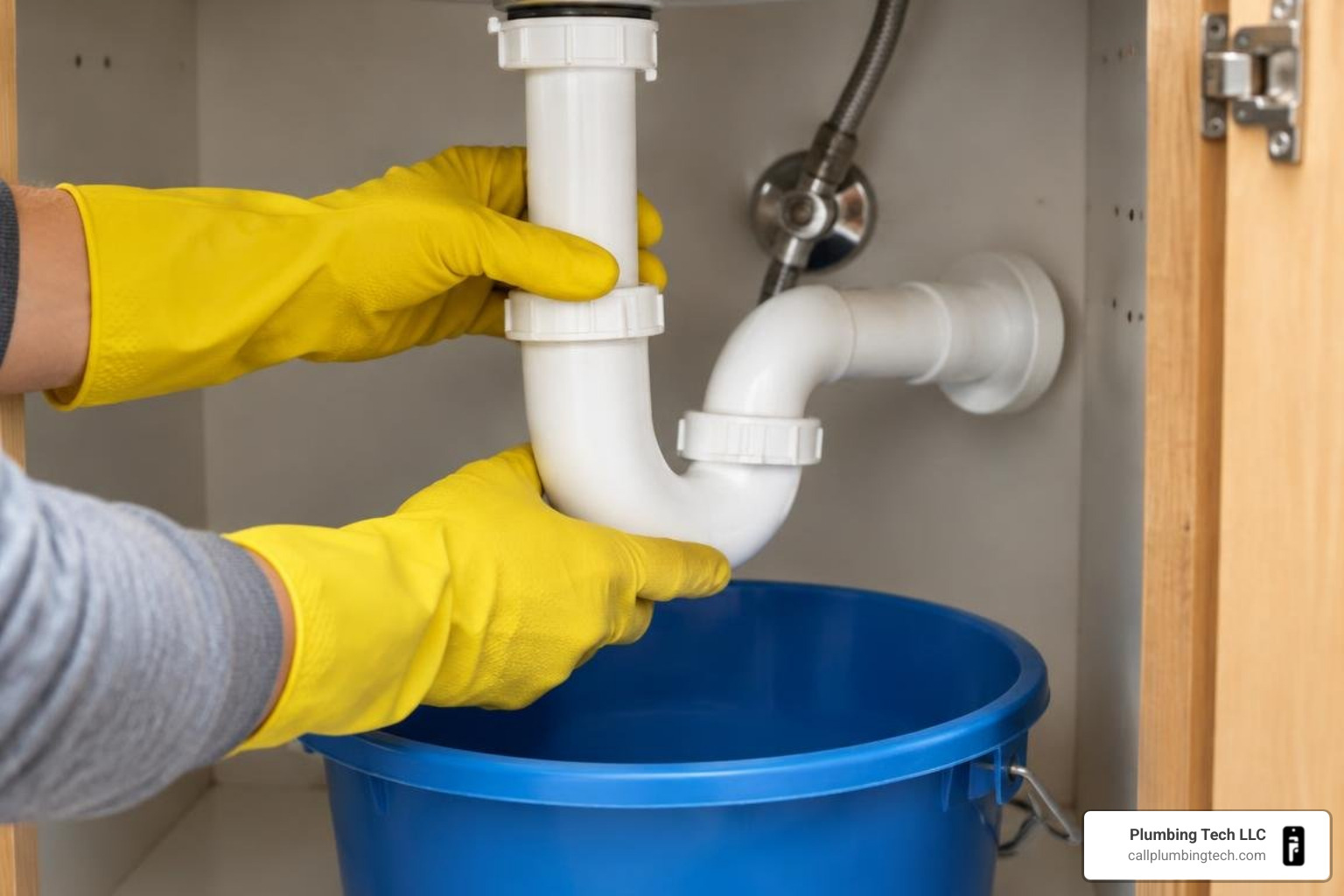
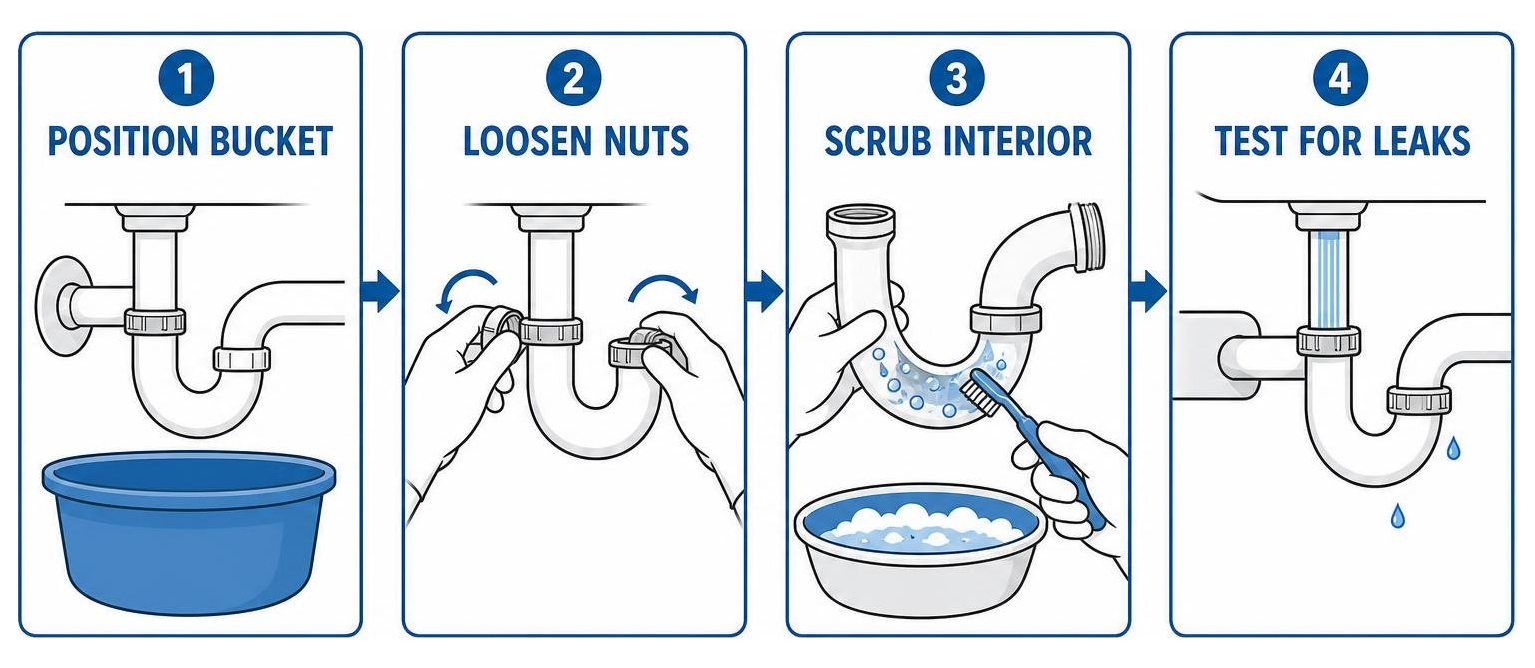
- Clear the Space and Position a Bucket: Empty everything from beneath the sink. Place a shallow bucket or plastic basin directly under the P-trap to catch trapped water and sediment.
- Loosen the Slip Nuts: Put on waterproof gloves. Loosen the two slip nuts securing the curved trap by hand, turning them counterclockwise. If the nuts are stuck, use tongue-and-groove slip-joint pliers, applying gentle pressure to avoid cracking the plastic.
- Drop the Trap Body: Carefully lower the curved section of the pipe and empty the standing water and debris directly into your bucket.
- Scrub the Interior: Carry the pipe to another sink or an outdoor spigot. Use warm water, grease-cutting dish soap, and an old bottle brush or toothbrush to scrub the inner walls until the plastic is clean.
- Inspect Washers and Reassemble: Check the rubber or plastic slip-joint washers for cracks, stiffness, or wear. Replace any damaged washers. Reattach the trap, align the pipes properly, and hand-tighten the slip nuts. Add a quarter-turn with your pliers, taking care not to over-tighten.
- Test for Leaks: Turn on the faucet and let hot water flow for 60 seconds while watching the joints. Wipe the fittings with a dry paper towel to confirm there are no slow drips.
Signs Your P-Trap Needs Replacement Instead of Cleaning
While routine maintenance solves most drain odor issues, older plumbing components eventually wear out. Knowing when to stop cleaning and replace the trap saves you from dealing with water damage down the road.
Physical Degradation and Leaking Joints
Plastic PVC traps can become brittle after decades of exposure to hot water, grease, and household cleaners. If you spot hairline cracks along the bottom curve, or if the slip-joint threads strip when tightening, the trap must be replaced.
In older homes, drain traps are often made of thin-wall brass or galvanized steel. These metals corrode from the inside out, leaving the bottom curve fragile and paper-thin. If you notice rust spots, green oxidation, mineral crusting, or persistent drips that new washers cannot fix, replace the assembly with a modern PVC P-trap. If you suspect deeper issues behind your walls or under your foundation, a sewer camera inspection can pinpoint structural problems without digging up your floors.
Persistent Venting and Main Line Clogs
If your drains continue to smell like rotten eggs despite thorough cleaning and refilling, the issue likely sits deeper within your drainage system. Chronic clogs in the main sewer lateral or blocked rooftop vent stacks can force sewer gases backward past the trap water seal.
When multiple fixtures in your home back up, drain slowly, or gurgle at the same time, simple sink cleaning will not resolve the underlying issue. In these situations, scheduling professional sewer cleaning will clear the main drainage pathways and restore normal pressure balance to your home.
Frequently Asked Questions About P-Trap Odors
How long does it take for a P-trap to dry out?
Under average indoor conditions, an unused P-trap dries out in roughly three to six weeks. The exact time depends on the local humidity, room temperature, and air movement. During dry winter months when heating systems run continuously, the water seal can vanish in as little as two weeks. To keep infrequently used fixtures sealed, run the faucet for 30 seconds once a month or use the mineral oil method.
Is sewer gas coming from a smelly P-trap dangerous?
In small, brief amounts, sewer gas is primarily an unpleasant nuisance. However, prolonged exposure to high concentrations of sewer gas can cause headaches, dizziness, nausea, eye irritation, and fatigue. The hydrogen sulfide responsible for the rotten-egg smell is toxic in elevated quantities, and methane gas poses a potential fire hazard if allowed to accumulate in unventilated spaces. Restoring dry or dirty traps quickly is essential for maintaining safe indoor air quality.
Can I pour boiling water down a PVC P-trap?
You should avoid pouring boiling water (212 degrees Fahrenheit) directly down a PVC or ABS drain. Standard residential PVC pipe is rated to handle temperatures up to 140 degrees Fahrenheit. Boiling water can soften thin-walled plastic pipes, warp slip joints, and ruin rubber washers, causing leaks inside your vanity or ceiling. Instead, use very hot tap water, which is hot enough to melt grease and activate baking soda without damaging your plumbing.
Keep Your Plumbing Fresh and Functional
Dealing with drain odors is a common part of homeownership, but it does not have to be an ongoing battle. In most cases, a dry water seal or minor organic buildup is the culprit behind that unpleasant smell. By refilling unused drains, applying simple baking soda and vinegar treatments, and keeping the curved pipes free of sludge, you can keep your home smelling clean and fresh year-round.
When regular cleaning does not eliminate the smell, or if you run into persistent clogs, gurgling pipes, or hidden leaks, our experienced team is here to help. Plumbing Tech LLC brings over 25 years of combined plumbing expertise to homeowners across Greater Cleveland, including Strongsville and Richfield, OH. We stand behind our work with modern diagnostic technology and a 100% satisfaction guarantee.
Contact our certified technicians today to schedule comprehensive drain cleaning and restore fresh, worry-free plumbing to your home.